
Navigating the Global Rizatriptan Benzoate Market: Strategic Trends and Commercial Opportunities Through 2032
Market State and Core Challenges
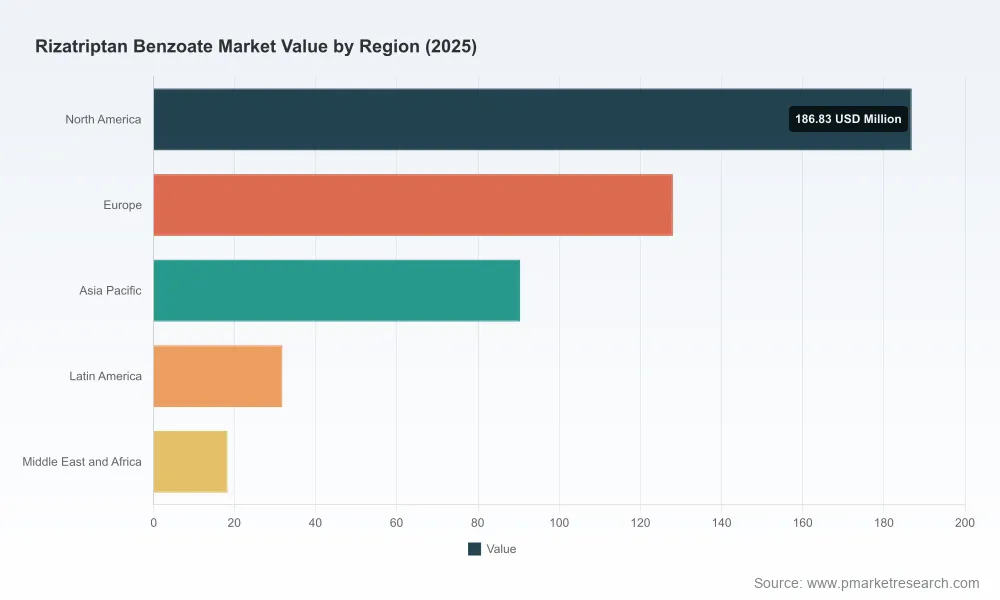
The global rizatriptan benzoate market exemplifies a mature therapeutic segment entering a phase of structural recalibration. At a baseline revenue of approximately $455 million in 2025, the market is projected to advance at a compound annual growth rate of 3.42 percent through 2032, ultimately approaching the $576 million mark. This trajectory does not depict runaway expansion. Instead, it signals a market where value creation is increasingly decoupled from volume growth and is instead driven by formulation differentiation, channel optimization, and regulatory compliance. The historical record from 2020 onward confirms this pattern of measured consolidation punctuated by innovation-driven inflection points. After steadying in the mid-$440 million range during 2023 and 2024, the market has reached a plateau that demands strategic recalibration rather than reliance on legacy pricing power.
Three interconnected challenges define the current inflection point. The first stems from patent expiration and its cascading effects on pricing architecture. With original exclusivity protections for the flagship branded product having lapsed years ago and additional orally disintegrating tablet protections expiring in the proximate timeframe, the market has experienced substantial price erosion across key geographies. Industry tracking indicates generic penetration has compressed unit economics by forty to fifty percent in mature markets, fundamentally altering margin structures for both originators and generic entrants. The implication is clear: price competition alone no longer supports sustainable positioning. Companies that continue to compete primarily on cost will find themselves trapped in a race to the bottom, while those that invest in differentiated delivery, service architecture, or combination strategies can preserve margins in an increasingly commoditized space.
The second challenge revolves around regulatory tightening around product purity and impurity control. Global regulators have intensified scrutiny of nitrosamine impurities in pharmaceutical products, and this heightened oversight has already generated tangible market disruption. A voluntary recall of rizatriptan benzoate tablets in mid-2025 highlighted the operational fragility that can emerge when impurity controls fail to meet updated expectations. This episode was not an isolated compliance event; it reflected a broader shift in which supply chain auditing, impurity profiling, and documentation rigor are becoming table stakes for market access. Manufacturers and distributors that treat impurity management as a back-office function risk revenue interruption, reputational damage, and potential formulary de-listing. The market now rewards proactive impurity risk management as a competitive differentiator, not a compliance checkbox.
The third challenge reflects the evolving patient and prescribing environment. Migraine care is increasingly shaped by patient-centricity, where speed of onset, tolerability, and administration convenience influence both adherence and formulary placement. Traditional tablet formulations remain foundational, but the presence of nausea during acute migraine attacks can compromise oral intake, creating an unmet need for faster-acting, water-free delivery options. The market's response to this clinical reality will determine which products capture share in the next cycle. Companies that fail to address administration convenience, particularly for patients experiencing significant gastrointestinal symptoms during attacks, risk ceding relevance to alternative delivery platforms and combination therapies. This patient-driven shift is not merely a clinical preference; it is becoming a commercial variable that shapes formulary decisions, pharmacy channel dynamics, and ultimately, market share distribution.
Key Drivers: Innovation, Regulation, Demand, and Supply Architecture
The evolution of the rizatriptan benzoate market is being shaped by four reinforcing drivers, each carrying distinct strategic implications for participants across the value chain.
Technological Innovation and Formulation Breakthroughs
Formulation science is emerging as a primary lever for differentiation in a market where basic tablet forms have long been available. The introduction of oral thin film technology represents a meaningful advance for patients who struggle with conventional tablets during acute migraine episodes. A water-free, rapidly disintegrating format addresses the practical barriers created by nausea and enhances the patient experience without altering the active molecule. Commercial availability of such a product has already created a tangible reference point for what patient-centric delivery can achieve, and it signals to the broader market that formulation innovation can still unlock share in a mature category. Beyond delivery format, combination therapy development is expanding the therapeutic playbook. The recent approval of a fixed-dose combination pairing rizatriptan benzoate with a complementary anti-inflammatory agent for acute migraine treatment demonstrates how molecular pairing can create new clinical narratives and potentially differentiate offerings in a crowded generic landscape. These innovations are not incremental tweaks; they are strategic maneuvers that reposition the molecule within broader migraine management pathways.
Regulatory and Policy Dynamics
Regulatory expectations are becoming a structural driver rather than a peripheral compliance issue. Impurity control requirements, manufacturing documentation standards, and post-market surveillance expectations are raising the operational bar for market participation. The recall activity observed in 2025 underscores that regulatory enforcement is no longer theoretical; it has direct consequences for product availability and commercial continuity. At the same time, the proliferation of generic entrants following patent expirations has shifted regulatory engagement toward quality systems, bioequivalence documentation, and supply chain traceability. Companies that build robust regulatory intelligence and quality infrastructure are better positioned to maintain uninterrupted market access, respond to audits efficiently, and preserve trust with distributors, pharmacies, and formulary committees. In this environment, regulatory capability functions as a strategic asset that protects revenue streams and supports long-term market participation.
Cetirizine Hydrochloride Market
Demand-Side Shifts in Prescribing and Patient Behavior
Demand patterns are being reshaped by both clinical practice evolution and patient expectations. Acute migraine management increasingly emphasizes rapid symptom relief, tolerability, and administration flexibility. Prescribers and patients alike are responding to therapies that offer predictable onset and minimal disruption to daily routines. The availability of orally disintegrating tablets and thin film formats aligns with this demand profile by providing alternatives that reduce administration friction during attacks. Furthermore, the emergence of combination therapies introduces the possibility of addressing multiple pathophysiological components within a single administration event, which may appeal to prescribers seeking streamlined regimens. Demand-side momentum is also being driven by broader awareness and diagnosis rates in certain geographies, but the commercial translation of this awareness depends on whether available products align with patient usability expectations and formulary economics. Markets that can align clinical efficacy with administration convenience are better positioned to capture share even in a price-eroded environment.
Worldwide Zolmitriptan Market
Supply Chain Realities and Cost Structure Dynamics
The supply architecture of the rizatriptan benzoate market is heavily supported by a concentrated base of active pharmaceutical ingredient and finished dosage manufacturers, with a significant number of Indian-based players supplying both API and formulated products globally. This concentration creates efficiency advantages but also introduces concentration risk. Multiple manufacturers have established FDA-approved applications and are actively supplying finished dosage forms across markets, reinforcing the availability of generic options while simultaneously intensifying competitive pressure on pricing. The reliance on a relatively narrow supplier base means that quality deviations, regulatory actions, or production disruptions can cascade quickly through the supply chain. The recall instance involving nitrosamine impurities demonstrated how a single compliance failure can affect product availability across distribution networks. Companies that diversify supply relationships, invest in rigorous quality verification, and maintain visibility into upstream production conditions are better equipped to manage volatility. From a cost perspective, the combination of generic price erosion and rising compliance requirements creates a margin environment where operational efficiency and supply chain resilience become decisive factors.
Competitive Landscape and Leading Strategies
The competitive field in the rizatriptan benzoate market blends originator presence, well-established generic manufacturers, and a smaller set of firms pursuing differentiated delivery or combination strategies. The originator organization continues to market branded versions of both conventional tablets and orally disintegrating products, maintaining a reference position in the market even as generic competition has expanded. Its strategic posture centers on preserving clinical recognition and leveraging the historical brand association with acute migraine treatment, while navigating the reality that the core patents have long expired. The branded franchise now operates more as a quality and familiarity anchor than as a protected monopoly, relying on physician familiarity, formulary inclusion, and patient brand recognition to sustain relevance.
On the generic side, a broad cohort of manufacturers has built positions through regulatory approvals, finished dosage capabilities, and global distribution relationships. Multiple firms from India and a few international players hold approved applications for tablets and orally disintegrating forms, creating a highly accessible supply environment. These companies compete primarily on regulatory compliance, production reliability, pricing, and distribution reach. However, the strategic differentiation among generic players increasingly depends on quality systems, impurity control, supply continuity, and relationships with pharmacy channels. Manufacturers that can demonstrate consistent quality, responsive regulatory engagement, and reliable supply are better positioned to secure long-term contracts and formulary standing. The presence of multiple active suppliers also provides distributors and buyers with alternatives, which enhances bargaining power and reinforces the importance of reliability as a competitive variable.
A distinct strategic tier is emerging around differentiated delivery and combination approaches. One company has positioned an oral thin film product as a patient-friendly alternative for migraine sufferers who experience nausea, emphasizing a water-free, rapid-disintegrating format. This approach targets a specific usability gap and illustrates how formulation differentiation can coexist with a mature generic market. In parallel, the recent approval of a fixed-dose combination therapy pairs rizatriptan benzoate with an anti-inflammatory partner, creating a new clinical positioning that may appeal to prescribers seeking broader acute treatment coverage. These strategies signal that the next phase of competition will not be limited to generic price competition; it will also involve therapeutic pairing, delivery innovation, and targeted patient segments.
Market structure is evolving through a combination of consolidation pressure and entry opportunities. On one hand, price erosion and rising compliance costs are squeezing margins for undifferentiated generic players, which may encourage consolidation, partnerships, or exit among smaller participants. On the other hand, formulation differentiation, combination development, and niche channel strategies create pathways for new entrants or repositioned incumbents to capture share without directly contesting the lowest-cost tier. The market is thus becoming more stratified: commoditized volume at the generic baseline, quality-driven reliability in the middle, and innovation-led differentiation at the edges. Companies that understand where they belong within this stratification and align their capabilities accordingly are more likely to sustain profitable positions.
Strategic Outlook: Three Trends to Watch Through 2032
Looking ahead, several trends will shape the strategic environment and open or close commercial opportunities over the next three to five years.
The first trend is the deepening of formulation and delivery differentiation as a margin defense mechanism. As generic price erosion continues, the relative value of administration convenience, faster onset perception, and patient-friendly formats will grow. Oral thin film and other non-traditional delivery modes are likely to receive increased attention, not as replacements for all tablets, but as targeted options that capture segments where nausea and administration difficulty limit adherence. The commercial opportunity lies in pairing delivery innovation with clear patient communication, formulary positioning, and pharmacy channel education. The risk is that differentiation claims must be substantiated with real-world usability and clinical credibility; otherwise, they risk being dismissed as marginal modifications in a price-sensitive market.
The second trend is the continued elevation of quality and impurity control as a competitive prerequisite. Regulatory scrutiny of nitrosamine-related concerns and manufacturing purity is unlikely to diminish. Companies that maintain advanced impurity testing, robust documentation, and proactive supply chain auditing will face fewer disruptions and will be better positioned to retain formulary and pharmacy relationships. The commercial opportunity here is twofold: first, quality excellence protects revenue continuity; second, it can become a differentiator in negotiations with distributors and procurement organizations that increasingly weigh supply risk alongside unit price. The uncertainty lies in how rapidly regulatory expectations may evolve and whether new impurity findings could trigger broader market actions that disrupt multiple products simultaneously.
PW Consulting
The third trend is the expansion of therapeutic combination strategies and their impact on prescriber behavior. Fixed-dose combinations that incorporate rizatriptan benzoate alongside complementary mechanisms are likely to stimulate renewed clinical interest in the molecule as part of broader acute migraine management. This trend can create new formulary discussions, patient education opportunities, and branded or semi-branded positioning even within a generic-heavy environment. The opportunity is to engage prescribers around simplified regimens and potential adherence benefits. The risk is that combination products may face higher pricing scrutiny, formulary access hurdles, or clinical headroom questions if prescribers prefer flexible, separate dosing or if reimbursement environments restrict combination uptake. Success in this area will depend on demonstrating clear clinical and practical value beyond novelty.
Implications for Decision-Makers: Strategic Actions by Stakeholder Type
For generic and branded manufacturers, the strategic priority should be to move beyond undifferentiated volume competition and build defensible positions through formulation capability, quality infrastructure, and targeted patient segments. Manufacturers that can offer reliable supply, rigorous impurity control, and administration formats that address real usability barriers will be better positioned to negotiate with pharmacy channels and protect margins. It is also prudent to assess whether combination or delivery innovation pathways align with internal capabilities and regulatory timelines, rather than assuming that the molecule's maturity precludes differentiation. Companies that treat quality and compliance as strategic enablers, rather than cost centers, will be more resilient to the operational shocks that can arise in a tightly scrutinized market.
For investors, the market's moderate growth and structural maturity suggest that value creation will come from companies with clear differentiation strategies, disciplined cost management, and strong regulatory execution rather than from broad sector tailwinds. Attention should be directed toward firms that are expanding into differentiated delivery, combination development, or quality-driven reliability, as these attributes are more likely to translate into sustainable margins. At the same time, exposure to a concentrated supply base and ongoing impurity scrutiny warrants careful monitoring of company-specific quality events and recall risk. The investment thesis is less about uniform market expansion and more about identifying participants that can preserve pricing power and commercial continuity in a price-eroded environment.
For procurement organizations, pharmacy buyers, and supply chain leaders, the strategic focus should be on resilience and continuity rather than price alone. In a market where recalls and impurity concerns can interrupt availability, diversification of supply sources, clear quality documentation, and proactive supplier auditing provide meaningful protection. Formulary decisions should weigh administration convenience and patient usability alongside unit cost, since products that reduce administration friction may improve adherence and reduce downstream service burden. The procurement opportunity is to structure sourcing relationships that balance competitive pricing with supply reliability and quality assurance, recognizing that short-term savings can be quickly erased by availability disruptions or recall-related transitions.
For executives seeking to deepen their understanding of segment-level dynamics, regional variation, channel performance, and tailored scenario planning, the full PW Consulting research report provides a more granular view of market sizes, competitive benchmarking, and actionable recommendations aligned with specific strategic objectives.
For detailed analysis of this topic, please visit the official page: Worldwide Rizatriptan Benzoate Market
Lacy Lee
Senior Marketing Manager
[email protected]
PW Consulting: www.pmarketresearch.com

























Sign in to leave a comment.