
The Worldwide Ultra HD Endoscope Market: Strategic Trends and Commercial Opportunities (2025–2032)
The global Ultra HD endoscope market has entered a decisive growth phase, with revenues expanding from approximately $1.05 billion in 2020 to an estimated $1.735 billion in 2025. Projections indicate the sector will reach $3.445 billion by 2032, reflecting a compound annual growth rate of 10.29%. This trajectory is not merely a function of incremental adoption; it signals a structural shift in how minimally invasive procedures are visualized, documented, and integrated into clinical workflows. As healthcare systems prioritize diagnostic precision, surgical efficiency, and cost containment, Ultra HD endoscopy has evolved from a premium upgrade to a baseline expectation across multiple specialties. The market's expansion, however, is unfolding against a backdrop of regulatory complexity, reimbursement pressures, and intensifying competitive differentiation, creating both clear opportunities and strategic friction points for players operating in this space.
Market Landscape and Core Challenges
The market's current scale and growth profile underscore its transition from a niche imaging segment to a mainstream capital equipment category. Revenue growth over the past half-decade has been consistent, with the most pronounced acceleration occurring as 4K platforms moved from early-adopter institutions to broader hospital networks. The forecast period through 2032 suggests sustained momentum, but this growth is not evenly distributed across use cases, geographies, or product architectures. Instead, it is being shaped by distinct clinical adoption curves, procurement cycles, and technology readiness levels that require nuanced positioning rather than uniform market expansion narratives.
Several structural challenges are defining the current inflection point. First, reimbursement environments are tightening even as procedural volumes and complexity increase. Recent Medicare Physician Fee Schedule adjustments have introduced payment rate reductions across endoscopic services, forcing providers to balance clinical aspirations against financial constraints. This dynamic is pushing hospitals to prioritize equipment that delivers measurable workflow efficiencies or reduces downstream costs, rather than purchasing imaging upgrades solely on resolution specifications. Second, capital expenditure cycles are becoming more selective. Hospital administrators are forecasting modest budget increases while maintaining endoscopy visualization systems as a priority category, meaning vendors must justify purchases through total cost of ownership arguments, interoperability, and procedural throughput gains. Third, cybersecurity and data integrity concerns are increasingly embedded in purchasing decisions. Surgical video systems are no longer isolated imaging tools; they are connected nodes within hospital networks, making certification, software integrity, and secure data handling competitive differentiators rather than compliance footnotes.
These pressures are reshaping how value is defined in the Ultra HD endoscope market. Resolution alone is no longer the primary purchase driver. Instead, institutions are evaluating how imaging platforms integrate with fluorescence modalities, narrow-band imaging, 3D visualization, and cordless or single-use architectures. The challenge for manufacturers is to demonstrate clinical and operational impact that aligns with procurement realities, while the challenge for providers is to distinguish between incremental specification improvements and genuine workflow transformation.
Key Market Drivers
Technological Innovation and Imaging Modality Convergence
The most significant driver of market expansion is the convergence of high-resolution imaging with advanced visualization modalities. True 4K imaging has become a foundational capability, but the commercial momentum is increasingly tied to complementary technologies such as narrow-band imaging, blue light observation, fluorescence imaging, and near-infrared angiography. These modalities extend the diagnostic and therapeutic utility of Ultra HD systems beyond sharper visuals, enabling better tissue differentiation, enhanced margin assessment, and more targeted interventions. The integration of these features into modular camera platforms allows institutions to scale capabilities across specialties without replacing entire systems, which aligns with constrained capital cycles and the need for flexible asset utilization.
A parallel innovation track is the shift toward cordless and single-use architectures. Wireless camera systems and disposable endoscope components address infection control, setup time, and maintenance burdens, while also reducing cross-contamination risk and reprocessing costs. This trend is particularly relevant in arthroscopy and other procedure areas where turnover speed and OR efficiency directly affect profitability. As these technologies mature, they are broadening the definition of value in the market from image quality alone to the entire procedural ecosystem.
Regulatory Pathways and Market Access Dynamics
Regulatory clearance and certification activity continue to shape both product availability and competitive positioning. Recent FDA 510(k) clearances across multiple 4K imaging platforms and endoscope series have expanded the addressable procedural scope, including use in laparoscopy, nasopharyngoscopy, ear endoscopy, urology, gynecology, and gastrointestinal applications. These clearances do more than authorize new products; they signal clinical credibility, support hospital procurement justification, and create pathway advantages for companies that can move efficiently through regulatory processes.
Rigid Endoscopes Market
Equally important is the rising emphasis on cybersecurity certification for connected surgical video systems. As imaging platforms become more software-defined and network-integrated, cybersecurity assurance is increasingly viewed as a prerequisite for deployment in modern hospital environments.Certification achievements in this area are becoming part of the buying conversation, especially for large health systems that must meet institutional security standards and reduce risk exposure across connected medical devices.
Demand-Side Shifts in Clinical and Institutional Behavior
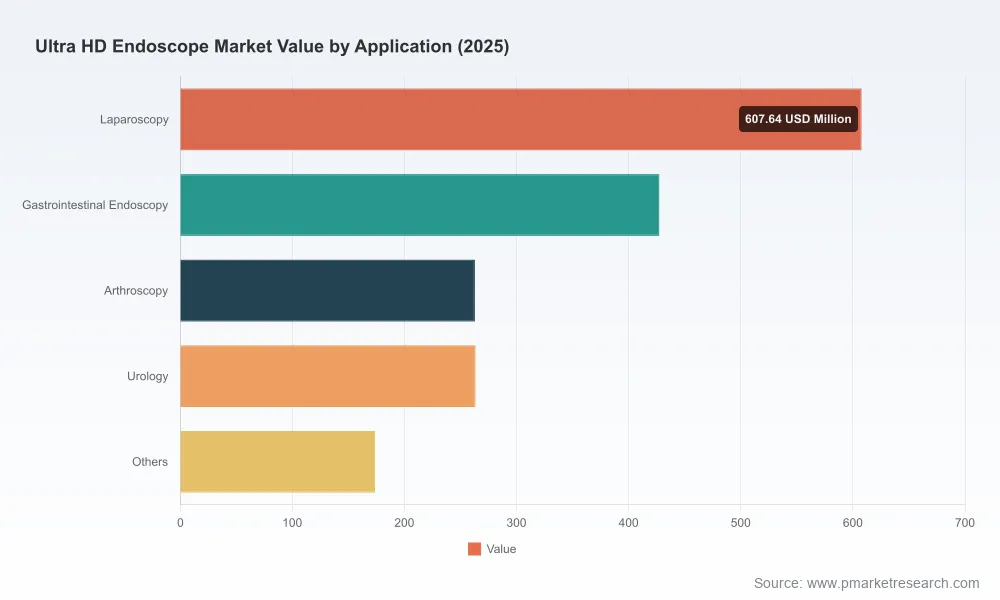
Demand is being reshaped by two overlapping forces: the expansion of minimally invasive procedure volumes and the institutional push for standardized, high-quality visualization across service lines. Clinicians increasingly expect imaging systems that support consistent visualization across laparoscopy, gastrointestinal endoscopy, arthroscopy, and urology, reducing the need for specialty-specific hardware silos. At the same time, hospitals are seeking platforms that can support training, documentation, and telemedicine-compatible workflows, especially as surgical teams operate across multiple sites or share expertise across departments.
Consumer and patient-side expectations are also indirectly influencing procurement. Greater awareness of advanced screening options and earlier intervention strategies is contributing to higher diagnostic and surveillance volumes in areas such as colorectal cancer screening. While reimbursement and coverage rules evolve, the broader direction favors earlier detection and more frequent endoscopic evaluation, which increases the operational relevance of reliable, high-fidelity visualization tools.
Cost Structure, Procurement Realities, and Total Value Arguments
Cost dynamics are driving a more sophisticated buying process. Even as endoscopy visualization remains a priority, hospitals are operating under cost-containment pressure and expecting suppliers to justify capital outlays through durability, service efficiency, consumable economics, and procedural throughput. This environment favors vendors that can present clear total-cost-of-ownership narratives and demonstrate how imaging investments reduce complications, shorten setup times, or extend the useful life of existing equipment through modular upgrades.
Supply-side considerations are also influencing product strategy. Manufacturers that can balance performance with serviceability, minimize reprocessing burden, and offer flexible financing or upgrade pathways are better positioned in markets where procurement teams are comparing initial price against long-term operational impact. The result is a market in which technical superiority must be paired with economic practicality to win sustained adoption.
Competitive Landscape and Leading Strategies
The competitive environment is shaped by a mix of established surgical visualization incumbents, specialized endoscopy manufacturers, and emerging players targeting specific procedural niches. Several themes define how leading companies are positioning themselves and where the landscape appears to be heading.
Differentiation Through Imaging Ecosystem and Modality Integration
Leading manufacturers are competing less on resolution claims alone and more on the breadth and integration of their imaging ecosystems. Companies with strong footholds in surgical endoscopy are expanding camera head and processor capabilities to support True 4K imaging, narrow-band imaging, blue light observation, fluorescence modalities, and modular configurations that span rigid and flexible endoscopes. This approach allows them to serve multiple specialties from a common platform, which is attractive to hospitals seeking standardization and fewer integration headaches.
Some incumbents are deepening their specialization in gastrointestinal and other high-volume endoscopic procedures by pairing 4K video processors with ergonomically designed endoscope series and targeted regulatory clearances. The strategic intent is clear: capture repeatable procedural volume by improving detection, diagnosis, and therapy workflows while maintaining compatibility with existing clinical preferences. In parallel, manufacturers focused on arthroscopy and minimally invasive orthopedic procedures are advancing wireless and single-use camera platforms that emphasize setup efficiency, infection control, and portability.
Strategic Moves in Market Expansion, Regulatory Momentum, and Certification
Recent product launches, regulatory clearances, and certification milestones illustrate how competitive advantage is being built in practice. New 4K camera heads and imaging platforms have been introduced with initial launches in select markets followed by staged regional rollouts, reflecting a measured approach to commercialization that balances clinical validation with commercial acceleration. These staged introductions allow manufacturers to refine training, service readiness, and channel support before broader deployment.
Regulatory activity has also been a strategic lever. Multiple 4K imaging systems and endoscope series have secured or expanded U.S. FDA clearances, enabling broader procedural indications and reinforcing market access. At the same time, cybersecurity certification achievements are increasingly highlighted as evidence that connected imaging platforms can meet institutional security expectations. For large hospital groups and integrated delivery networks, these signals can influence shortlisting decisions and reduce perceived deployment risk.
Geography is another axis of competition. Established players are extending advanced imaging platforms into emerging markets with structured launch plans, while manufacturers from emerging manufacturing hubs are expanding their presence with cost-competitive 4K camera systems for clinical and surgical use. This dual dynamic is creating a more layered competitive field: premium differentiated platforms competing on modality integration and workflow maturity, and value-oriented offerings competing on price, service accessibility, and regional support.
Endoscopy Ultrasound Market
Market Structure and Evolution Trends
Market concentration indicates that a meaningful share of revenue is captured by a relatively small group of leading companies, yet the presence of multiple specialized and regional players ensures that competition remains active across segments. This structure suggests a market that is consolidating around platforms with strong clinical acceptance and service networks, while still leaving room for differentiated entrants that address unmet workflow needs or specific procedural niches.
Looking ahead, the competitive landscape appears likely to evolve along three paths. First, continued platform consolidation as hospitals favor vendors that can support multiple specialties and reduce the number of distinct imaging ecosystems they manage. Second, growing importance of software, connectivity, and cybersecurity as procurement criteria, which may advantage companies with stronger regulatory and certification track records. Third, potential for targeted disruption in high-turnover or infection-sensitive use cases through single-use and wireless solutions, especially where OR efficiency and reprocessing cost are dominant concerns. The interplay between these forces will determine which companies compete on scale and ecosystem breadth versus those that win through specialized workflow advantages.
Future Outlook: Strategic Trends for 2026–2032
From Resolution to Integrated Visualization Value
Over the next several years, the market is likely to shift further from a focus on resolution as a standalone selling point toward integrated visualization value that combines image quality, advanced modalities, and workflow efficiency. 4K will increasingly be treated as the baseline, while differentiation will come from how effectively systems support fluorescence, narrow-band imaging, 3D visualization, wireless operation, and interoperability with hospital information and documentation environments. This trend favors organizations that can articulate clinical outcomes, OR throughput improvements, and training benefits in addition to image specifications.
Modularity, Upgradability, and Lifecycle Economics
Procurement constraints and capital selectivity will continue to reward modular and upgradable architectures. Hospitals are likely to prefer platforms that can be enhanced over time rather than replaced entirely, especially when budgets are tight and visualization systems are considered priority but not unlimited investments. Vendors that design for lifecycle flexibility, serviceability, and predictable consumable economics will be better positioned to win multi-year adoption, while those relying on frequent full-system replacements may face more resistance in cost-conscious procurement environments.
PW Consulting
Geographic Expansion and Segment-Specific Adoption Gaps
Growth will likely remain strong across the forecast horizon, but adoption trajectories will diverge by region and application. Mature markets will see more replacement-cycle activity, modality upgrades, and cybersecurity-driven purchasing, while emerging markets may experience faster initial adoption of 4K platforms as hospitals build or modernize surgical and endoscopy infrastructure. At the same time, application-level adoption will vary based on procedure volume, training availability, and the clinical case for advanced imaging in each specialty. Companies that tailor go-to-market strategies to these differences, rather than treating the market as uniform, will be more effective in converting growth potential into sustained share gains.
Risks and Uncertainties
Several risks could alter the pace or shape of growth. Continued reimbursement compression could slow capital purchases if hospitals perceive limited financial return from imaging upgrades. Regulatory or cybersecurity expectations could rise further, increasing time-to-market and compliance costs for new platforms. Supply chain volatility and component availability may affect pricing and launch timing, particularly for manufacturers dependent on specialized sensors, processors, or wireless components. Finally, if advanced modalities are perceived as insufficiently validated for broad clinical impact, adoption could become more conservative, with buyers prioritizing reliability and service support over feature expansion. These uncertainties do not negate the growth outlook, but they highlight the importance of scenario-aware strategy rather than assuming linear adoption.
Strategic Actions for Decision Makers
For Manufacturers and Technology Providers
Position products around workflow and total value rather than resolution alone. Invest in modular platforms, modality integration, and cybersecurity assurance, and ensure that launch strategies include clear regional sequencing, clinical training, and service readiness. Where relevant, develop single-use or cordless options for high-turnover or infection-sensitive procedures, and prepare total-cost-of-ownership narratives that speak directly to hospital procurement priorities. Differentiation will increasingly depend on how well a platform reduces complexity across specialties while maintaining clinical credibility.
For Investors and Strategic Partners
Focus on companies that demonstrate recurring value drivers beyond initial equipment sales, including service ecosystems, consumable economics, upgrade paths, and regulatory or certification advantages that support market access. Pay attention to players with credible plans for geographic expansion and those targeting high-growth procedural areas with differentiated imaging or workflow features. Also watch for consolidation signals, as hospitals and health systems increasingly prefer fewer, more capable imaging partners. Due diligence should weigh not only product specifications but also reimbursement exposure, cybersecurity posture, and the ability to compete across both premium and value-oriented segments.
For Procurement Leaders and Healthcare Administrators
Evaluate Ultra HD endoscopy investments against institutional priorities such as procedural throughput, standardization across service lines, infection control, and cybersecurity compliance. Favor platforms that can be scaled modularly, supported by clear service and training programs, and justified through measurable operational benefits rather than image quality alone. Where possible, align purchasing decisions with broader capital planning cycles and consider lifecycle cost, upgrade flexibility, and the potential to reduce complexity by consolidating imaging ecosystems across departments.
The Ultra HD endoscope market is expanding with clear momentum, but the winners will be those who translate that growth into defensible commercial positions. Detailed segment-level data, competitive benchmarking, and deployment scenarios can materially improve strategic timing and resource allocation, especially when decisions must balance clinical ambition with financial discipline. For organizations seeking deeper segmentation data and tailored recommendations across regions, applications, and product architectures, the full PW Consulting market report provides a more granular view to support execution-specific planning.
For detailed analysis of this topic, please visit the official page: Worldwide Ultra HD Endoscope Market
Lacy Lee
Senior Marketing Manager
[email protected]
PW Consulting: www.pmarketresearch.com




























Sign in to leave a comment.