
The Worldwide Wafer Boat Market: Strategic Trends and Business Opportunities
1. Market Context and Core Challenges
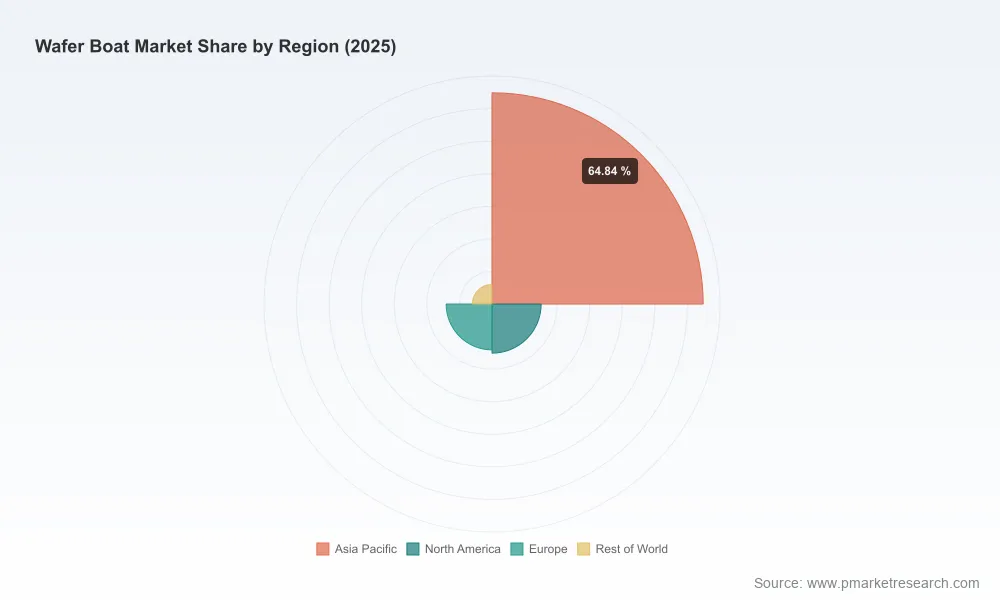
The global wafer boat market has moved through a decisive growth phase over the past five years, expanding from approximately USD 580.5 million in 2020 to an estimated USD 945.0 million in 2025. The market is projected to reach USD 1,672.8 million by 2032, supported by an anticipated compound annual growth rate of 8.5 percent between 2026 and 2032. This trajectory reflects the broader reorientation of semiconductor manufacturing toward advanced nodes, larger wafer formats, and more demanding process environments. The scale of growth is no longer driven solely by capacity additions in traditional logic and memory fabs; it is increasingly tied to specialty processing, wide-bandgap material adoption, and equipment upgrades that require higher-performance wafer carriers capable of operating reliably under harsher thermal and chemical conditions.
Behind the headline growth, the industry is navigating a series of structural inflection points that will define competitive winners over the next cycle. The first challenge lies in balancing purity, particle control, and mechanical stability at increasingly advanced process nodes. As semiconductor processes move below 7 nanometers, wafer boats must maintain ultra-high purity levels, often exceeding 99.99 percent, while minimizing particle generation during repeated thermal cycles and chemical exposures. Even minor contamination or dimensional drift can translate into yield loss, which raises the performance bar for both quartz and advanced ceramic carriers. Suppliers are therefore being forced to invest in material refinement, tighter tolerances, and process-specific boat designs rather than relying on commodity-style standardization.
A second challenge is the shift in cost and performance trade-offs between traditional quartz solutions and advanced ceramic alternatives such as silicon carbide. Quartz remains widely used in thermal oxidation and diffusion environments, but high-purity quartz supply is exposed to raw material volatility, processing complexity, and application-specific demand swings. At the same time, silicon carbide wafer boats are gaining traction where superior thermal shock resistance, corrosion resistance, and longer service life can reduce downtime and improve throughput in more demanding low-pressure chemical vapor deposition and diffusion workflows. The market is not simply migrating from one material to another; it is becoming more application-specific, with buyers evaluating total cost of ownership rather than purchase price alone. This complicates procurement decisions and pushes manufacturers to justify material selection with longer-term process reliability data.
Worldwide Ceramic Wafer Boat Market
The third challenge is geographic and operational concentration risk. The market remains relatively concentrated, with the top three players accounting for roughly 42.5 percent of revenue and the top five reaching about 58.2 percent. While concentration can indicate strong execution by leading firms, it also highlights dependence on a limited set of suppliers for high-end wafer handling components. Any disruption in capacity, qualification timelines, or localized supply chains can create bottlenecks for fabs that rely on just-in-time procurement and tightly integrated equipment ecosystems. In parallel, procurement teams are increasingly scrutinizing supplier resilience, traceability, and compatibility with automated handling systems, especially as SEMI standards continue to shape carrier interfaces and contamination control expectations across fabs.
2. Key Demand Drivers and Structural Shifts
Technology Innovation and Material Performance
Technology requirements are pushing wafer boat design in multiple directions at once. Advanced process flows increasingly demand carriers that can withstand higher temperatures, more aggressive chemical environments, and repeated thermal cycling without introducing defects. In this context, quartz continues to serve important roles where optical transparency, proven performance in thermal oxidation, and compatibility with established process recipes remain valuable. However, the performance ceiling of quartz is being tested as process windows tighten and equipment utilization expectations rise. Silicon carbide and engineered ceramic solutions are increasingly preferred in high-stress environments because they combine thermal stability with longer lifespans and stronger resistance to corrosive conditions. This material evolution is not just a substitution story; it is reshaping product roadmaps, qualification cycles, and the value of application-specific engineering.
Another important dynamic is the ongoing emphasis on low particle generation and high purity. As process nodes advance, the tolerance for contamination narrows and wafer carriers become part of the overall yield equation. Manufacturers are responding with tighter production controls, more rigorous cleaning and inspection protocols, and design choices that reduce mechanical stress points and particle traps. The result is a market in which performance differentiation is increasingly tied to process know-how and consistency rather than simple material availability. This benefits suppliers that can demonstrate repeatable quality across batches and provide evidence that their carriers support stable operation in specific equipment configurations.
Policy and Regulatory Environment
Policy and standards-driven requirements are becoming more influential in wafer boat purchasing decisions. Regulatory and industry standards efforts, including SEMI guidelines governing carrier interfaces and handling equipment, support automation compatibility, contamination control, and consistent integration across fab environments. These standards matter because wafer boats are no longer treated as isolated consumables; they are part of an integrated handling chain that must align with automated transport, inspection, and process equipment. Compliance with interface standards reduces integration risk and supports smoother equipment qualification, which gives compliant suppliers a structural advantage in competitive bids.
PW Consulting
At a broader level, government-backed semiconductor capacity initiatives and local supply chain development programs are reshaping where manufacturing investment flows. As fabs expand or diversify production footprints, they often seek suppliers that can support regional demand, shorten lead times, and offer technical support closer to the point of use. This has encouraged both established multinational suppliers and regional manufacturers to invest in local service, technical capabilities, and application engineering. The policy environment is therefore indirectly influencing competitive dynamics by increasing the importance of responsiveness, localization, and qualification support alongside raw material performance.
Demand-Side Behavior and Equipment Strategy
On the demand side, wafer boat purchasing is increasingly influenced by equipment utilization and process reliability rather than unit pricing alone. Semiconductor manufacturers are under pressure to maximize throughput while maintaining yield, which makes the durability and consistency of consumables more relevant than in the past. A wafer boat that lasts longer, withstands more cycles, and maintains dimensional stability can reduce changeover frequency, lower the risk of unplanned interruptions, and contribute to more predictable fab scheduling. These considerations are especially important in high-value process steps, where downtime is expensive and contamination risk carries significant financial consequences.
At the same time, wafer size transitions continue to shape demand patterns. The dominance of 300mm wafers in leading-edge logic and advanced packaging environments increases the importance of carrier stability, load handling, and compatibility with larger wafer formats. Meanwhile, 200mm capacity remains relevant in a range of specialty, automotive, and mature-node applications, sustaining demand for carriers designed for those process environments. As a result, suppliers are being asked to support a more diverse product set rather than focusing exclusively on leading-edge wafer sizes. This diversification affects manufacturing planning, inventory strategy, and the pace at which new boat designs are qualified.
Supply Chain and Cost Structure Dynamics
Raw material dynamics are adding complexity to the cost structure. High-purity quartz, a foundational input for many quartz wafer boats used in thermal processes, is tied to broader industrial demand and specialized processing requirements. This creates exposure to supply variability and pricing pressure in segments where quartz remains the default material. Silicon carbide-based solutions face their own cost and manufacturing complexity considerations, particularly where sintering quality, purity, and reproducible performance must be maintained across product lines. These material realities are pushing the market toward more segmented pricing and performance discussions, with buyers comparing options based on process fit and lifecycle economics rather than assuming a single material is universally optimal.
Lead times and qualification cycles are also becoming more important in procurement planning. As fabs introduce new equipment, upgrade process recipes, or qualify alternative carrier materials, suppliers must provide not only the physical product but also the testing data, compatibility evidence, and technical support needed to move through qualification efficiently. Suppliers that can shorten qualification timelines and provide clear documentation often gain preference in environments where equipment teams are managing multiple concurrent projects. This shifts competitive advantage toward firms with stronger technical support, consistent batch quality, and the ability to work closely with process engineers.
3. Competitive Landscape and Leading Strategies
The competitive landscape is defined by a blend of established multinational suppliers and growing regional manufacturers. Leading players are pursuing different strategic positions, and their success increasingly depends on how well they align material expertise, application engineering, and integration support with customer process needs. Entegris operates from a position that emphasizes wafer handling and carrier solutions across semiconductor processing and shipping environments, with a focus on process carriers and related components that support wafer boats in fab settings. Its strategy reflects the value of broader handling ecosystem support, where compatibility with fab workflows and integrated solutions can create a stronger position than component supply alone. Participation in industry events such as SEMICON Korea 2026 underscores the importance of visibility, customer engagement, and demonstration of advanced material and handling capabilities in a region with strong semiconductor demand.
Kyocera is positioned around fine ceramic technology and high-purity materials, including single-crystal sapphire-based wafer boats designed for semiconductor processing equipment. Its strengths lie in high purity, plasma resistance, and heat resistance, attributes that appeal to process environments where contamination control and material durability are central. CoorsTek takes a complementary approach through advanced engineered ceramics, including silicon carbide wafer boats and components used in wafer processing and high-temperature applications. Its positioning is closely tied to engineered material performance and the ability to tailor solutions for demanding thermal and chemical conditions.
A notable feature of the current landscape is the growing presence of specialized manufacturers in China, several of which focus on silicon carbide and quartz wafer boats for vertical and horizontal semiconductor process configurations. Semicorex, for example, emphasizes silicon carbide boats in multiple material variants, highlighting corrosion resistance, high-temperature stability, and custom carrier options. Jiangsu Pacific Quartz Co., Ltd. focuses on high-purity quartz wafer boats commonly used in thermal oxidation and diffusion processes. Ningbo VET Energy Technology Co. concentrates on silicon carbide boats developed through advanced sintering techniques, with emphasis on thermal stability and durability. 3X Ceramic Parts supplies silicon carbide ceramic wafer boats across horizontal and vertical configurations, while Semicera Semiconductor Technology Co., Ltd. manufactures SiC and SiSiC wafer boats for semiconductor requirements.
Taken together, these regional players illustrate a market that is becoming more differentiated by material specialization and process configuration. Their growing relevance is not simply a function of cost; it also reflects the broader geographic redistribution of semiconductor manufacturing and the increasing need for multiple qualified supply sources. Buyers are often looking for suppliers that can deliver application-specific performance, repeatable quality, and sufficient technical support to fit into sensitive fab environments. In that context, competitive advantage is shaped by three factors: material and process expertise, qualification readiness, and the ability to support automation and contamination-control expectations.
4. Forward Outlook and Emerging Opportunities
Over the next three to five years, the wafer boat market is likely to evolve around three interconnected themes. First, advanced ceramic and silicon carbide solutions will continue to gain relative importance in demanding process environments, especially where thermal stability, corrosion resistance, and longer service life reduce total operating risk. This shift will be gradual rather than abrupt, because quartz will remain relevant in specific thermal and optical applications. The practical opportunity is not in declaring a universal material winner, but in matching carrier selection to process intensity, equipment configuration, and lifecycle economics. Manufacturers that can demonstrate measurable benefits in yield support, downtime reduction, and cleaning or replacement frequency will be better positioned to capture premium demand.
Second, automation compatibility and contamination control will become even more central to product selection. As fabs standardize on more integrated handling and processing flows, wafer boats that align with established interface expectations and support low particle generation will face lower integration friction. Suppliers that invest early in standards-aligned design, consistent dimensional quality, and documentation that supports qualification will benefit from faster adoption in automated environments. This creates an opportunity for companies to compete on reliability and integration readiness, not just material composition.
Third, regional diversification of supply and technical support will likely intensify. Semiconductor investment patterns are creating demand in multiple geographies, and procurement teams are increasingly attentive to supply resilience, lead-time predictability, and proximity of engineering support. This favors suppliers that can maintain multiple qualified production sources, offer responsive customer service, and adapt product portfolios to regional process mixes. At the same time, it raises the bar for consistency: expanding across regions only creates value if quality and qualification support can be replicated at scale.
These trends point to several business opportunities. Suppliers can pursue application-specific engineering as a differentiator, building product families around process environments rather than offering generic carriers. They can also strengthen qualification support and testing documentation to reduce customer friction and shorten adoption cycles. Another opportunity lies in lifecycle value propositions, where longer lifespan, lower particle generation, or reduced changeover frequency are presented as part of a broader process reliability argument. The main risks include raw material volatility, the possibility that qualification cycles slow adoption of new materials, and the challenge of maintaining consistent quality while scaling to meet regional demand.
5. Strategic Actions for Decision Makers
For manufacturers and suppliers, the priority is to move beyond material-level competition and build defensible advantage through process-specific performance and qualification readiness. Investment in purity control, dimensional consistency, and particle-management design can translate directly into stronger acceptance in advanced fab environments. Equally important is technical support capability: suppliers that can help customers navigate qualification, provide clear documentation, and align carriers with automation and contamination-control expectations will be more resilient in a concentrated and technically demanding market. Companies should also evaluate whether their portfolios are balanced across process environments and wafer sizes, since demand is increasingly shaped by both leading-edge 300mm applications and sustained 200mm and specialty needs.
For investors, the market offers a case where growth is supported by broad semiconductor capacity expansion, but returns will be shaped by execution quality, material specialization, and the ability to serve demanding process environments. The concentration of the market indicates that scale, technical credibility, and qualification track records matter. Opportunities are likely to be strongest where companies can demonstrate durable differentiation through material performance, automation compatibility, or regional service capability. Caution is warranted where growth assumptions depend primarily on volume expansion without corresponding improvements in quality, support, or integration readiness.
For procurement and fab operations teams, the practical focus should be on total cost of ownership and process fit rather than unit price alone. Evaluating wafer boat options through the lens of lifespan, particle control, cleaning frequency, compatibility with handling systems, and qualification effort can surface choices that reduce operational risk over time. It is also important to maintain a qualified supplier base that balances performance, resilience, and responsiveness, especially as fabs manage multiple process upgrades and equipment changes simultaneously. Clear technical specifications, consistent batch quality, and documented interface compatibility should be treated as core selection criteria, not optional conveniences.
For organizations seeking a fuller picture of how these trends will affect specific subsegments, geographies, and supplier strategies, deeper segmentation data and customized scenario analysis can help translate these market dynamics into operational decisions. Detailed research allows decision makers to compare material choices, assess competitive positioning more precisely, and align procurement or investment plans with the evolving requirements of advanced semiconductor processing.
Worldwide Wafer Shippers Market
For detailed analysis of this topic, please visit the official page: Worldwide Wafer Boat Market
Lacy Lee
Senior Marketing Manager
[email protected]
PW Consulting: www.pmarketresearch.com
























Sign in to leave a comment.