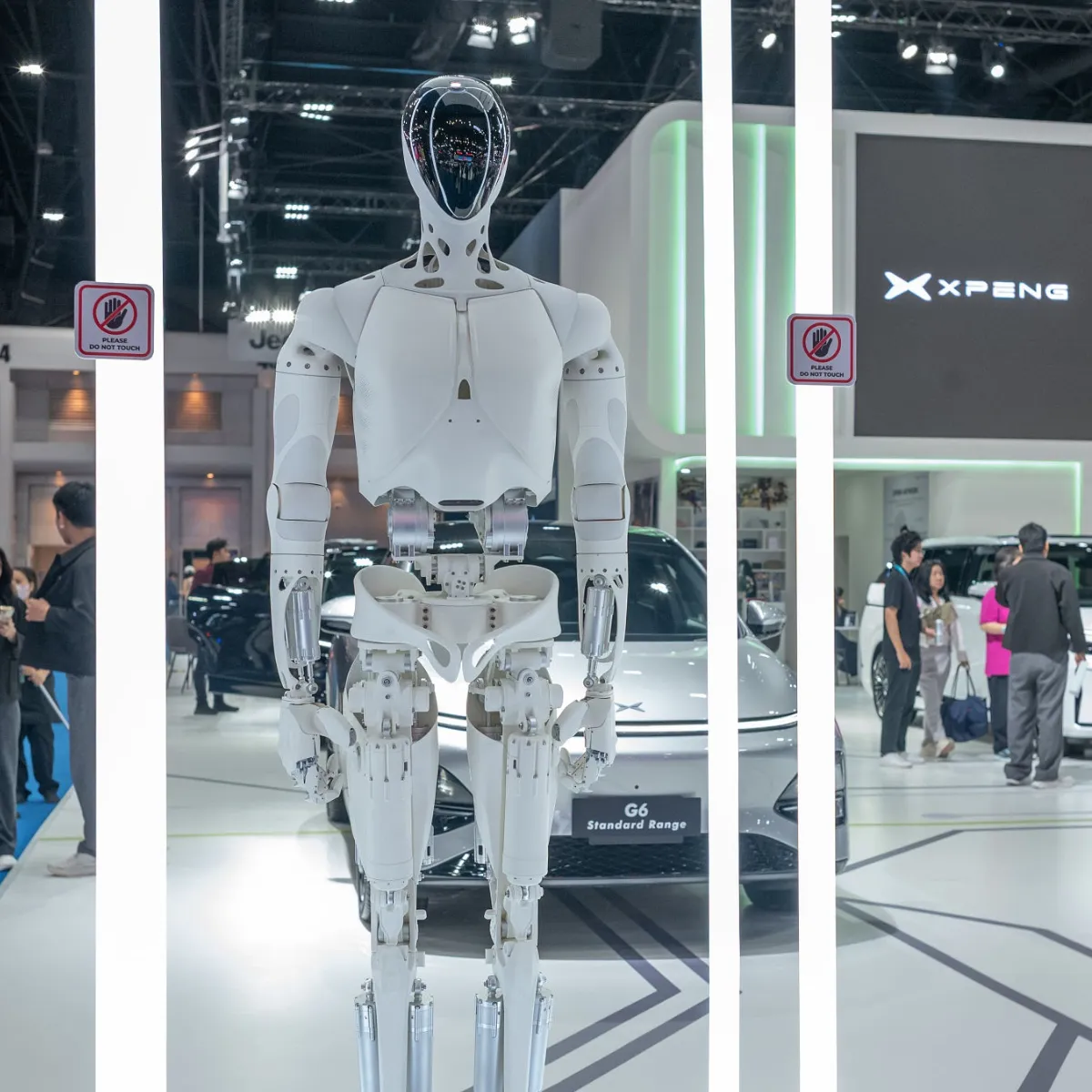

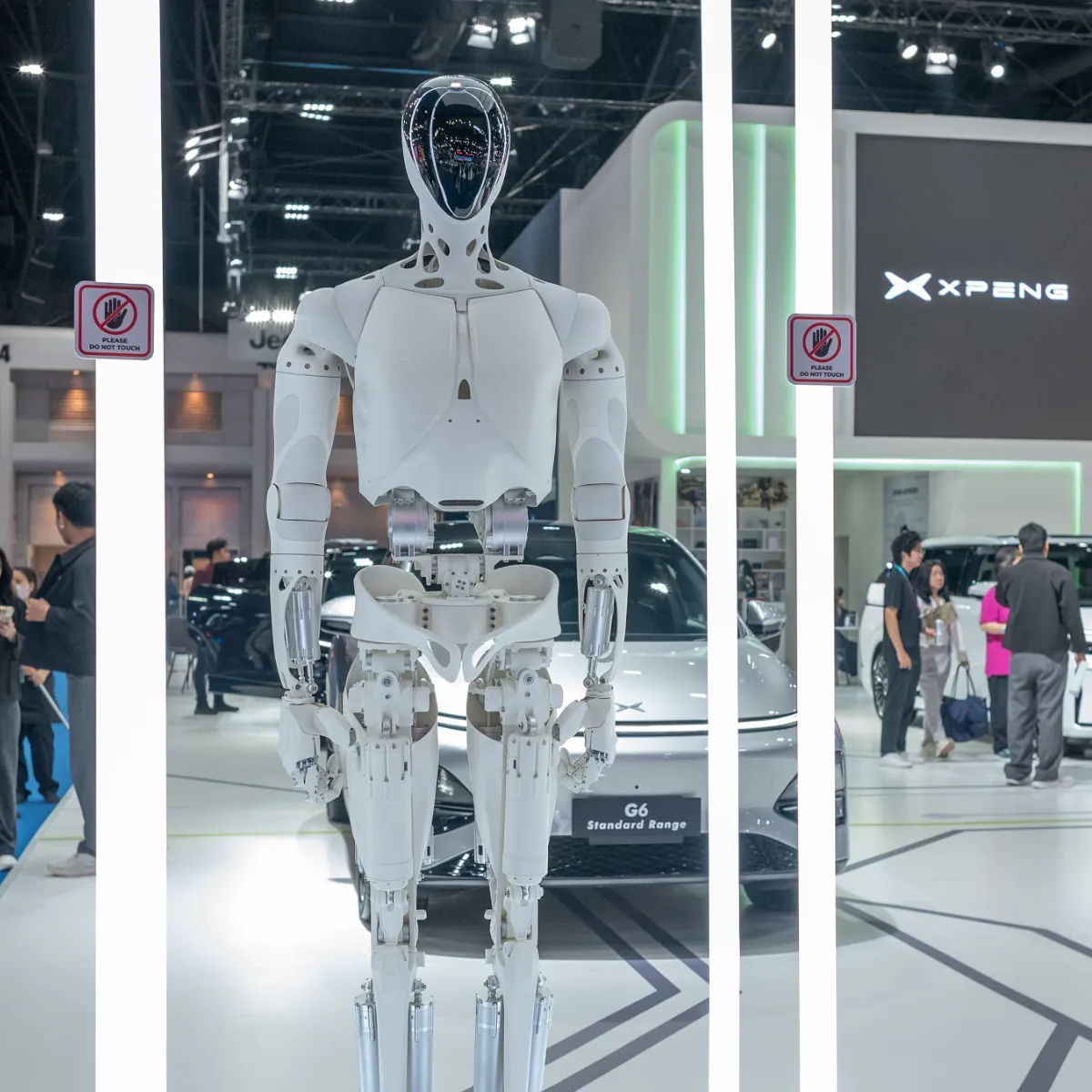
Xpeng Robotics’ major funding round shows why physical AI is attracting serious investors. Explore the opportunity through Evolve Venture Capital’s perspective.
Xpeng Robotics Raises the Bar for Physical AI Investment
The race to build commercially useful humanoid robots is no longer a futuristic conversation reserved for technology conferences. Investors are now putting serious capital behind companies that believe intelligent machines can move from laboratories and demonstrations into factories, retail environments and everyday commercial settings.
One of the clearest signals came from Xpeng’s robotics business, which announced more than $900 million in its first funding round. The round was led by IDG Capital and Gaorong Ventures, while strategic investors including Tencent and Alibaba also participated. The transaction values the robotics business at more than $6.3 billion.
For founders and investors watching the global technology market, this is more than another large fundraising announcement. It highlights how capital is moving toward technologies that combine artificial intelligence with physical infrastructure.
Why Investors Are Watching Physical AI
Software-based AI has already demonstrated its ability to transform knowledge work. Physical AI represents a different opportunity because intelligent systems must understand environments, interact with objects and respond to unpredictable real-world situations.
That creates a much harder technical problem.
Humanoid robots require advances across hardware, machine learning, sensors, control systems, battery technology and manufacturing. The companies capable of bringing these components together may eventually compete for enormous industrial markets.
Xpeng’s funding strategy reflects this broader ambition. The capital is expected to support robotics hardware and software development, physical AI models, data collection, manufacturing capabilities and international expansion. The company has also targeted production of 1,000 humanoid robots per month by the end of the year, with broader commercial sales expected later.
For investors, the message is clear: physical AI is gradually moving from experimental technology toward commercial infrastructure.
The Bigger Investment Question Is Not the Robot
A common mistake in technology investing is to focus entirely on the product.
The more important question is whether the company can build a defensible business around that product.
For robotics startups, investors need to understand manufacturing economics, deployment costs, software margins, hardware reliability, customer acquisition and maintenance requirements. A robot can attract enormous attention while still struggling to become commercially viable.
This is where disciplined venture analysis becomes important.
A strong technology story needs to be supported by evidence that customers are willing to pay, production can scale and the company has a realistic path toward sustainable margins.
What This Means for Early-Stage Founders
The size of Xpeng’s round should not encourage every robotics founder to chase enormous valuations immediately.
Instead, it should encourage founders to think about milestones.
A startup developing robotic technology should be able to demonstrate measurable progress at each stage. That could mean improving task accuracy, reducing manufacturing costs, securing pilot customers, increasing operating hours or proving that its software improves robot performance.
Investors increasingly want to see evidence that capital will accelerate an existing trajectory rather than simply finance experimentation.
For founders considering venture capital investing in early stage startups, the lesson is equally important from the investor side: technical brilliance alone is insufficient. The opportunity must connect technology, market demand and execution capability.
Could Physical AI Become the Next Major Startup Category?
There are strong reasons to believe it could.
Industrial automation is expanding, labor shortages continue to affect several economies and companies are searching for ways to improve productivity. Meanwhile, advances in AI models are giving robots increasingly sophisticated perception and decision-making capabilities.
However, physical AI remains capital intensive.
Unlike a software startup that can serve thousands of customers through cloud infrastructure, robotics companies need physical production capacity. That creates greater funding requirements and potentially longer paths to scale.
This makes strategic investors particularly valuable.
Technology companies, manufacturers, logistics businesses and automotive groups can bring more than money. They may provide manufacturing knowledge, distribution channels, customer relationships and technical expertise.
Xpeng’s investor mix illustrates this point. Financial investors provide capital and market expertise, while strategic technology companies can contribute ecosystem advantages.
The Opportunity for Investors
From an investor perspective, robotics should be evaluated as a portfolio theme rather than a single-product trend.
There are opportunities across robot operating systems, sensors, computer vision, industrial automation, humanoid hardware, simulation software, data platforms and specialized robotics applications.
That diversification can help investors avoid relying on one technological approach.
For a venture capital firm, the objective should not be to identify the robot that attracts the most headlines. It should be to identify companies building sustainable advantages in markets where adoption can eventually support venture-scale returns.
This is especially relevant for investors interested in early stage investment opportunities. Smaller startups may be developing specialized technologies that become critical components of the broader robotics ecosystem.
The Funding Lesson for Founders
The Xpeng story also demonstrates how investors respond when technology fits a major industrial transformation.
Founders should therefore frame fundraising around the future market they are helping create.
Instead of saying, “We are building a humanoid robot,” a stronger investment narrative explains the specific economic problem being solved, the customer segment affected, the technology advantage and the path toward scalable deployment.
That makes the funding conversation more concrete.
For founders preparing to Raise Capital for Startups, the objective should be to make investors understand why the company deserves capital now and what measurable value that capital can create.
Financial Adviser Advice From Evolve Venture Capital
From Evolve Venture Capital’s perspective, founders entering robotics and physical AI should avoid overfunding before validating commercial demand. Capital should be linked to clearly defined technical and business milestones.
Investors should also examine valuation discipline. A fast-growing sector can create excitement, but excitement should not replace due diligence.
The most attractive opportunities may ultimately be companies that combine strong technology with realistic manufacturing economics, recurring revenue potential and credible customer adoption.
The future of robotics could be enormous. But the strongest investment opportunities will be determined not by the most impressive prototype, but by the teams capable of turning that prototype into a repeatable business.
Contact Information:
- Website: www.evolvevcap.com
- Email: [email protected]
Phone: +65 8181 4097




























Sign in to leave a comment.