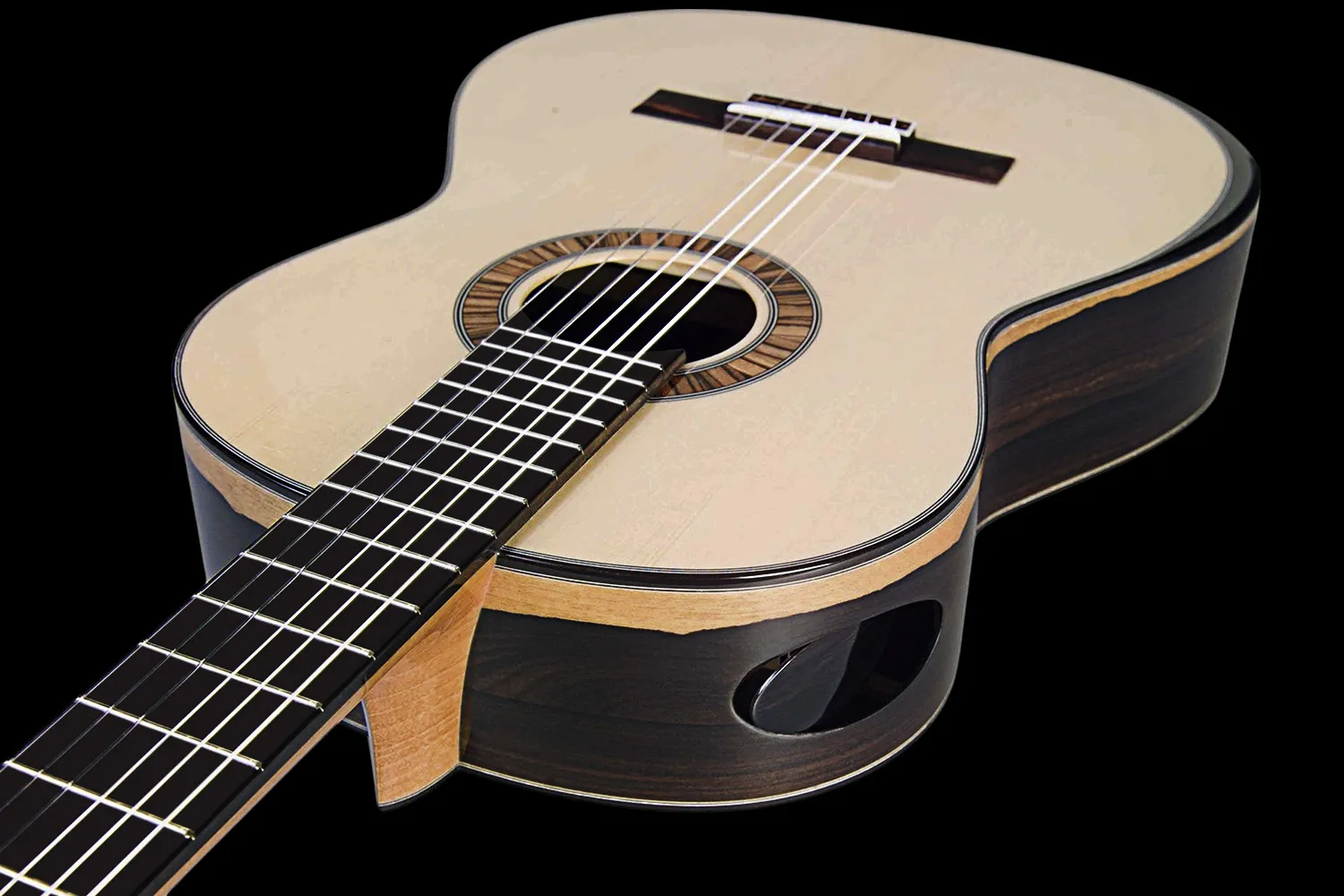

There is a small moment that happens before the first proper chord.
You pick up the guitar. Your hand finds the neck. The body settles against you. You may not even play a note yet, but you are already noticing things.
Does the neck feel comfortable? Is the body sitting naturally? Does the guitar feel light, solid, familiar, or different from what I expected?
Those first reactions matter.
With Kremona classical guitars, the experience begins well before you start listening closely to the sound. Your hands are already forming an opinion.
First, Notice How the Guitar Sits
A classical guitar has a different relationship with the player than a steel-string acoustic.
There is no strap pulling it into position. Your posture, leg position, arm, and the guitar's body all work together.
So, what do you notice?
- Does the body sit comfortably against you?
- Can your right arm reach the strings without feeling strained?
- Does the guitar feel balanced when you are seated?
- Can you keep a relaxed playing position?
You might be thinking, “Is this really that important?”
Yes. A guitar that feels natural in your hands can make it easier to concentrate on the music rather than constantly adjusting your position.
Then Your Left Hand Finds the Neck
This is often where the experience becomes more personal.
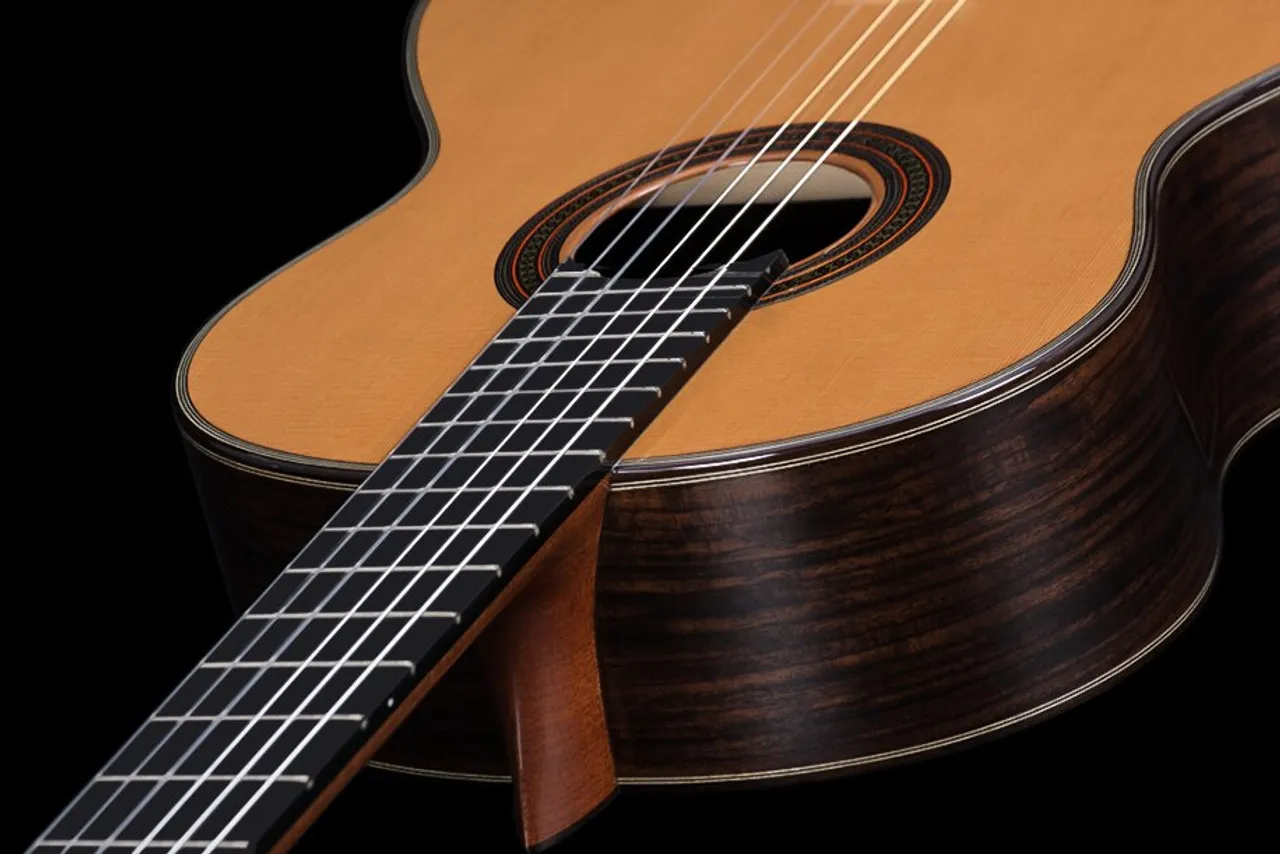
Classical guitars generally have wider necks than steel-string acoustics. That extra space gives the fretting hand room to place individual fingers clearly, which matters when you are playing chords, arpeggios, scales, and independent voices.
But wider does not automatically mean better for everyone.
Does your thumb settle comfortably behind the neck? Can your fingers reach their positions without unnecessary tension?
That is the real question.
If you normally play steel-string guitars, the neck may feel surprisingly different at first. Give your hand a moment. Do not judge it from the first few seconds.
Now Play One Note
Not a chord.
Just one note.
Listen to what happens after your finger releases the string.
A well-made classical guitar can reveal a surprising amount through a single note. You may notice the attack first, followed by the way the sound continues and fades.
Try the same note in a few places.
Does the response feel even? Does one note speak quickly while another seems quieter or slower to respond?
These small details are often more useful than simply asking whether the guitar sounds “good.”
Listen for More Than Volume
This is where choosing among guitars becomes interesting.
A classical guitar is not simply about how loud it can become. Players often listen for tone, balance, projection, sustain, articulation, and response.
Try a simple arpeggio.
Then play a melody.
Then something you already know well.
Why?
Because your own music tells you more than a random test piece ever will.
The guitar should let you hear what your fingers are trying to say.
Look Closely at the Details
Once your ears and hands are engaged, your eyes may start wandering over the instrument.
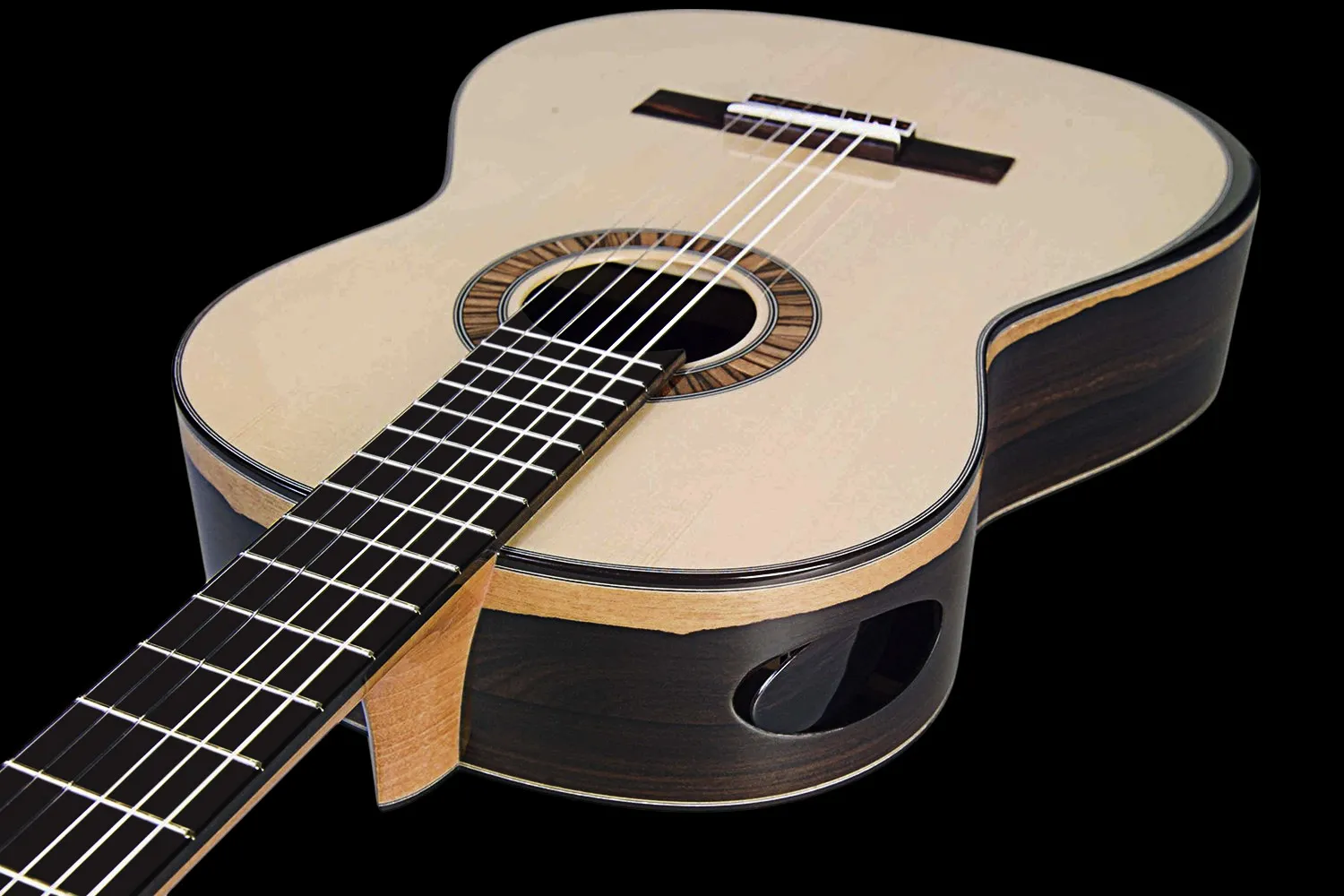
You might notice the finish, rosette, bridge, fingerboard, tuners, and the way the neck joins the body.
That is part of the pleasure of exploring Kremona guitars.
And if you are comparing them with individual luthier guitars, remember that these instruments can represent different approaches to construction and design. One is not automatically right for every player.
So, What Do You Notice First?
Perhaps it is the neck.
Perhaps it is the way the body rests against your leg.
Maybe it is one clear note that suddenly seems to hang in the room a little longer than expected.
And sometimes, it is simply that quiet feeling of “This feels natural.”
That is worth paying attention to.
The first impression of a classical guitar is not just about appearance. It is the beginning of a conversation between your hands, your ears, your playing habits, and the instrument itself.

























Sign in to leave a comment.