

There is a moment during a first scuba dive when the world suddenly feels different. The noise of the beach fades, movement becomes slower, and a completely new environment appears before your eyes.
For many travellers, that first glimpse of the underwater world becomes more memorable than the photographs they take during their holiday.
The Andaman Islands offer opportunities to experience this fascinating side of nature. With coral reefs, tropical marine life, and beautiful island surroundings, scuba diving in Andaman has become a popular activity among travellers looking for something beyond traditional beach sightseeing.
But what makes the experience so special? And what should someone expect when exploring the ocean for the first time?
Let's discover what an underwater adventure around Havelock Island can offer.
1. A Different Perspective on an Island Holiday
Most Andaman itineraries focus on beaches, island hopping, sunset viewpoints, and sightseeing.
These experiences are enjoyable, but scuba diving introduces travellers to a world that is largely invisible from the surface.
Underwater, natural structures become habitats for fascinating marine organisms. Small fish move between coral formations, while sunlight creates changing patterns across the seabed.
The experience is not necessarily about speed, physical strength, or extreme adventure.
Instead, scuba diving encourages patience and observation.
A few minutes spent watching the behaviour of reef fish can reveal details that are easy to miss during ordinary sightseeing.
2. What Happens During Your First Scuba Diving Experience?
First-time participants often wonder what their diving session will involve.
Although individual programs vary, an introductory scuba experience generally begins with registration, eligibility checks, and a briefing from the diving team.
Participants learn about basic equipment, underwater hand signals, and important safety procedures.
Before the main dive, the instructor introduces essential skills and checks whether the participant feels comfortable continuing.
Once underwater, movement is usually slow and controlled.
Some people initially concentrate on breathing through the equipment. As they become more comfortable, they may begin noticing fish, coral formations, and their surroundings.
Every participant adapts differently. There is no need to compete with another diver or rush through the experience.
3. Why Havelock Island Appeals to Different Types of Travellers
Havelock Island, officially Swaraj Dweep, combines natural beauty with opportunities for guided underwater exploration.
One of the advantages of scuba diving in Havelock is the variety of experiences available.
Beginners may choose supervised introductory programs, while certified divers can explore sites appropriate to their qualifications.
Shore diving typically begins with a beach entry. Boat diving involves travelling to an offshore location before entering the water.
Neither experience is automatically better.
The ideal option depends on the participant's comfort, program eligibility, personal interests, and the day's sea conditions.
Havelock also makes it possible to combine diving with a relaxed holiday rather than planning an entire trip around adventure activities.
4. Scuba Diving and Snorkelling: Two Different Ways to Explore
Travellers sometimes wonder whether they should try scuba diving or snorkelling.
Both activities provide opportunities to observe marine environments, but the experiences are different.
Snorkelling generally involves floating at the surface while observing what lies beneath.
Scuba diving uses specialised breathing equipment, allowing participants to remain underwater within their training and program limits.
Snorkelling may appeal to those who prefer a surface-based activity, while scuba offers a more immersive experience.
Neither requires travellers to disturb marine life.
The right choice depends on individual preferences, swimming ability, health considerations, and the requirements of the selected activity.
5. The Small Marine Encounters That Make Diving Special
Underwater adventures are often promoted using photographs of large marine animals.
In reality, smaller encounters can be equally fascinating.
Around suitable Andaman reef habitats, divers may observe anemonefish, butterflyfish, angelfish, and other colourful species.
Some fish remain close to protective coral structures, while others move through open areas in groups.
Paying attention to these details can make an ordinary-looking reef surprisingly interesting.
Marine life is unpredictable, and no operator can guarantee sightings of particular animals.
Rather than expecting a specific photograph or encounter, approach each dive with curiosity.
6. Can Couples and Groups Enjoy Diving Together?
Scuba diving can be a memorable activity for couples, friends, and families travelling to the Andaman Islands.
However, people travelling together may have different abilities or comfort levels.
One person may prefer a beginner shore dive, while another might already hold a diving certification.
A suitable operator can explain which programs are available to each participant and whether shared scheduling is possible.
Couples should also understand that being booked for the same session does not necessarily mean they will remain together underwater.
Individual supervision and safety requirements always take priority.
The goal is to create a positive experience for everyone without pressuring hesitant participants.
7. Why Responsible Diving Makes the Experience Better
Coral reefs are living ecosystems rather than decorative underwater landscapes.
Their complex structures provide shelter and food sources for many marine species.
Responsible divers appreciate these environments without disturbing them.
Avoid touching coral, collecting shells, chasing fish, or interfering with animals.
Follow the instructor's guidance to maintain a safe distance from the reef.
Photography should never become more important than environmental protection.
These small actions help visitors experience the underwater world while reducing unnecessary disturbance to marine habitats.
8. Take Home More Than Underwater Photographs
Underwater photographs can be wonderful souvenirs, but the experience itself offers something photographs cannot fully capture.
For a beginner, successfully completing a supervised dive may bring a sense of personal achievement.
For someone interested in marine biology, observing a living reef can encourage further learning.
Other travellers may simply enjoy the unusual feeling of moving through a quiet underwater environment.
Many people return from their first dive with new questions about ocean life, conservation, and opportunities to learn scuba diving.
That curiosity is part of what makes the activity memorable.
Frequently Asked Questions
Is scuba diving in Andaman worth trying for beginners?
Yes, it can be a rewarding experience for eligible beginners who are interested in underwater exploration and comfortable participating under professional supervision.
Which is better for first-time visitors: shore diving or boat diving?
Both can be suitable. Shore diving involves entering from the beach, while boat diving reaches offshore locations. The appropriate choice depends on the program and individual circumstances.
Can non-swimmers experience scuba diving in Havelock?
Certain supervised introductory programs accept non-swimmers, provided they meet the applicable medical, safety, and participation requirements.
What marine life can visitors see during a dive?
Depending on the location and conditions, divers may encounter tropical reef fish, corals, and other marine organisms. Sightings are never guaranteed.
Do I receive a diving certification after an introductory dive?
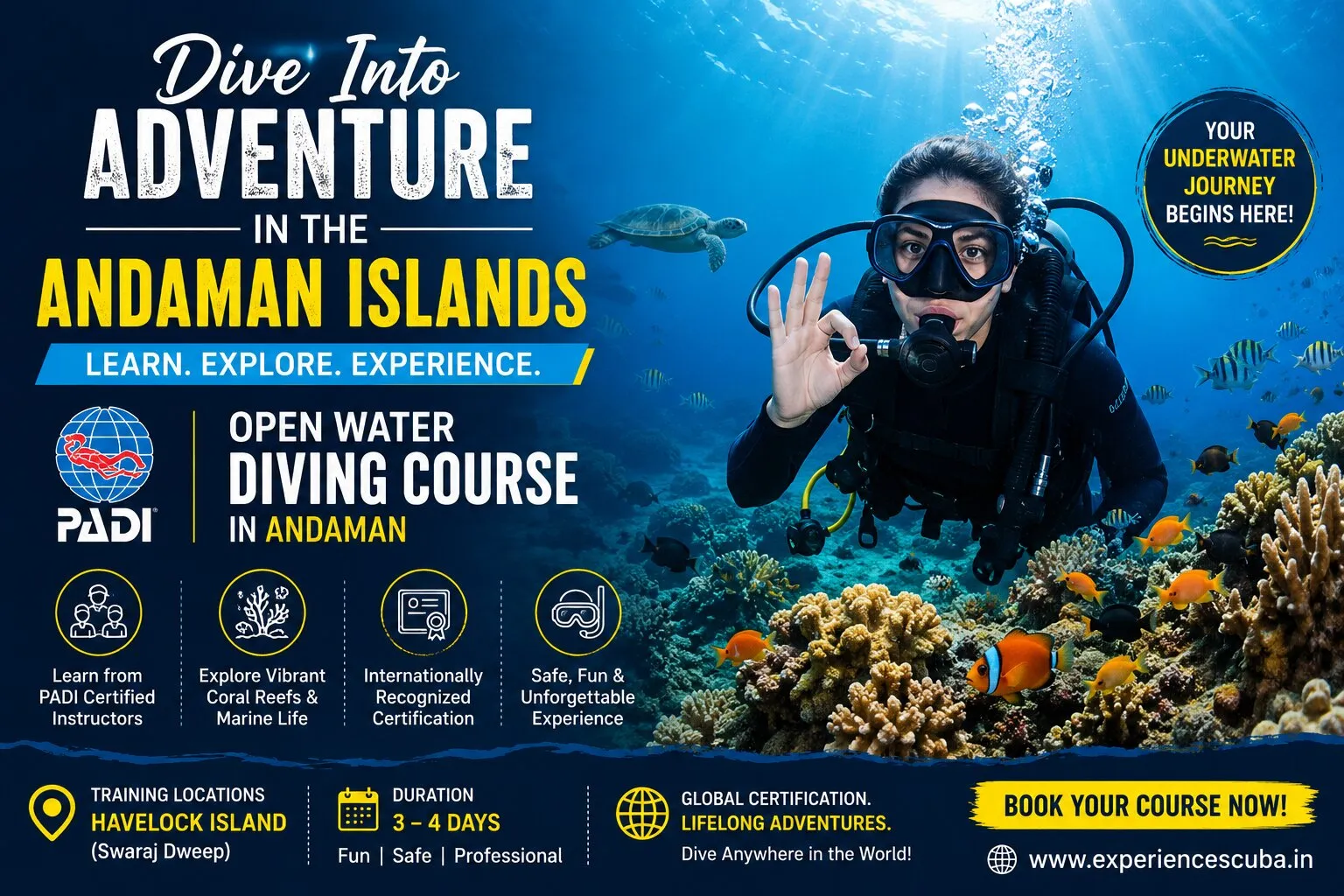
An introductory experience does not provide the same qualification as completing a recognised scuba certification course, such as PADI Open Water Diver.
Where can I learn more about diving programs in Havelock?
Experience Scuba is a PADI 5-Star Dive Centre based in Vijaynagar, Havelock Island, offering introductory experiences, diving packages, and professional scuba training courses.
Final Thoughts
A visit to the Andaman Islands can be filled with beaches, island scenery, and unforgettable coastal experiences.
Scuba diving introduces something different: an opportunity to observe the fascinating environment beneath the waves.
Whether you are curious about your first underwater experience or considering diving as a new recreational interest, Havelock Island offers several options worth exploring.
Choose a program that matches your abilities, follow professional guidance, and respect the marine environment.
Sometimes, the most memorable part of an island holiday is not what you see from the beach, but what you discover beneath the surface.



















Sign in to leave a comment.