Your Skin Isn't Difficult. It's Just Sensitive. Here's What That Means

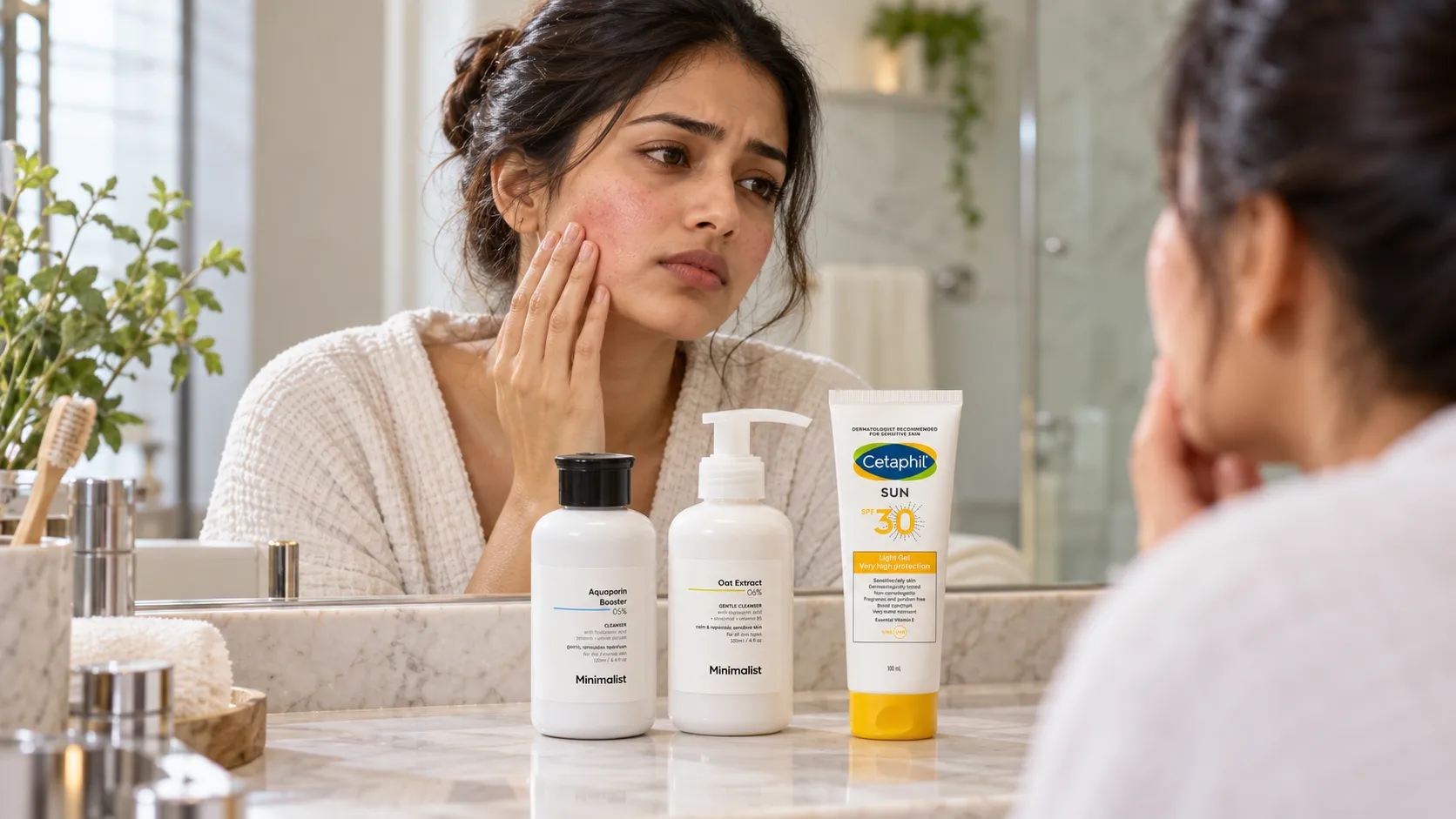
You try a new product and your face turns red within the hour. You switch cleansers and suddenly you're dealing with dry patches and tightness. You eat something slightly off and your skin flares up the next morning. If any of this sounds familiar, you probably have sensitive skin, and you've likely also been given advice that made things worse, not better.
Here's what's actually going on, and what a sensible routine looks like when your skin reacts to almost everything.
What Sensitive Skin Actually Is
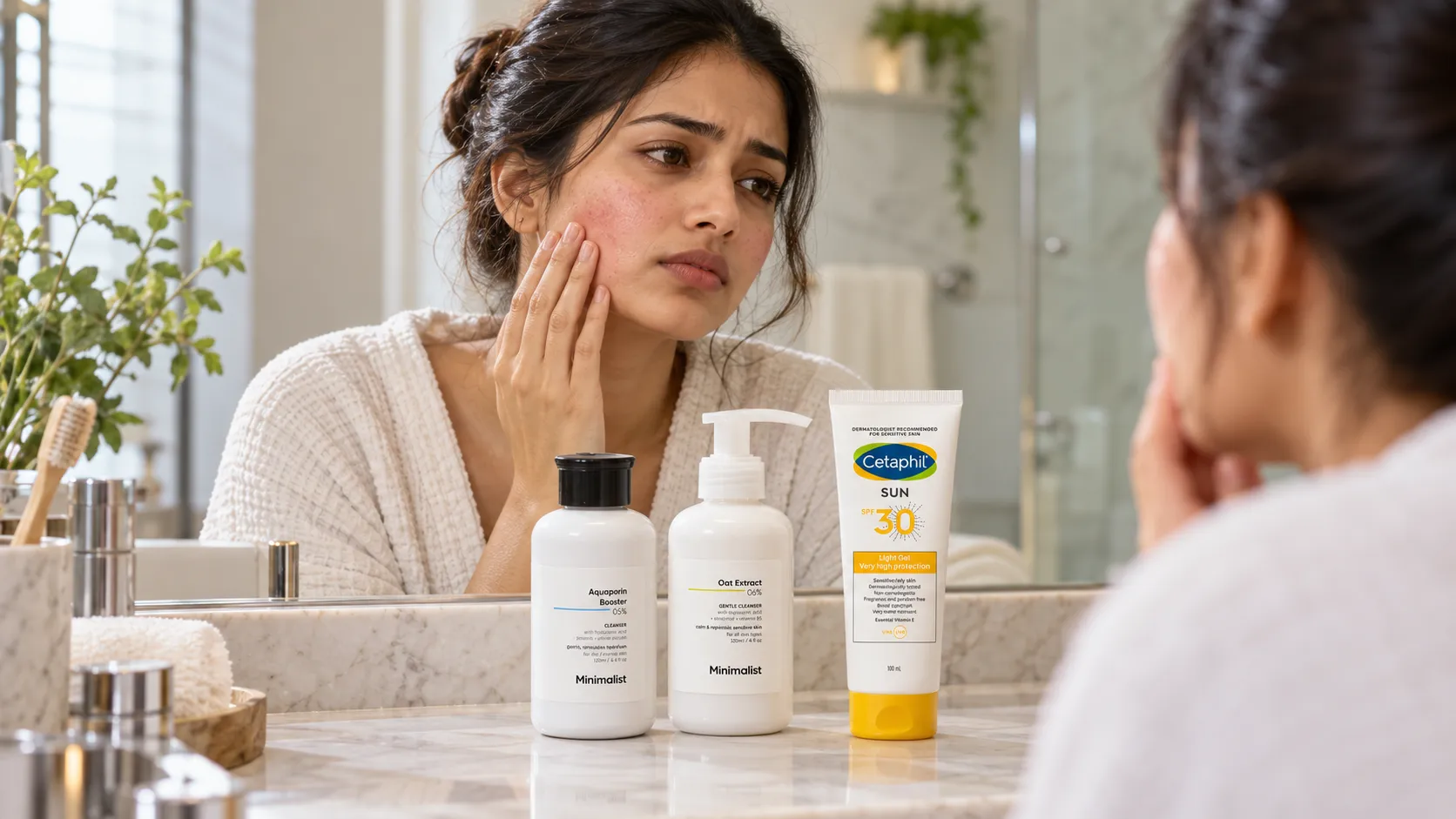
Sensitive skin isn't a diagnosis. It's a description of how your skin behaves: it reacts more easily than average to products, weather, stress, and other triggers. The underlying reason is usually a weakened skin barrier, the outermost layer of skin that keeps irritants out and moisture in.
When that barrier is compromised, things that wouldn't bother most people get through. Fragrances, sulfates, alcohol, even changes in temperature can set off redness, tightness, itching, or breakouts. The skin isn't being dramatic. It's genuinely struggling to protect itself.
This also means that sensitive skin isn't necessarily a permanent condition. For many people, once the barrier is repaired and the right routine is in place, the reactivity reduces significantly.
Common Triggers You Might Not Have Thought About
Most people know to avoid strong fragrances and harsh scrubs. But there are less obvious triggers that are worth knowing:
- Over-cleansing strips the natural oils that protect your barrier. Using a face wash more than twice a day, or choosing one with sulfates, is a common culprit.
- Hot water opens pores and pulls moisture out faster than lukewarm water. Always wash your face with water that's cool to lukewarm.
- Layering too many actives at once, like acids and retinol in the same routine, can overwhelm reactive skin.
- Skipping SPF leaves skin exposed to UV damage, which weakens the barrier over time and makes sensitivity worse.
- Stress and poor sleep both affect cortisol levels, which directly impacts how your skin behaves.
In India, climate plays a big role too. Humidity in monsoon season, dry winter air, and intense summer sun all put the barrier under pressure. A routine that works in one season often needs adjusting in another.
Building a Routine That Doesn't Backfire
Cleansing
Start with a gentle face wash for sensitive skin, one that is fragrance-free, sulfate-free, and has a pH close to your skin's natural level. Gel-based washes can be drying; cream or milk cleansers tend to work better. The best face wash for sensitive skin cleans without stripping, your skin should feel comfortable after, not tight.
Toning
A toner for sensitive skin should be alcohol-free. Look for ingredients like centella asiatica, panthenol, or rose water, things that calm rather than stimulate. Avoid anything with a strong astringent effect, it will remove moisture and make your barrier work harder.
Serum
A serum for sensitive skin should focus on barrier repair and calming. Niacinamide at low concentrations (around 5%), centella, and ceramides are all good options. The best serum for sensitive skin is usually unfussy. It does one job well rather than trying to target five concerns at once.
Moisturising
A moisturizer for sensitive skin needs to do two things: hydrate and seal. Ingredients like glycerin and hyaluronic acid draw water in. Ceramides and shea butter lock it there. The best moisturizer for sensitive skin is typically fragrance-free, non-comedogenic, and doesn't contain essential oils, which are a common but underestimated trigger.
Sun Protection
A mineral sunscreen for sensitive skin with zinc oxide or titanium dioxide sits on the surface of the skin rather than being absorbed, making it far less likely to cause a reaction. Chemical sunscreens can be effective but are more likely to irritate reactive skin. SPF 30 minimum, every single day, indoors and out.
What to Avoid in Your Products
Reading labels is a skill worth developing when you have reactive skin. Here's a short list of ingredients that commonly cause problems:
- Fragrance (listed as 'parfum' or 'fragrance') - the most common trigger in skincare.
- Alcohol denat. (denatured alcohol) - drying and barrier-disrupting.
- Essential oils like lavender, peppermint, and eucalyptus - naturally derived but highly irritating for many.
- SLS and SLES (sodium lauryl/laureth sulfate) - foaming agents that strip the skin barrier.
- High concentrations of exfoliating acids - useful for most skin types but too aggressive for reactive skin without careful introduction.
How Long Does It Take to Calm Down
If you've been using products that were damaging your barrier, the first step is to strip the routine back to basics. Gentle cleanser, a simple sensitive skin moisturizer, and SPF. Nothing else for two to four weeks.
Once the skin has had time to recover, you can slowly reintroduce one product at a time. Patch test everything on your inner arm first, wait 24 to 48 hours, and only then apply to your face. Introducing one new product per week makes it easy to identify what's causing a reaction if one appears.
If you're looking for products formulated with sensitive and reactive skin in mind, the sensitive skin and barrier repair collection at Zivanyaa brings together cleansers, serums, and moisturisers chosen for their gentle, barrier-supporting formulas. For a wider look at what's available, the full skincare face Products is worth exploring too.
Key Takeaways
- Sensitive skin is usually caused by a weakened skin barrier, not permanent skin type.
- Common triggers include fragrance, sulfates, over-cleansing, hot water, and UV exposure.
- Use a gentle, fragrance-free face wash for sensitive skin twice a day, never more.
- A calming toner for sensitive skin should be alcohol-free and contain soothing actives like centella or panthenol.
- The best serum for sensitive skin focuses on barrier repair, not multi-tasking active blends.
- Choose a moisturizer for sensitive skin with ceramides and glycerin. Avoid essential oils and fragrance.
- Mineral sunscreen for sensitive skin with zinc oxide is less likely to cause a reaction than chemical SPF.
- When the skin is flaring, strip back to three basics and rebuild slowly, one product per week.




Sign in to leave a comment.