

Zero Liquid Discharge, Waste Heat Recovery, and BioCarbon are three important technologies helping industries move towards a more sustainable future. Instead of treating wastewater, unused heat, and organic waste as problems to manage, manufacturers can turn them into valuable resources. When these solutions work together, they can reduce waste, improve resource efficiency, and support the development of a truly circular industrial plant.
Traditional manufacturing often follows a linear approach: raw materials enter the plant, products are manufactured, and waste leaves the facility. A circular industrial model works differently. It focuses on recovering water, reusing energy, and finding productive uses for waste wherever technically and economically possible.
What Is a Circular Industrial Plant?
A circular industrial plant is designed to make better use of the resources it consumes. Water is recovered and reused, excess heat supports other processes, and suitable organic residues can be converted into useful materials.
This approach is not just about environmental responsibility. It can also help businesses manage operating costs, reduce dependence on fresh resources, and improve their long-term production efficiency.
The key is to connect different processes so that the output or waste from one operation can become a useful input for another.
1. Zero Liquid Discharge: Recovering Water from Industrial Wastewater
Water is essential in industries such as textiles, pharmaceuticals, chemicals, food processing, and manufacturing. However, many industrial processes generate wastewater containing dissolved salts, chemicals, and other contaminants.
Zero Liquid Discharge (ZLD) is a wastewater management approach designed to recover reusable water while minimizing or eliminating liquid waste discharge from the treatment process.
Depending on the wastewater characteristics, a ZLD system may combine several treatment stages, including filtration, membrane treatment, evaporation, and crystallization.
The recovered water can be reused for suitable applications, such as process operations, equipment washing, or cooling systems, depending on its quality. Concentrated residues and salts require appropriate handling and disposal or recovery.
For industries operating in water-stressed areas, ZLD can help reduce freshwater demand and improve water management. However, system design must consider energy consumption, wastewater composition, recovery targets, and operating costs.
By treating wastewater as a potential resource, manufacturers can move closer to a closed-loop water system.
2. Waste Heat Recovery: Making Better Use of Energy
Industrial furnaces, boilers, dryers, kilns, and heating systems often release hot exhaust gases or other forms of unused thermal energy. When this heat escapes without being recovered, the plant loses energy that may still have practical value.
Waste heat recovery captures some of this unused energy and redirects it to useful applications.
Depending on the temperature and process requirements, recovered heat can be used to preheat incoming air, heat process water, generate steam, or support other thermal operations.
For example, a manufacturing plant may use recovered heat from an exhaust stream to preheat air entering a dryer. This reduces the additional energy needed to reach the required operating temperature.
The benefits can include lower fuel consumption, improved thermal efficiency, and reduced energy-related emissions.
The best results depend on matching the available heat source with a suitable heat demand. Temperature, operating hours, equipment compatibility, and maintenance requirements should all be considered before selecting a system.
Waste heat recovery helps industries extract more value from the energy they already purchase.
3. BioCarbon: Turning Biomass into a Valuable Resource
Agricultural residues, wood waste, and other suitable biomass materials can offer opportunities for resource recovery. Instead of sending all such material for disposal, industries may be able to process it into useful carbon-rich products.
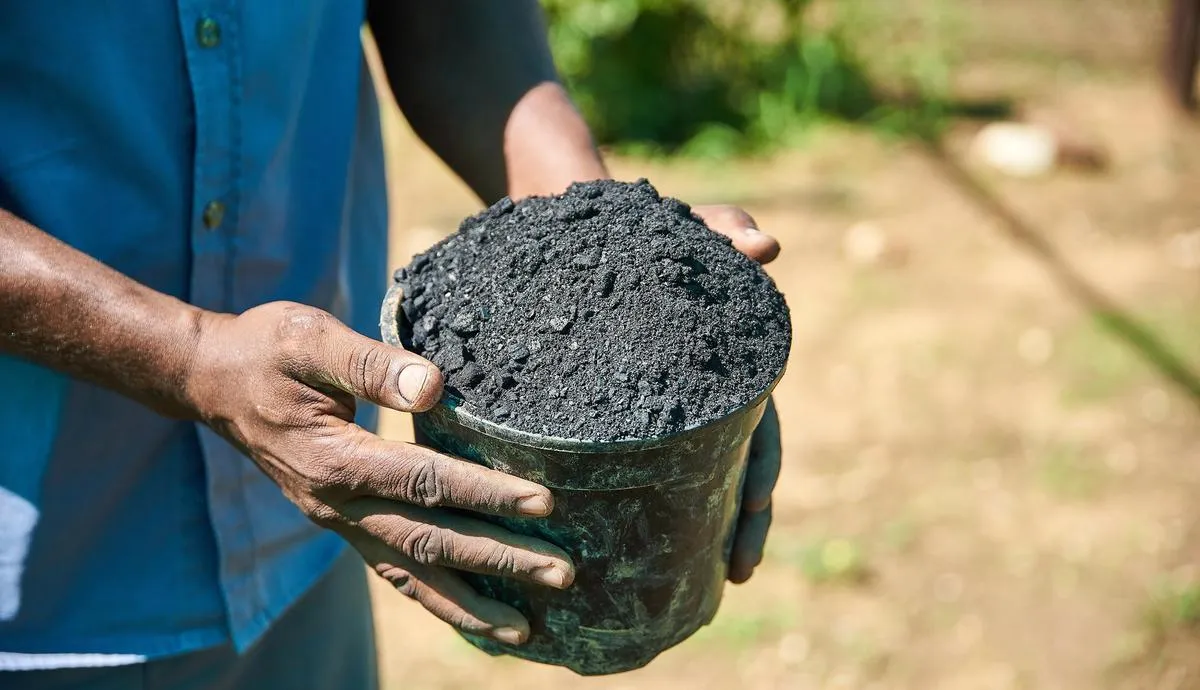
One important option is biochar, a carbon-rich material commonly produced by heating biomass under limited-oxygen conditions. The resulting material can have applications in soil improvement, selected filtration processes, and other uses depending on its properties and quality.
BioCarbon production can also support better biomass management by creating a useful output from selected organic residues.
However, the feedstock must be suitable, and the production process must be properly controlled. Moisture content, processing temperature, emissions management, product quality, and the intended application all affect the final outcome.
For industrial facilities with access to suitable biomass, biochar production may create an additional resource-recovery opportunity.
To explore related technologies, see Kerone's biochar and sustainable processing solutions.
How These Three Technologies Work Together
The real opportunity comes from integrating water recovery, energy efficiency, and biomass conversion into one resource-management strategy.
Consider a plant that uses water for production, consumes fuel for heating, and generates organic residues.
- A ZLD system can recover water from suitable wastewater streams for reuse.
- A waste heat recovery system can capture energy from hot exhaust gases and supply useful heat to other operations.
- A BioCarbon production line can convert suitable biomass residues into carbon-rich products.

When these systems are planned together, the plant can identify opportunities to reduce waste across multiple operations rather than solving each problem separately.
For example, recovered heat may support another process that requires thermal energy, while treated water may serve an application with suitable quality requirements. Such integration must be confirmed through process calculations and a detailed assessment of the actual plant.
The goal is to build a system where resources circulate more efficiently, without compromising product quality, plant safety, or environmental compliance.
Key Considerations Before Implementation
Every industrial facility has different operating conditions. Before investing in these technologies, businesses should evaluate:
- Water balance: How much wastewater is generated, and how much water can realistically be recovered?
- Heat availability: What temperatures, flow rates, and operating hours are available for heat recovery?
- Biomass quality: Are the available residues suitable for BioCarbon production?
- Operating costs: What energy, maintenance, treatment chemicals, and replacement parts will be required?
- System integration: Can the equipment work with existing production processes and future expansion plans?
A detailed feasibility study helps identify the right combination of technologies and avoid investing in equipment that does not match the plant's actual needs.
Building a More Sustainable Industrial Future with Kerone
Creating a circular industrial plant requires more than installing individual pieces of equipment. It requires a practical engineering approach that considers water treatment, energy use, material recovery, and the demands of daily production.
Kerone's Environmental & Green Solutions cover technologies such as ZLD systems, waste heat recovery, effluent treatment, pollution control, and resource recovery. These solutions can help industries evaluate ways to improve resource efficiency while meeting their operational and environmental requirements.
The right system depends on the industry, the available resources, and the desired results. With proper planning and integration, manufacturers can take meaningful steps towards reducing waste and making better use of water, energy, and materials.
Conclusion
A truly circular industrial plant does not view every waste stream as something to discard. It looks for practical ways to recover water, reuse energy, and convert suitable residues into valuable resources.
Zero Liquid Discharge, Waste Heat Recovery, and BioCarbon each address a different part of this challenge. When combined through careful engineering, they can help industries improve resource efficiency, manage operating costs, and move towards more sustainable manufacturing.
The future of industrial production will depend not only on how much a plant produces, but also on how intelligently it uses the resources behind every product.



















Sign in to leave a comment.