




ntellectual property protection plays a decisive role in business sustainability. Brands, inventions, designs, and proprietary knowledge often represent a company’s most valuable assets. When protection is weak or poorly managed, these assets become vulnerable.
Many businesses underestimate intellectual property risks during early growth stages. Others assume protection can wait until scale is achieved. This approach exposes organisations to serious commercial threats that extend far beyond legal disputes.
Understanding the business risks associated with weak intellectual property protection helps companies make informed decisions and safeguard long term growth.
Why Intellectual Property Protection Matters
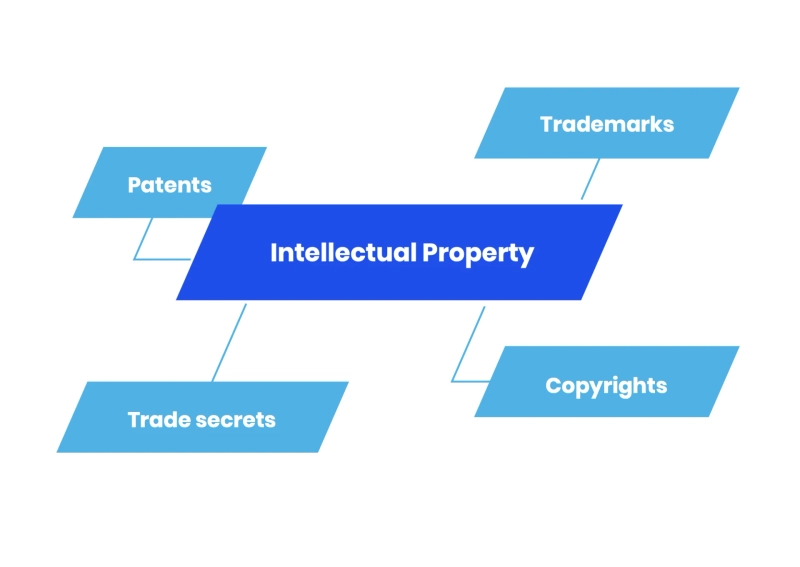
Intellectual property protection secures exclusive rights over creations and innovations. Trademarks distinguish brands. Copyright protects creative expression. Patents safeguard technical advances. Trade secrets preserve confidential know how.
Strong protection supports differentiation and market confidence. Weak protection invites imitation and dispute. Once exclusivity erodes, competitive advantage declines rapidly.
For growth driven businesses, intellectual property is not merely a legal formality. It is a strategic asset.
Loss of Competitive Advantage
One of the most immediate risks of weak protection is loss of competitive advantage.
Without enforceable rights, competitors can replicate products, branding, or technology with minimal consequence. Price undercutting follows, often accompanied by quality dilution.
Original creators bear development costs while imitators benefit without investment. This imbalance discourages innovation and slows growth.
Effective protection creates barriers to entry and preserves market position.
Brand Dilution and Consumer Confusion
Brand value depends on distinctiveness and trust. Weak trademark protection undermines both.
Unauthorised use of similar marks confuses consumers. Counterfeit or low quality goods damage brand reputation.
Once confusion spreads, restoring brand clarity becomes difficult. Marketing costs rise while customer loyalty weakens.
Businesses often seek remedial support from an IP Protection Law firm in Delhi after dilution has already occurred. Preventive action remains far more effective.
Increased Risk of Legal Disputes
Weak protection often leads to disputes rather than preventing them.
Unregistered or poorly documented rights are harder to enforce. Disagreements over ownership, scope, or usage escalate into litigation.
Defending weak rights consumes time and resources with uncertain outcomes. Courts assess evidence and conduct rather than relying on clear registrations.
Strong protection simplifies enforcement and reduces dispute risk.
Barriers to Market Expansion
Expansion into new markets magnifies intellectual property risks.
A brand protected in one jurisdiction may face challenges elsewhere. Without prior registration, local entities may claim rights or block entry.
Product launches may be delayed or cancelled due to conflicts. Rebranding becomes necessary under pressure.
Strategic registration aligned with expansion plans protects growth momentum.
Impact on Investment and Valuation
Investors scrutinise intellectual property during due diligence.
Weak protection raises red flags. Unregistered rights, pending disputes, or unclear ownership reduce valuation.
Deals may stall or collapse due to unresolved IP risks. Even when transactions proceed, negotiating power weakens.
Strong portfolios signal maturity, foresight, and reduced risk.
Exposure to Infringement Claims
Weak protection also increases vulnerability to infringement claims.
Businesses operating without clearance may unknowingly infringe third party rights. Lack of internal controls compounds the risk.
Once claims arise, options narrow. Injunctions, damages, and settlements disrupt operations.
Preventive searches and structured compliance reduce exposure.
Loss of Revenue Opportunities
Intellectual property generates revenue through licensing, partnerships, and franchising.
Weak protection limits these opportunities. Licensees seek certainty and enforceable rights.
Without clear ownership and scope, monetisation suffers. Potential partners hesitate to engage.
Protecting IP expands revenue channels and commercial flexibility.
Operational and Strategic Disruption
IP disputes and imitation disrupt daily operations.
Management attention shifts from growth to damage control. Product roadmaps change under pressure.
Uncertainty affects employee morale and stakeholder confidence. Strategic focus weakens.
Strong protection allows leadership to concentrate on expansion rather than defence.
Digital and Technology Vulnerabilities
Digital assets face unique IP risks.
Software, data, and online content are easily copied. Without proper safeguards, proprietary technology leaks.
Open source misuse and unclear licences increase exposure.
Digital growth without IP protection accelerates risk accumulation.
Regulatory and Compliance Risks
Regulators increasingly monitor intellectual property practices.
Misleading claims of ownership, improper licensing, and false branding attract penalties.
Consumer protection laws intersect with IP issues, increasing liability.
Weak protection can trigger regulatory action alongside civil disputes.
Cost of Reactive Protection
Reactive protection costs more than prevention.
Litigation, rebranding, settlements, and lost opportunities impose heavy burdens.
Preventive measures cost less and provide clarity.
Many organisations realise this only after consulting a Best Trademark Law Firm and Lawyers in Delhi during enforcement or crisis management.
Building Strong Intellectual Property Protection
Effective protection requires planning and consistency.
Businesses should identify core assets and prioritise protection. Registrations must reflect current and future markets.
Contracts should clarify ownership and use. Monitoring systems detect infringement early.
Leadership commitment ensures IP remains integral to strategy.
Conclusion
Weak intellectual property protection exposes businesses to imitation, disputes, and lost value. These risks intensify as organisations grow and enter competitive markets.
Strong protection preserves exclusivity, supports expansion, and enhances valuation. It reduces uncertainty and builds stakeholder confidence.
In an economy driven by ideas and innovation, intellectual property protection underpins sustainable success. Businesses that invest early in protection secure not only legal rights but long term growth and resilience.