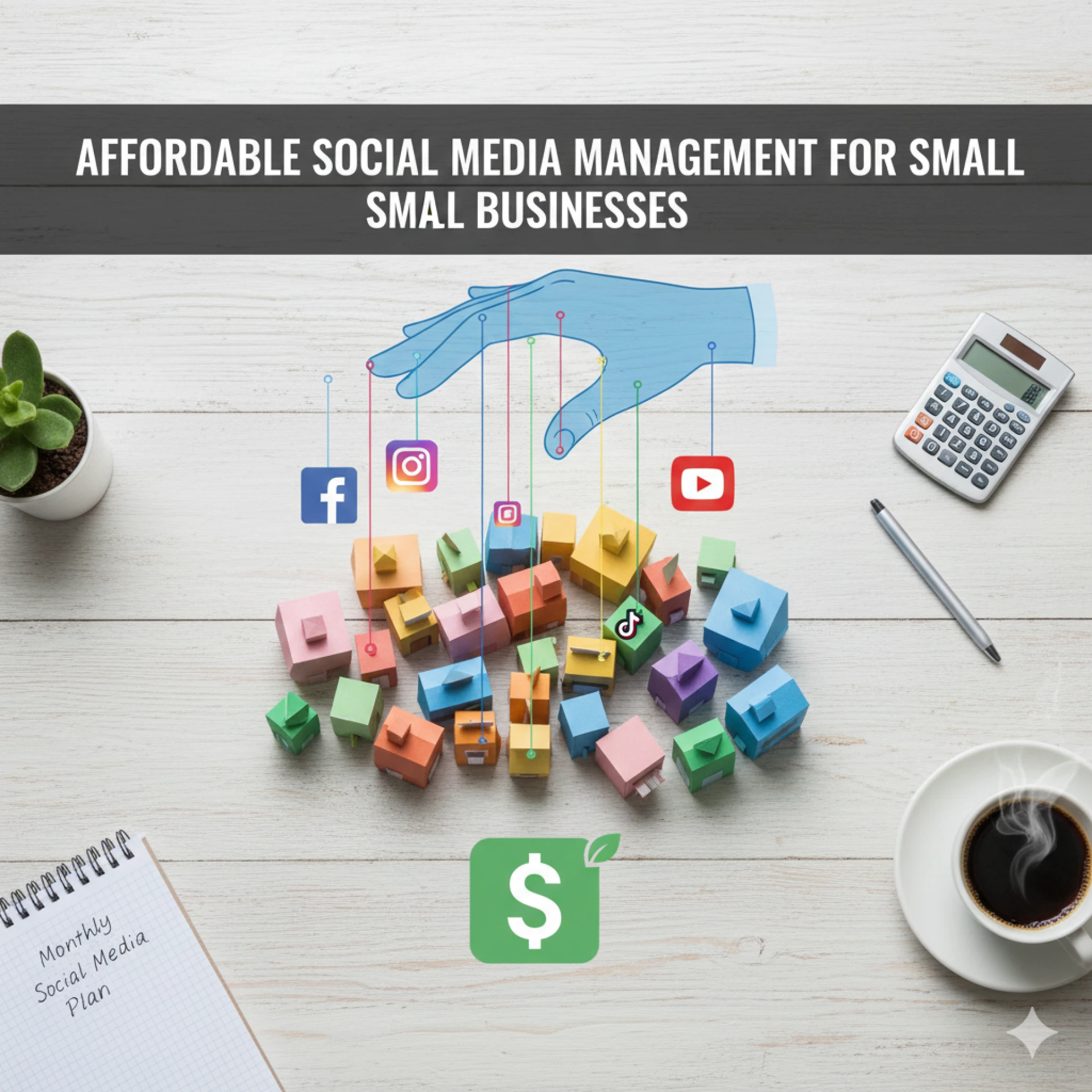

Small business owners often find social media difficult to manage alongside daily work. Between handling customers, running operations, managing staff, and planning growth, social media can easily fall to the bottom of the priority list. Many businesses know they should be active online, but they struggle to maintain consistency without dedicated time or expertise.
At the same time, spending heavily on marketing is not always realistic for small teams or growing businesses. Large agencies and high monthly retainers can feel out of reach, leaving many businesses trying to handle social media on their own with mixed results.
Affordable social media management helps businesses stay active online without adding stress to their budget or schedule, while steadily improving their online presence. It focuses on practical planning, clear goals, and simple execution rather than complex or trend driven strategies. When managed properly, social media becomes easier to maintain, more predictable, and more effective over time.
This article explains what affordable social media management really means, what services are typically included, how pricing is structured, and how small businesses can make smart decisions without overspending. Let us begin by understanding what affordability truly looks like in this context.
Why Social Media Feels Hard to Manage for Small Businesses
Many small businesses struggle with social media because it requires ongoing attention. Posting once in a while rarely delivers results, yet staying consistent can feel difficult without a clear plan.
Common challenges include limited time, lack of content ideas, and uncertainty about what works. Platform updates and changing trends can also make social media feel confusing. As a result, posting becomes irregular and engagement stays low.
Without structure, social media can start to feel like wasted effort instead of a useful business tool. This is where affordable social media management adds clarity by turning scattered efforts into a steady routine. Understanding the services involved helps explain how this works in practice.
Key Services in Affordable Social Media Management
Affordable social media management works best when it focuses on the core activities that actually move a small business forward. Instead of doing everything at once, it concentrates on a few essential services that bring structure, clarity, and consistency. These services form the heart of social media management and are designed to support steady growth without unnecessary complexity.
Together, these elements help small businesses stay visible, communicate clearly, and understand what is working over time.
Content Planning and Strategy
Content planning is the foundation of affordable social media management. Without a plan, posting often becomes random and inconsistent, which leads to low engagement and wasted effort. A clear strategy gives direction and makes social media easier to manage.
This stage usually starts with understanding the business goals and the type of audience the brand wants to reach. From there, a simple monthly content plan is created so posting feels organised rather than rushed.
Content planning often includes:
- Monthly or weekly content calendars
- Clear themes such as education, promotion, and brand awareness
- Posting schedules that match the business workload
When content is planned in advance, businesses save time and avoid last minute posting. This structure also makes it easier to maintain consistency, which is more important than posting frequently. Once planning is in place, attention naturally shifts to creating content that feels relevant and clear.
Post Creation and Basic Design
Post creation turns ideas into visible content. In affordable social media management, the focus stays on clarity and consistency rather than heavy design work. The goal is to create posts that are easy to understand and aligned with the brand tone.
This service usually involves writing captions that speak directly to the audience and using simple visuals that look clean across platforms. Content is adapted to fit platform formats so it feels natural rather than forced.
Post creation typically includes:
- Clear and audience-focused captions
- Simple branded visuals or images
- Platform-friendly layouts and formats
Consistent post creation helps businesses build recognition over time. When posts follow a familiar style and message, audiences start to trust and engage more naturally. Engagement grows further when businesses stay active in conversations.
Community Engagement and Monitoring
Community engagement focuses on interaction rather than posting alone. This service ensures that comments and messages do not go unanswered, which plays an important role in building trust.
Regular engagement shows that a business is present and responsive. Even simple replies can make audiences feel valued and more connected to the brand.
Community engagement usually includes:
- Responding to comments and direct messages
- Monitoring basic audience interactions
- Keeping conversations active and respectful
Over time, consistent engagement supports stronger relationships and improves overall visibility. To refine this process, businesses need to understand how their content is performing.
Performance Tracking and Reporting
Performance tracking helps small businesses understand whether their efforts are working. Affordable social media management keeps this process simple so results are easy to interpret.
Rather than focusing on complex data, reporting highlights key indicators such as reach, engagement, and content performance. These insights help guide future planning and content decisions.
Performance tracking often includes:
- Basic engagement and reach metrics
- Monthly performance summaries
- Practical insights for content improvement
Regular reporting removes guesswork and helps businesses improve steadily over time. With a clear understanding of services and performance, it becomes easier to see how pricing is structured and what influences overall cost.
How Social Media Management Pricing Is Usually Structured
Social media management pricing is influenced by the level of effort required rather than a fixed rate. Costs are usually based on the scope of work and the type of support needed.
Key factors include the number of platforms managed, posting frequency, content type, and reporting depth. Businesses that need fewer platforms and simple posts often fall into more affordable ranges.
This flexible structure allows small businesses to choose options that fit their budget while still maintaining consistency. To set expectations clearly, it helps to look at typical cost ranges.
Standard Cost Ranges for Affordable Social Media Management
Affordable social media management is available at different price levels depending on business needs and goals. While exact pricing varies, general cost ranges in USD help businesses plan their budgets more confidently.
Starter level services usually cost between 300 to 600 USD per month and include basic planning, a limited number of posts, and light engagement. Mid level services often range from 700 to 1,500 USD per month, adding branded visuals, higher posting frequency, and regular performance tracking.
Advanced social media management typically starts from 1,500 USD and can go beyond 3,000 USD per month, covering multiple platforms, detailed reporting, and ongoing optimisation. Many providers, including WebyKing, organise these services into predefined SMM packages to keep pricing and deliverables clear.
Understanding these cost ranges helps small businesses choose the right level of support without overspending. Knowing what influences pricing makes decision making easier and more practical.
More advanced options include multiple platforms, detailed reporting, and ongoing optimisation. Many providers, such as WebyKing, group these services into predefined SMM packages to simplify pricing and scope.
Understanding cost ranges helps small businesses choose support that aligns with their goals without overspending. Knowing what affects pricing adds further clarity.
Factors That Influence Social Media Management Costs
Social media management costs are not fixed because every business has different goals, audiences, and expectations. The final price usually depends on how much work is involved and how detailed the strategy needs to be. Below are the main factors explained in depth, with clear numbering to help you understand where your budget actually goes.
1. Number of Platforms Being Managed
Managing one social media platform is very different from managing several. Each platform has its own content style, audience behavior, and best posting times. For example, content created for Instagram cannot be reused in the same way for LinkedIn or X.
When more platforms are included, the workload increases because each one needs separate planning, posting, and performance tracking. This naturally raises social media management costs. Businesses that focus only on the platforms where their audience is most active often save money while still getting good results.
This leads directly to how often content is published on those platforms.
2. Posting Frequency Per Month
Posting frequency plays a major role in pricing. A brand that posts a few times a week needs less planning and creation than one that posts daily or multiple times a day. More posts mean more time spent on content ideas, writing captions, designing visuals, and scheduling.
Higher posting frequency usually improves visibility and engagement, but it also increases social media management costs. Finding the right balance between consistency and budget helps businesses stay active without overspending.
Once the posting frequency is decided, the next factor is the type of content being created.
3. Complexity of Content Creation
Not all content takes the same effort to produce. Simple image posts with short captions cost less than custom graphics, carousel posts, reels, or video content. Advanced content often requires scripting, editing, design skills, and sometimes even professional tools.
Brands that want high-quality visuals and storytelling should expect higher social media management costs because more creative work is involved. However, this type of content usually delivers better engagement and brand recall.
After content is published, the focus shifts to how audiences interact with it.
4. Level of Engagement Monitoring
Engagement monitoring includes replying to comments, responding to messages, handling reviews, and interacting with followers. This is an ongoing task that requires daily attention, not just scheduled work.
Basic packages may include limited responses, while advanced plans offer full community management. As the level of engagement monitoring increases, so do social media management costs. Still, active engagement helps build trust and long term relationships with followers.
To measure how well all this effort performs, reporting becomes important.
5. Type of Reporting Provided
Reporting shows what is working and what needs improvement. Basic reports may only include follower growth and post reach, while detailed reports analyze engagement rates, conversions, audience behavior, and content performance.
Advanced reporting takes more time and expertise, which affects social media management costs. However, clear insights help businesses make better decisions and avoid wasting money on ineffective strategies.
When these factors are adjusted thoughtfully, costs become easier to manage.
How Small Businesses Can Keep Social Media Management Affordable
Keeping social media management affordable starts with clarity. Businesses benefit from focusing on fewer platforms where their audience is most active.
Other practical steps include planning content, reusing content across platforms, and setting realistic goals. Avoiding unnecessary add-ons also helps keep budgets under control.
A steady and focused approach often delivers better results than trying to do too much at once. Over time, this consistency supports long term growth.
Why Consistency Matters More Than Volume on Social Media
Posting frequently does not always lead to better results. Consistency plays a more important role in building trust and visibility.
When businesses post regularly and maintain a clear message, audiences know what to expect. This strengthens brand recognition and encourages engagement over time.
Affordable social media management supports consistency by creating manageable routines that fit business capacity. This leads naturally to stronger and more reliable outcomes.
Final Thoughts
Affordable social media management makes it possible for small businesses to stay active online without stretching their budget. By focusing on planning, consistency, and clear goals, businesses can build a strong presence over time.
Choosing structured support makes decision making easier and helps businesses know exactly what to expect. With a clear and realistic approach, social media becomes a steady and manageable part of everyday business growth.




























Sign in to leave a comment.