

With an ever-changing world of healthcare, AI and digital transformation work to create a healing environment for the patient and build better system managing processes. At the heart of such dynamics are RPA the things developed to become more efficient with scheduling, billing, and releasing data. This article talks about the Top 10 things about AI and automation that transform health. Learn how development of RPA software, intelligent automation services, and top RPA software for healthcare translate into accuracy in speed and cost reduction within the industry.
1. Patient Scheduling and Registration Automation
Unlike manual scheduling, which is time consuming and error-prone, appointment booking, sending reminders, pre-verification of patient insurance, and faster filling of registration forms are some of the activities that RPA can perform in healthcare to reduce patient no-shows and lessen the burden of front office administrative staff. RPA bots are also capable of interfacing with multiple systems (EHRs, insurance databases, CRM platforms) for real-time updates and smooth patient onboarding.
2. Claims Management and Billing
Claims processing is one of the most error-prone and resource-consuming tasks in healthcare. Such errors often lead to claim denials, loss of revenue, and delays in reimbursements. Intelligent automation services turn bots into agents that extract patient data, check it against payer rules, submit claims, and follow up on denials. Paid RPA services modify bots for healthcare providers to reconcile payments and create billing reports to shorten delays and increase cash flow.
3. EHR Management
Maintenance and updating of EHRs is a very important profession but tedious. AI-based and RPA software can perform data entry, upload files, or check for regulatory compliance in multiple systems, giving fewer screen hours to healthcare professionals and more time with their patients.
Also, such intelligent RPA tools detect data anomalies, flag missing data, and make updates, thus ensuring data integrity and building better decision-making.
4. Regulatory Compliance and Audit Reports
Health care is very much an area in which compliance is emphasized. Rigorous documentation and reporting are necessary to support compliance with HIPAA, GDPR, or local statutes.
This automation ensures that all activities related to patient data and transactions are tracked, logged, and duly formatted for audit. On a higher note, the best RPA technologies muster internal compliance helpers that automatically generate reports and alert the institution of any discrepancies, thus preventing penalties.
5. Telemedicine and Virtual Care Support
The telehealth boom during COVID-19, but the management of virtual care is still a puzzle.
RPA can help in healthcare to ensure that the processes on the back end are streamlined, including patient identity verification, documentation of virtual consults, and e-prescriptions. RPA and AI help free doctors for critical cases as well by triaging simple patient cases on the basis of symptoms.
6. Lab and Diagnostic Workflow Automation
Lab-taking sample testing and reporting results-Typical processes, many of them repetitive, may occur in multiple other laboratories. These tasks are performed by such bots, alleviating the extremely mundane work with the margin of human error and reducing the time between test conductance and diagnosis.
In addition, AI can even interpret results and flag irregularities for review by pathologists to increase diagnostic speed and enhance patient care.
7. Supply Chain and Inventory Management
Hospitals rely on having medical supplies available on time. RPA bots watch inventory, generate purchase orders, and communicate with vendors automatically.
With AI integration, predictive models can forecast supply demand on the basis of previous usage records, seasonal trends, and patient inflows to minimize shortages and wastage.
8. Human Resource and Payroll Automation
Administrative activities in HR for the healthcare sector are about everything-from bringing in new employees to paying them. RPA development services offer RPA bots to automate these processes, accurately calculating salaries, processing leave requests, and updating staff records. It lessens the HR workload and helps institutions in complying with labor laws.
9. Patient Engagement and Post-Care Follow-Up
AI-driven chatbots and RPA bots are improving patient engagement by making follow-up calls with patients, sending reminders for medications, and collecting feedback. Intelligent automation services can analyze post-care data and identify high-risk patients, notifying the appropriate medical team to arrange fast intervention. This type of intervention serves to increase patient satisfaction and health outcomes.
10. Medical Research and Clinical Trials
RPA applications in healthcare allow for the automation of the extraction of data from medical journals, trial reports, and patient records, with medical research generating huge amounts of data for classification, validation, and analysis. AI then proceeds with an analysis of data, finding patterns, predicting trial results, and accelerating drug development. With this combo of AI and RPA, research is carried out in less time and is more accurate.
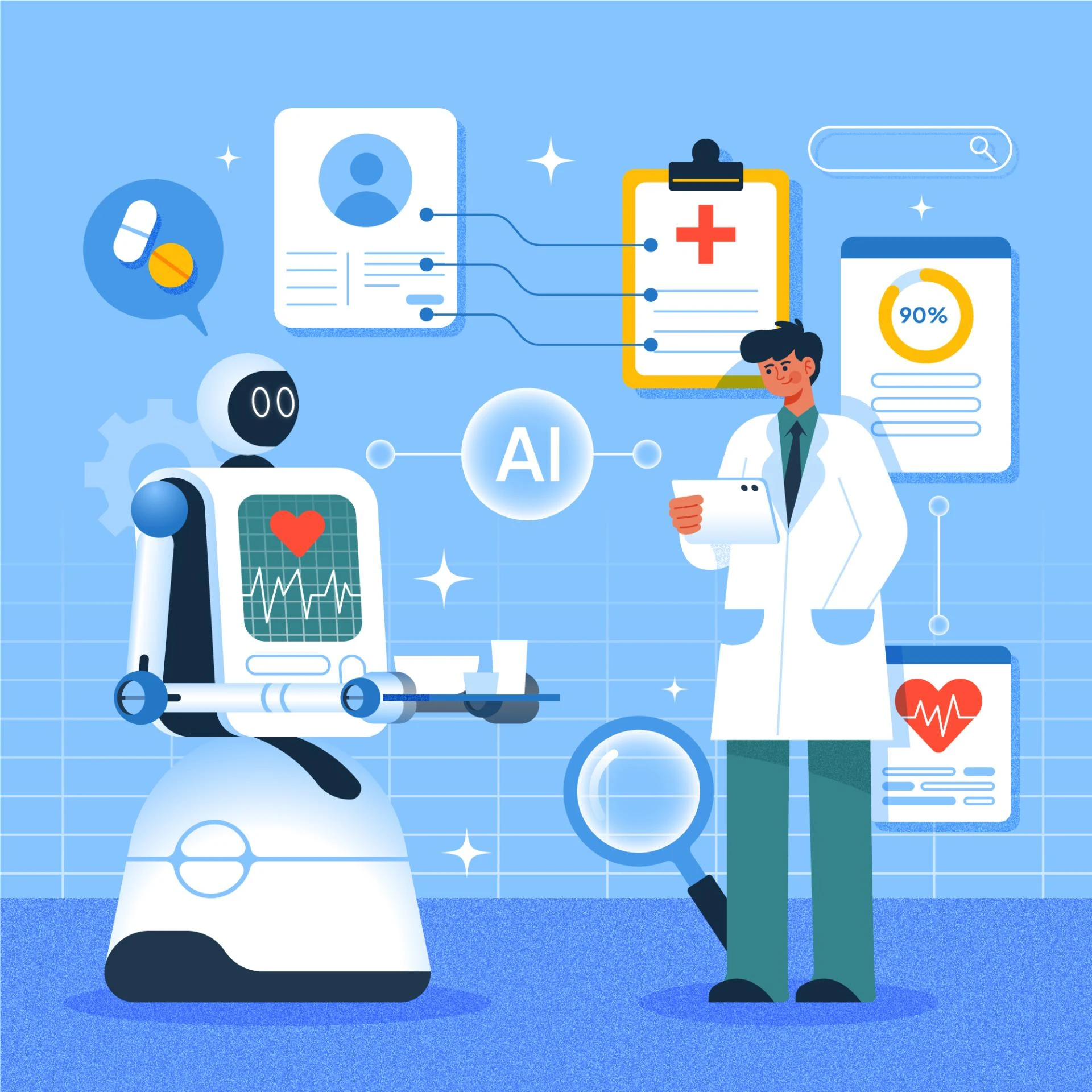
Role of RPA Development Services
When a healthcare organization wants to stay competitive, it is strategic but not optional that it pursues RPA development services. These offer custom automation solutions compliant with certain frameworks while respecting internal workflow procedures and integrations with legacy systems.
Such an RPA development company can:
- They assess opportunities for automation
- Build scalable RPA processes
- Incorporate AI within RPA processes
- Maintain, watch, and manage RPA processes
- Ensure security and privacy of data
Choosing the Best RPA Software for Healthcare
Healthcare providers must consider the following factors when selecting an automation platform:
- Compliance readiness (HIPAA, GDPR, etc.)
- Integration with EHR, CRM, and ERP systems
- Support for AI and ML to provide intelligent automation
- Ease of use and low-code development environment
- Scalability to allow for enterprise-wide adoption
Some of the top platforms for RPA software in healthcare are UiPath, Automation Anywhere, Blue Prism, and Microsoft Power Automate, each with its peculiar strengths in healthcare workflows, data security, and AI integration.
Conclusion
The future is digital, with the world of healthcare being one of the areas embracing RPA for transformation. Efficiency in operating, and among other things, patient care-were being too profuse and persuasive.
With the adoption of smart automation services and working alongside skilled RPA development providers, Danny or Mary Gage can be at the next level of light efficiency, accuracy, and patient fulfillment.
Now is the time for embracing RPA, not just as a technology, but as a strategy for sustenance and transformation.






























Sign in to leave a comment.