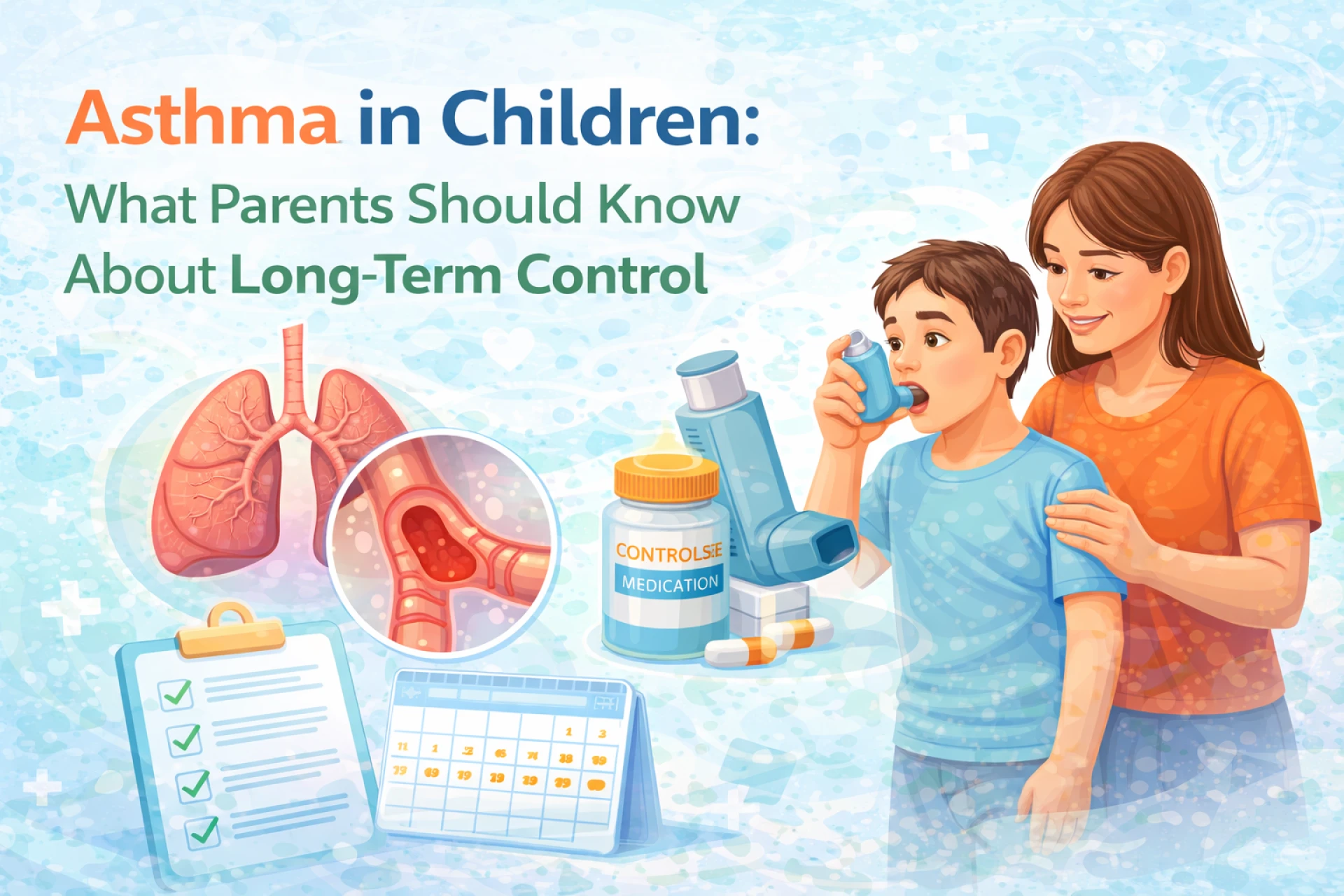

Millions of kids around the world have asthma, which is a common long-term respiratory disease. Asthma can make it hard to breathe by causing inflammation and narrowing of the airways. Symptoms include wheezing, coughing, chest tightness, and shortness of breath. Asthma can't be cured, but with the right long-term care, kids can live healthy, active lives.
We stress the importance of early diagnosis, effective treatment, and parental awareness in managing childhood asthma at Sarvesh Health City, which is known as the Best Neonatology Hospital in Hisar. Every parent needs to know what causes, what symptoms, and how to treat them in order to keep their child healthy.
Learning about asthma in kids
Asthma in children is frequently initiated by a confluence of genetic and environmental influences. Some common triggers are:
- Allergens: Dust mites, pollen, pet dander, and mold.
- Respiratory Infections: Viral infections, such as the common cold, can make asthma symptoms worse.
- Environmental Factors: Strong smells, smoke, and dirty air.
- Physical Activity: Asthma can happen during hard exercise.
- Changes in the weather: Cold air, humidity, or sudden changes in temperature.
Kids with asthma may have mild symptoms from time to time or severe attacks that need immediate medical attention. Because symptoms can change, it's important for parents to keep a close eye on their child's health and see a pediatric specialist on a regular basis.
What to Look For in Signs and Symptoms
If you know the early signs of asthma, you can stop severe attacks. Parents should pay attention to:
- Coughing that doesn't go away, especially at night or after working out.
- Breathing makes wheezing or whistling sounds.
- Breathing quickly or having trouble breathing.
- Tightness in the chest or complaints of chest pain.
- Being tired while exercising.
At Sarvesh Health City, our pediatricians work with families to spot these symptoms early and make individualized plans for how to manage asthma. Early intervention is very important for keeping a child healthy and helping them grow and develop.
Strategies for Long-Term Control
To effectively manage childhood asthma, you need to use medicine, change your lifestyle, and keep an eye on things. Long-term control is all about lowering inflammation, stopping symptoms, and keeping asthma attacks from happening.
1. Managing medications
Long-term asthma medications usually have:
- Inhaled corticosteroids: Often given as a daily preventive treatment because they lower inflammation in the airways.
- Leukotriene Modifiers: Pills you take by mouth that help lower inflammation and stop asthma attacks.
- Combination inhalers: Have both corticosteroids and long-acting bronchodilators, which helps control symptoms better.
Parents need to make sure their child takes the medicine exactly as directed. Not taking your medicine as directed or missing doses can make asthma harder to control and raise the risk of attacks.
2. Avoiding Triggers
Finding and avoiding triggers is very important for keeping asthma under control over the long term. Here are some things you can do to prevent:
- Keeping the house clean and free of mold and dust.
- Staying away from cigarette smoke.
- Keeping an eye on pollen forecasts and keeping windows closed when pollen levels are high.
- To cut down on infections, make sure kids wash their hands often and stay away from sick people.
3. Keeping an eye on things regularly
Parents should keep an eye on their child's symptoms and peak flow readings if the doctor says they should. This helps find early signs that asthma is getting worse and change treatment right away. Regular checkups with pediatric pulmonologists or asthma specialists at Sarvesh Health City help make sure that treatment plans are always up to date with the child's changing needs.
4. Living and working out
If asthma is well-controlled, kids can live active lives. Encourage people to be active, but make sure they take precautions, like using a rescue inhaler before exercising if they need to. Eating well, getting enough sleep, and managing stress are also very important for controlling asthma.
How to Handle Asthma Attacks in an Emergency
Even with careful long-term care, kids can still have asthma attacks. Parents should know how to spot these situations and act quickly. Signs of an emergency are:
- Very bad shortness of breath.
- Breathing quickly or with effort.
- Lips or fingertips that are blue.
- Having trouble talking or doing everyday things.
In an emergency, use the rescue inhaler that was given to you and get medical help right away. Sarvesh Health City is the best neonatology hospital in Hisar and offers 24-hour emergency care for asthma and other breathing problems.
Working with Health Care Professionals
Parents, kids, and healthcare providers need to work together. Pediatric specialists can:
- Make a personalized plan for dealing with asthma.
- Change medications based on how well they work, how much you grow, and what triggers you in the spring and fall.
- Teach people how to use an inhaler correctly and keep an eye on it.
- Give people shots and other preventive care to lower the risk of getting respiratory infections.
Parents need to be involved to help kids stick to their medication schedules, keep an eye on their symptoms, and make sure their home is safe.
Things People Get Wrong About Asthma in Kids
Parents often wonder what kids with asthma can and can't do. Some false beliefs are:
- Asthma limits all physical activity, but with the right care, kids can play and do sports.
- Asthma medications are addictive, but preventive medications are safe and necessary for long-term care.
- Asthma can go away as children get older. Some kids may outgrow it, but many will need ongoing care into their teens or adulthood.
Teaching families about these false beliefs helps lower stress and makes sure that care is always the same.
Questions and Answers About Childhood Asthma
Q1. How do doctors figure out if a child has asthma?
A: To find out if a child has asthma, pediatricians look at their medical history, do a physical exam, and do lung function tests like spirometry.
Q2. Is it possible to cure asthma in kids?
A: Asthma can't be cured, but it can be managed well with long-term control strategies and preventive measures.
Q3. Is it safe to use inhalers for a long time?
A: Yes. When used as directed, inhaled corticosteroids are safe and can help keep asthma attacks from getting worse.
Q4. What can parents do at home to stop asthma attacks?
A: By finding out what causes symptoms, keeping the area clean, making sure medications are taken correctly, and checking symptoms often.
Q5. When should I take my kid to the hospital for asthma?
A: If you have severe shortness of breath, bluish lips, rapid breathing, or trouble speaking, you need to see a doctor right away.
Final Thoughts
When kids with asthma get the right information, preventive measures, and medical care, it is a condition that can be managed. Parents are very important for keeping an eye on symptoms, making sure kids take their medicine, and making sure they are safe. Kids with asthma can live normal, active lives if they are diagnosed early and their condition is managed well.
Sarvesh Health City, which is known as the Best Neonatology Hospital in Hisar, is committed to giving your child the best possible care, including managing their asthma. Our team of experts makes sure that every child's health journey is unique, with ongoing support and a caring environment.




Sign in to leave a comment.