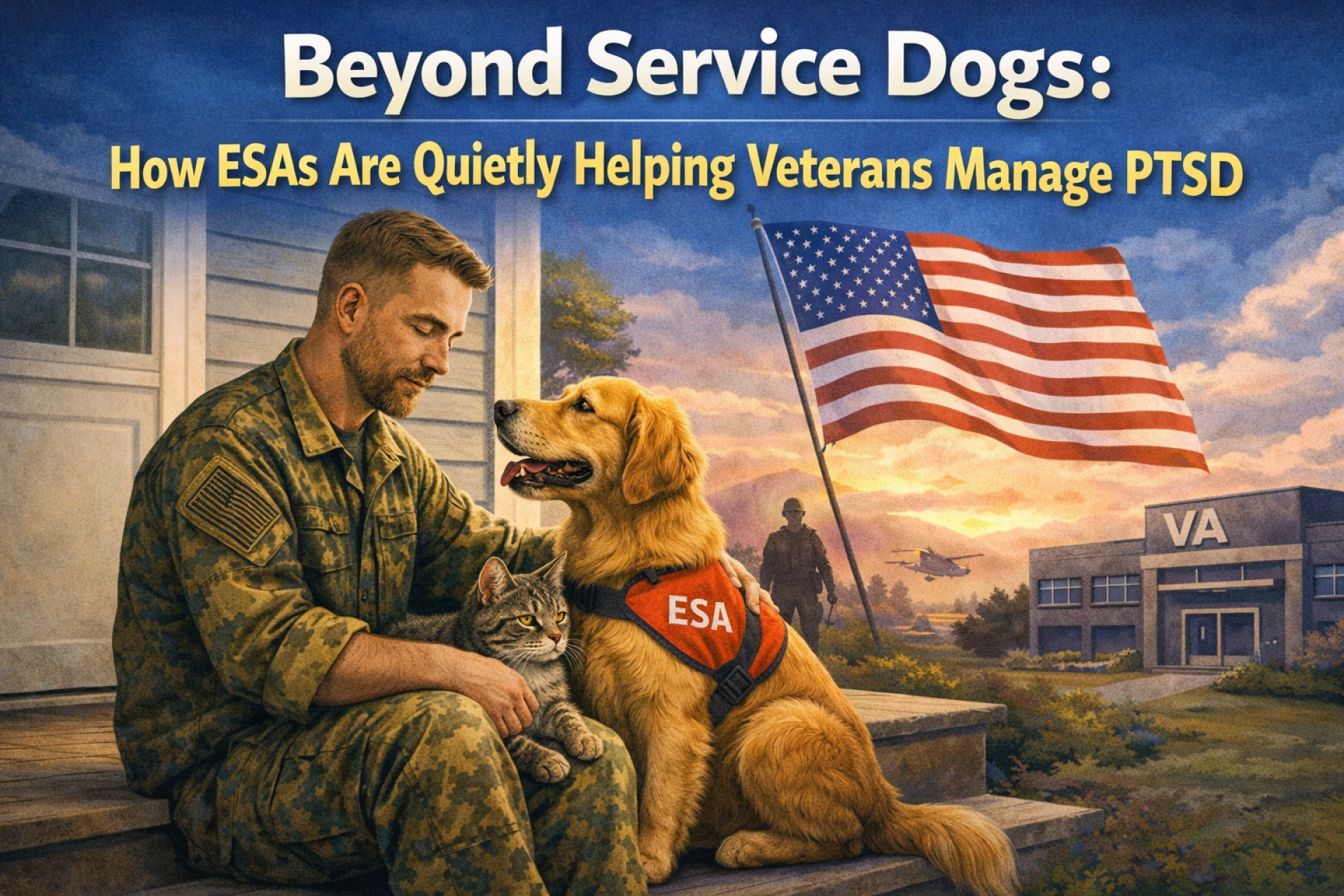

For many veterans living with post traumatic stress disorder, daily life after service can feel like an ongoing battle. Crowded spaces, disrupted sleep, emotional numbness, and hypervigilance often persist long after deployment ends.
While service dogs are widely recognized as a form of assistance, they are not the only path to stability. Increasingly, veterans are finding meaningful relief through emotional support animals, supported by a legitimate ESA Letter that allows them to live with their animals without housing barriers. Within the first steps of civilian life, this documentation often becomes the bridge between isolation and support, especially for veterans who are not eligible for or interested in service dog programs.
Why Emotional Support Animals Are Expanding Veteran Options
Service dogs are remarkable, but access is limited. Training programs can take years, cost tens of thousands of dollars, and involve strict eligibility criteria. Many veterans with PTSD need support now, not after a multi year wait. Emotional support animals offer an alternative that fits naturally into daily routines. Veterans can adopt an animal that already aligns with their lifestyle and emotional needs, without the pressure of public task performance. This accessibility has quietly reshaped how veterans approach mental health support.
Understanding Housing Rights Across the Country
Veterans often relocate frequently due to work, family needs, or medical care. Housing stability becomes essential, yet pet restrictions remain common. Knowing how protections apply locally is critical. Resources like ESA By States help veterans understand how federal housing law interacts with state specific practices. This clarity empowers veterans to request accommodation confidently, regardless of where life takes them after service.
The Legal Backbone Protecting Veterans and ESAs
Emotional support animals are protected under federal housing regulations when they alleviate symptoms of a mental or emotional disability. These protections are outlined clearly in ESA Laws, which apply to apartments, rental homes, and many shared living situations. For veterans who have already sacrificed stability, these laws ensure that housing providers cannot add unnecessary barriers to recovery.
Dogs as Emotional Anchors for Veterans
For many veterans, dogs provide a unique sense of safety and routine. Morning walks establish structure. Physical presence reduces feelings of threat. Unlike service dogs, emotional support dogs are not required to perform tasks, yet their impact can be profound. Misunderstandings around documentation persist, which is why education around Emotional Support Dog Certification is essential. Veterans do not need online badges or registrations, only legitimate clinical support.
Cats and Quiet Companionship in PTSD Recovery
Not every veteran wants or can manage a dog. Cats offer calm companionship that fits smaller spaces and lower energy lifestyles. For veterans dealing with insomnia or anxiety, the steady presence of a cat can provide grounding without overstimulation. Housing providers often misunderstand this category, making education around Emotional Support Cat particularly important for veterans choosing quieter forms of support.
When Psychiatric Service Dogs Are Still the Right Fit
Some veterans require animals trained to perform specific tasks related to PTSD, such as interrupting dissociation or responding to night terrors. In these cases, documentation like a PSD Letter helps distinguish service animals from ESAs. Understanding this distinction prevents denial of lawful accommodations and ensures veterans receive the correct protections.
Financial Relief Matters More Than Most Realize
PTSD often affects employment stability and income. Housing related pet fees can quietly drain limited resources. By securing accommodation properly, veterans often experience tangible financial relief and also on saving money with esa letters show how avoiding monthly pet rent and deposits can significantly reduce stress, making recovery more sustainable.
Shared Housing and Veteran Living Arrangements
Many veterans live with roommates, family members, or in transitional housing. These arrangements can complicate ESA requests. Clear communication and documentation are critical, especially when multiple parties are involved. Guidance around ESA roomate agreement helps veterans navigate shared living situations without conflict or misunderstanding.
Veteran Experiences Behind Closed Doors
One veteran described sleeping through the night for the first time in years after adopting a support animal. Another shared how daily care responsibilities helped restore a sense of purpose lost after discharge. These stories rarely make headlines, yet they reflect a growing reality. ESAs are not a trend among veterans. They are a response to unmet needs within existing systems.
Why Legitimate Evaluations Matter
Veterans are particularly vulnerable to misinformation and exploitative services promising instant approval. Legitimate evaluations conducted by licensed professionals protect veterans legally and emotionally. RealESALetter.com focuses on housing compliant assessments, ensuring documentation aligns with federal requirements and respects the seriousness of veteran mental health.
Universities, Housing Policies, and Veteran Students
Some veterans return to school using education benefits, encountering campus housing systems unfamiliar with ESA law. Guidance similar to standford university esa letter rules helps veterans understand how institutional housing intersects with federal protections, preventing unnecessary denials during academic transitions.
A Quiet Shift With Lasting Impact
Emotional support animals may not wear vests or perform visible tasks, but their role in veteran PTSD management is significant. As awareness grows, more veterans are discovering that support does not have to be formalized through elite programs to be valid. With the right documentation, legal protection, and understanding, ESAs are helping veterans rebuild stability on their own terms.
In 2026, the conversation around veteran mental health is expanding. Beyond service dogs, emotional support animals are quietly, consistently, and lawfully changing lives.
Sign in to leave a comment.