




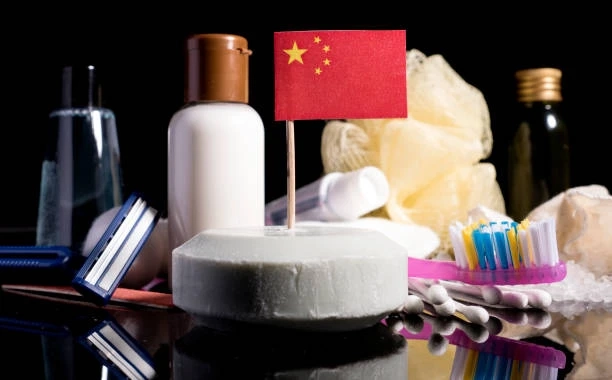
The China skincare market is also one of the most powerful segments in the global beauty and personal care market sector. Although growth has slowed relative to previous growth cycles, the market remains resilient, fueled by premiumization, ingredient innovation, and changing consumer expectations on efficacy and brand trust.
The skin care industry in China is no longer characterized by high growth in terms of volume. Rather, it indicates a shift to value-based consumption where the consumer will be more concerned with the performance of the product, transparency in formulation, as well as the credibility of the brand.
The China skincare market is estimated to have reached USD 39.67 billion in 2024 and is projected to reach USD 41.05 billion by 2030 with the CAGR to increase by 0.57 over the period of 2025-2030 (Vyansa Intelligence analysis). This is a growth curve that depicts a mature but strategically relevant market environment.
Market Maturity Is Reshaping Growth Dynamics
The skin care sector in China is at a structural maturity stage. The previous growth was significantly driven by the rise in urbanization, the rise in disposable income, and the high rate of embracing international beauty brands. In the modern setting, growth has become more incremental and is being influenced by product differentiation, brand positioning and consumer loyalty.
Facial skin care is the most prevailing category, taking up about 85 percent of the total market value. There has been a steady demand for products like moisturizers, serums, anti-aging solutions, sunscreens and functional treatments across all age groups.
Instead of increasing the frequency of use, brands are targeting consumers up-market to buy higher-quality products, dermatologically tested products, and products related to a specific function.
Premiumization and Ingredient Awareness Does the Demand.
Premiumization is one of the most characteristic tendencies in the China skin care market. Consumers are better prepared to pay more on products which focus on:
- Clinically backed efficacy
- Clean/science-based formulations.
- High-tech ingredients include peptides, ceramides, probiotics, and botanical extracts.
- Dermatology-inspired positioning and sensitive-skin positioning.
Simultaneously, Chinese consumers have increased in their ingredient literacy. Customers are becoming savvy in product formulations, safety requirements and manufacturing openness, especially the younger generations.
This has compelled brands to move to more pedagogic marketing and invest in product stories that are driven by research and development.
Local brands are becoming competitive.
Although foreign firms are still very strong, domestic Chinese skin care brands have been gaining significant ground over the past few years. Local players are also capitalizing on:
- Improved product development rates.
- Better knowledge of local skin issues.
- Relevance to culture and narration.
- Aggressive pricing in the premium mass market.
The Shanghai Pehchaolin, Kunming Botanee bio tech, Proya Cosmetics, Jala Group, and Shanghai Chicmax are some of the brands that have reinforced their market positions due to targeted brands and product innovation.
Meanwhile, multinational companies such as L'Oreal (China), Estee Lauder (Shanghai), Shiseido China, Procter and Gamble (Guangzhou), and LVMH are still investing in China by launching products locally and activating digital engagement services.
Distribution Channels are still Varied.
Although e-commerce has experienced significant growth, the proportion of the skin care sales in China through offline retail outlets such as department stores, specialty retailers and pharmacies still represents a large portion of the overall sales.
Nevertheless, online channels are becoming increasingly strategic especially to:
- Product discovery
- Brand storytelling
- Influencer-driven marketing
- Consumer education
Instead of eliminating offline retail, the digital channels are serving as complementary expansion and growth facilitators or they are aiding the brands in creating awareness and pushing premium products through faster adoption.
The competitive landscape is a representation of consolidation.
China is a moderately consolidated skin care market with the five largest players occupying approximately 35 percent of the total market share. This structure shows that there is a high level of competition, but the option of niche and specialist brands seizing segments remains.
The competition is based more and more on:
- Credibility of formulation and efficacy of products.
- Dermatological validation
- Environmental sustainability and sourcing.
- Consumer loyalty and brand loyalty.
Price battles are no longer enough to bring about differentiation.
Market prospects are stable growth with strategic opportunities.
The future of the Chinese skin care industry shows a stable but not a rapid growth, given the fact that the market will reach USD 39.67 billion in 2024 and USD 41.05 billion in 2030.
To brands and investors, this environment is favorable:
- Long-term brand building
- R&D-led product pipelines
- Specialized segmentation plans.
- Good regulation and compliance to quality.
These forces cannot be analyzed without a deep comprehension of consumer behavior, competitive positioning and changing category structure- areas where the analysis of China skin care market by the Vyansa Intelligence produces actionable depth of understanding.
Final Thoughts
The rapid expansion is no longer a key driver in the skin care market of China. Rather, it represents a well-matured and premium-based industry that is created by knowledgeable consumers, well-developed domestic competition, and stable demand for quality formulations.
With a current growth rate of a steady pace, the ability to succeed in this market will rely less on the size of the business and more on the credibility, innovation and strategic orientation—it is thus one of the most challenging and most rewarding beauty business markets in the world.