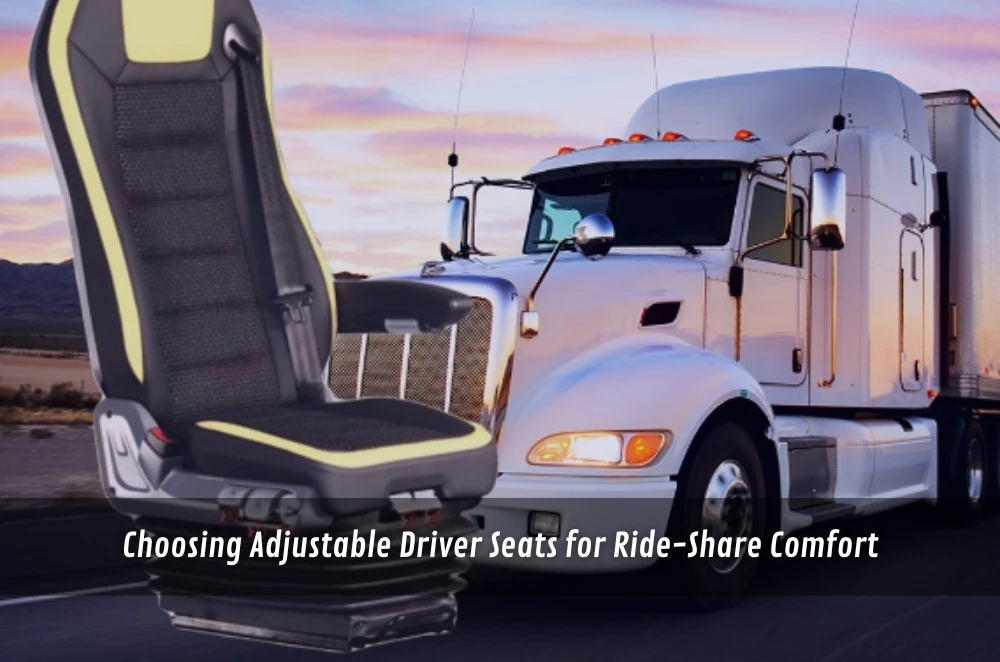

If you spend hours on the road ferrying passengers, you already know how quickly comfort can fade. That dull ache in your lower back or the creeping tension in your shoulders isn’t just annoying — it can change the way you drive. That’s where a well-designed seat makes the difference. A properly fitted adjustable driver seat gives you the control to fine-tune your posture through each shift, helping you stay balanced and alert without constantly fidgeting for relief. The ability to tweak height, tilt, and lumbar support may sound minor, but it adds up to steadier focus and less fatigue over the day. Every ride feels smoother, and at the end of a long run, you step out feeling closer to how you did at the start. It’s a quiet improvement, not a flashy upgrade — one that simply helps your body keep pace with your work.
Why adjustability matters over a full shift
Good posture isn’t a pose; it’s a moving target. You brake, you shoulder-check, you twist to greet a passenger. A supportive base absorbs those micro-movements, then helps you return to neutral without thinking. That’s how a well-set seat keeps tension from snowballing across a long run.
- Height and tilt align hips and knees so your spine keeps its natural curve.
- Fore-aft and backrest angle set an easy reach to the wheel and pedals.
- A stable cushion stops your pelvis from rolling with every bump.
- A well-placed head restraint reduces the risk of neck strain.
What surprised me the first time I tuned a seat properly was how quiet everything felt—less fidgeting, smoother steering inputs, steadier scanning of mirrors. It’s subtle, but it shows up in the way you judge gaps and glide through roundabouts. That’s the practical payoff: fewer distractions from aches and more bandwidth for driving.
Linking posture to safer systems on the road
There’s more to safe driving than just airbags and sensors — the way you sit affects how all those systems work together. When your seat is adjusted properly, your eyes align with mirrors, your hands rest lightly on the wheel, and your reactions stay sharp. That alignment makes it easier for modern vehicle safety features to do what they’re designed for — from lane assistance to automatic braking — because you’re positioned to respond quickly and clearly.
- Correct eye height improves how driver-assist alerts line up with what you actually see.
- A relaxed elbow angle steadies steering, which pairs nicely with lane-keeping aids.
- Stable seating helps you modulate brakes so stability control isn’t working overtime.
Day to day, that translates into smoother merges and fewer last-second corrections. Nothing flashy—just a driver position that supports steady decisions.
A quick field test from the driver’s seat
On a long Saturday split shift, I ran two configurations in the same hatch. First pass, I sat a touch low with minimal lumbar. By hour three, my shoulders were rounding and my neck felt tight. Second pass, I raised the base about a finger’s width, brought the wheel closer, and wound in lumbar until it met my lower back. The afternoon flowed better. I wasn’t hunting for a comfortable position at lights, and my head-checks felt clean instead of jerky. The car didn’t change. My seat did. That small reset is why adjustability counts more than the trim level of the cabin.
- Set seat height first; everything else hangs off that.
- Bring the wheel to you; don’t reach for it.
- Adjust lumbar until you feel firm contact, not a lump.
- Re-check mirrors after you settle; they’ll tell you if you’ve slumped.
Health over distance: supporting the body you drive with
Spending long hours behind the wheel takes a toll in ways you don’t always notice at first. The small aches that start in your lower back or shoulders can build quietly until they affect your focus. That’s why understanding the impact of driver seats on long haul health matters more than most drivers realise. The way your seat supports you through repeated stops, turns and long idling stretches can influence circulation, muscle fatigue, and even how alert you feel by the end of the shift.
- Firm, supportive foam prevents “sinking,” which can tip the pelvis.
- Gentle backrest recline (~100–110°) keeps the chest open and shoulders relaxed.
- A two-to-three finger gap behind the knees protects circulation.
- Micro-breaks between trips reset posture before aches become the default.
The aim isn’t perfection; it’s consistency. If your setup makes it easy to return to neutral, the body thanks you later.
Picking features that last beyond the first week
The seat that feels plush in the driveway isn’t always the one that feels steady at the end of a busy run. Focus on what holds alignment when the road gets choppy and the cabin heats up.
- Independent lumbar control you can fine-tune, not just a one-position bulge.
- Adjustable base height and tilt so hips aren’t pinned lower than knees.
- Breathable materials that don’t trap heat in stop-start traffic.
- A cushion that’s firm enough to keep you centred through corners.
Set your position, drive for fifteen minutes, then nudge the lumbar and wheel a little and notice how your shoulders and neck respond. Small tweaks often beat big changes.
Ergonomics that support attention when it matters
Comfort isn’t just about feeling good — it’s about staying sharp when traffic gets unpredictable. The way a seat supports your body directly affects how focused you remain through the ups and downs of a busy shift. A well-balanced posture steadies your breathing, keeps movements efficient, and helps your mind stay on the road rather than on discomfort. That’s the quiet value behind ergonomic driver seat safety, it ties physical support to mental alertness.
- Stable hips = smoother brake release when traffic compresses.
- Balanced shoulders = quieter steering inputs in tight streets.
- Clear sightlines = earlier reads on hazards before they’re urgent.
- Less fidgeting = fewer “tiny” distractions that add up.
None of this is about gadgets. It’s geometry, habit and a seat that gives you room to move, then returns you to neutral.
Final thoughts
A well-set seat won’t drive the car for you, but it shapes the way you drive. Start with a position that keeps hips level, spine supported, and arms relaxed. Then choose hardware that lets you keep that balance when the shifts stretch and the traffic pulses. If your current setup can’t hold alignment, an adjustable driver seat offers simple controls that bring posture back within reach. Pair that with steady habits—mirror checks after you settle, brief resets between trips—and you’ll feel fresher, think clearer, and keep the drive smooth from first ping to last drop-off.



























Sign in to leave a comment.