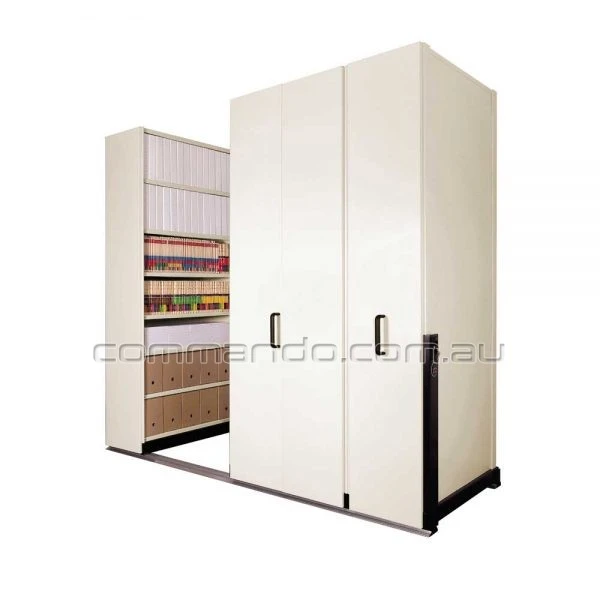

Clutter builds, and equipment is out of place when shelving is not optimised for performance. It takes longer to find what you need and locate where it is. An office environment requires commercial shelving solutions that work with you to create efficiency, safety and flexibility while still fitting neatly into your workspace.
The key is to start by examining how different items are used and handled in the office. Whether that be documents, IT equipment, archives or shared supplies, there are different shelving considerations for each.
Shelving for daily use documents
Files and documents are some of the most used and moved items in most offices. Frequent retrieval and distribution calls for shelving that allows speed and ease of access. Open units with minimal barriers and mechanisms give teams fast access without having to go around or behind shelving to access what they need.
Shelf height is also worth considering. Adjustable shelves lets your team change heights to fit binders, folders, and boxed files as storage needs change throughout the year.
Visual consistency is less important here than structural reliability. Frames and uprights need to stay rigid under frequent use and avoid leaning or vibrating when bins and files are added or taken from shelves.
Shelving depths are typically better for document storage. Clear, deep aisles improve clearances and create a cleaner, more organised visual line across collaborative work areas.
Storage options for IT and technical equipment
Equipment storage in offices has its own unique requirements. Printers, networking hubs, backup servers, monitors, projectors, and peripherals can cluster loads and generate heat. Shelving systems must be capable of both greater structural support and good airflow.
Shelving units used for IT equipment are better with higher load ratings and additional support frames or bracing to hold heavy or concentrated loads. Open or vented units allow more heat dissipation. Depth and aisle considerations are critical to avoid overhang and cable strain in these areas. In technical spaces, units with cable routing capabilities can improve safety and troubleshooting without disrupting workflows.
Mobility can also be helpful in IT areas. Mobile shelving or worktops give teams flexibility to reconfigure during upgrades, diagnostics, repairs, or office reconfigurations.
Long-term archive storage
Archived records are more concerned with durability and storage density than with rapid access or frequent movement. High-density shelving systems allow storage of larger quantities of material vertically, reducing the need for multiple rooms or off-site storage.
Archival shelving also requires greater consistency. Uniform spacing, standardised shelf widths and clear zone labelling all aid long-term organisation. Materials with finishes that protect against moisture, dust and long-term abrasion can help better protect stored items, especially in ground-floor storage areas.
Adjustability is still essential here as well. As record formats and types change over time, offices need the capacity to adapt their shelving rather than be limited by it.
Shelving for shared office supplies
Shared office supplies require shelving that encourages tidiness without hiding inventory. Open units with modular components can help teams quickly assess stock levels and maintain consistent tidiness.
Dividers, bins and tiered options prevent goods from becoming mixed or misplaced. Systems that offer expandability or reconfigurability will enable offices to adapt to staffing levels or evolving workflows without replacing units in their entirety.
Ergonomics plays a role as well. Supplies that are used most often should remain within ergonomic reach of seated or standing users, while bulkier and heavier items can be shelved higher without disrupting day-to-day routines.
Materials and load considerations
Material selection is one of the aspects that contribute to the performance and longevity of shelving. Metal shelving can provide exceptionally high weight capacity and stability under heavy loads and in high-traffic applications. Composite or laminated shelving is an option for a softer, less industrial look in shared or highly visible areas, without sacrificing load capacity. It should always be planned with a margin of error. Shelving operated close to its stated max rating will wear out more quickly and pose greater safety risks. Offices are better served by systems built to hold more than is currently needed, providing room for growth without structural limitations.
Planning for the future
Office spaces evolve over time. Staff expand or contract, new technologies are introduced, and storage requirements shift. Shelving designed for adjustability, expansion, or relocation helps offices remain agile without recurring replacement costs.
Modular systems help support long-term efficiency in this way. They can adapt along with the office rather than becoming a constraint on your business.
The selection of shelving should depend on your current or immediate needs and space utilisation, rather than futureproofing or expansion. Shelving units and systems that can be used for a variety of storage items, offer stability and strength and can be reconfigured or expanded later, are a silent but key player in an orderly and efficient workplace.



























Sign in to leave a comment.