




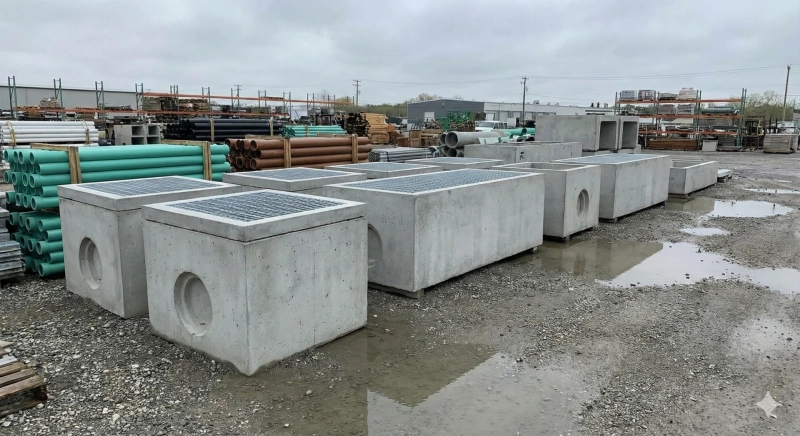
Concrete catch basins for use in Ontario are a reliable component of urban and rural stormwater systems. Designed to collect surface runoff, manage debris, and direct water into storm sewers, correctly specified concrete catch basins reduce flooding, protect infrastructure, and meet provincial and municipal requirements.
Why Choose Concrete Catch Basins in Ontario?
Concrete catch basins offer durability, structural strength, and longevity in Ontario's climate. They resist traffic loads, freeze-thaw cycles, and many chemical exposures common to roads and parking areas. When installed and maintained correctly, concrete catch basins provide a high-quality, low-life-cycle-cost drainage solution for municipalities, developers, and private property owners.
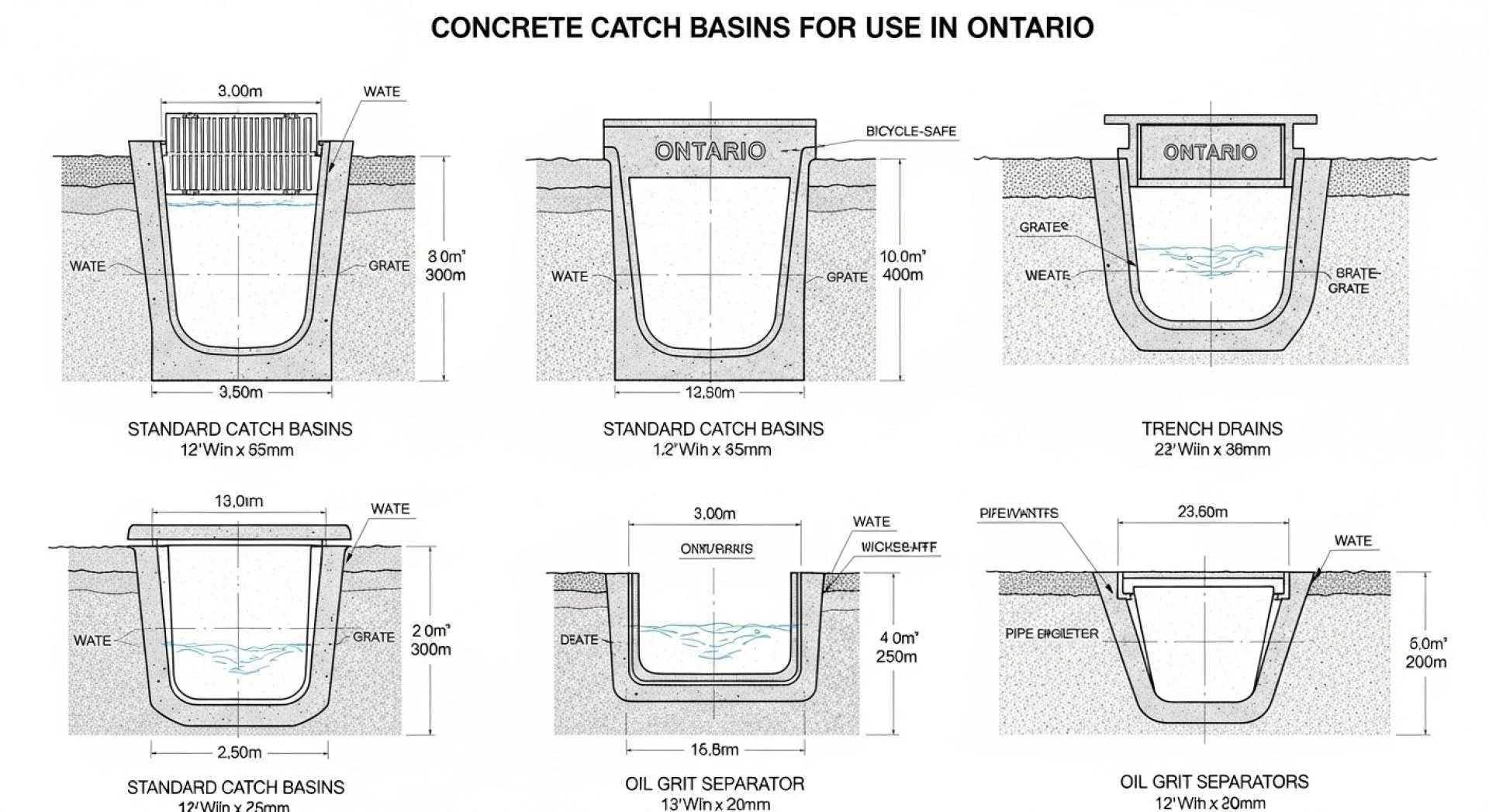
Design and Specification Considerations
- Standards and Codes: In the context of water management, it is essential to adhere to established standards and codes. Follow Ontario municipal specifications and provincial guidelines. Many municipalities reference the Ontario Provincial Standard Specifications (OPSS) and local engineering standards for granular bedding, backfill, and concrete class in their drainage systems.
- Concrete Grade: Ensure that the concrete grade meets the high-quality standards set for drainage systems. Use air-entrained concrete with appropriate compressive strength (often 25–40 MPa) and admixtures to improve freeze-thaw resistance.
- Hydraulic Capacity: Size basins to handle anticipated runoff from upstream drainage areas, factoring in design storms and conveyance capacity.
- Inlet Type and Grating: Choose grated or curb inlet configurations based on roadway type and debris load to optimize drainage system performance. Heavy-duty ductile-iron or cast-iron frames and grates are commonly used in traffic areas.
- Load Rating: Select basins and covers rated for the expected traffic — pedestrian, light vehicle, or heavy truck loads — per provincial and municipal requirements.
- Watertightness and Seals: Ensure pipe connections and chimney seals meet performance expectations to prevent soil infiltration and differential settlement.
Installation Best Practices
- Site Assessment: Assess soil conditions, groundwater levels, and frost depth. Ontario's variable soils and seasonal frost require attention to bedding and base design.
- Proper Bedding and Backfill: Use well-compacted granular material for bedding and surrounding to provide uniform support and prevent settlement.
- Depth and Frost Protection: Install basins to avoid frost heave or include design features (e.g., insulation, deeper bottoms) where frost penetration is a concern in residential areas.
- Connection Details: Ensure inlet and outlet pipes are aligned with proper slope, and provide erosion protection at outfalls.
- Construction Timing: Avoid installing precast concrete in extreme cold without appropriate measures (heated enclosures, accelerators, thermal blankets) to achieve proper curing.
Maintenance and Asset Management
Regular maintenance extends the service life of concrete catch basins for use in Ontario. Establish an inspection and cleaning program that includes:
- Periodic removal of sediment and debris to maintain hydraulic capacity.
- Inspection of grates, frames, and seals for damage or corrosion.
- Monitoring for signs of structural cracking or undermining, especially after freeze-thaw cycles or heavy loading events.
- Use of CCTV inspection for connected storm sewer pipes to identify blockages or infiltration.
Document maintenance activities in an asset management system to prioritize repairs and replacements based on condition and risk for drainage solutions.
Environmental and Regulatory Considerations
Concrete catch basins in Ontario must be integrated into stormwater management systems that comply with municipal bylaws and provincial environmental regulations. Key considerations:
- Stormwater Quality: Catch basins can trap sediment and debris, but are not substitutes for treatment practices. Consider upstream pretreatment (grit chambers, oil-grit separators, vegetated swales) where pollutants are a concern in water management.
- Permitting: Projects near watercourses or wetlands may require permits from conservation authorities or compliance with the Fisheries Act and provincial protections.
- Salt and De-icing Impacts: Road salts can affect adjacent soils and stormwater drainage systems. Use best management practices to limit salt application and consider materials and coatings that resist chloride-induced deterioration.
Cost and Lifecycle Factors
Upfront costs for concrete catch basins vary by size, load rating, and Site complexity. Lifecycle costs are influenced by maintenance frequency, durability in freeze-thaw conditions, and repair needs of the drainage solution. Well-designed precast concrete basins can outperform alternative materials (plastic, fiberglass) in high-load applications and in locations with significant snow and ice operations.
Selecting Suppliers and Contractors in Ontario
Choose suppliers and contractors with experience meeting Ontario specifications for precast concrete products. Verify manufacturer product certifications, material test results, and references for previous local installations. Contractors should be familiar with municipal inspection requirements and winter construction practices.
Common Applications
- Municipal streets and highways
- Parking lots and commercial plazas
- Industrial sites with heavy vehicle traffic
- Subdivision and Site Development Storm Systems
Conclusion
Concrete catch basins for use in Ontario provide a durable, adaptable solution for stormwater collection when designed, specified, and maintained for local climate and regulatory conditions. Engaging experienced engineers and contractors, following provincial and municipal standards, and implementing routine maintenance will ensure reliable performance and long-term value in water management.