
Introduction
Data is growing faster than most businesses expect. Every application, customer interaction, report, and backup add to an expanding digital footprint. Without a clear approach, storage costs rise, performance slows, and security risks increase. This is where data storage management becomes essential. It helps organizations stay in control of their data while supporting growth, compliance, and operational efficiency.
This guest post explores how data storage management works today, why it matters for modern businesses, and how a smart strategy can turn data from a burden into a long-term advantage.
Understanding Data Storage Management in Today’s Environment
Data storage management refers to the processes, policies, and technologies used to store, organize, protect, and optimize data throughout its lifecycle. It goes beyond simply saving files. It includes decisions about where data lives, how long it is kept, how it is accessed, and how it is secured.
In modern IT environments, data may exist across on-premise servers, cloud platforms, hybrid systems, and edge locations. Managing this complexity requires visibility, automation, and clear governance. Effective data storage management ensures that the right data is available at the right time without unnecessary cost or risk.
Why Data Storage Management Matters More Than Ever
The shift to digital-first operations has changed how data is created and used. Applications now rely on real-time access to large datasets. Teams expect instant performance. Regulators demand stronger data protection. At the same time, storage budgets are under constant pressure.
Without proper data storage management, organizations often face duplicated data, underutilized storage, slow systems, and increased exposure to data loss. A structured approach helps reduce waste, improve performance, and align storage decisions with business goals.
The Role of Data Storage Management in Business Performance
Strong data storage management directly impacts daily operations. When data is organized and placed on the right storage tier, applications run faster and users experience fewer disruptions. Archived or inactive data can be moved to cost-efficient storage, freeing up high-performance systems for critical workloads.
This balance improves system reliability while controlling expenses. Over time, businesses gain clearer insight into how data supports revenue, customer experience, and internal efficiency.
Data Storage Management and Scalability
Growth brings complexity. As companies expand, data volumes increase across departments, tools, and platforms. Manual approaches no longer scale. Data storage management provides frameworks that grow alongside the business.
Automated policies can classify data based on usage, sensitivity, or age. This allows organizations to scale storage capacity without losing control. Instead of reacting to storage shortages, teams can plan proactively and support long-term growth with confidence.
Security and Compliance Through Data Storage Management
Data protection is no longer optional. Regulations such as GDPR, HIPAA, and industry-specific standards require strict controls over how data is stored and accessed. Data storage management plays a key role in meeting these requirements.
Encryption, access controls, retention policies, and secure deletion are all part of a comprehensive strategy. By managing data consistently across environments, organizations reduce the risk of breaches and demonstrate compliance during audits.
Cloud, Hybrid, and On-Premise Data Storage Management
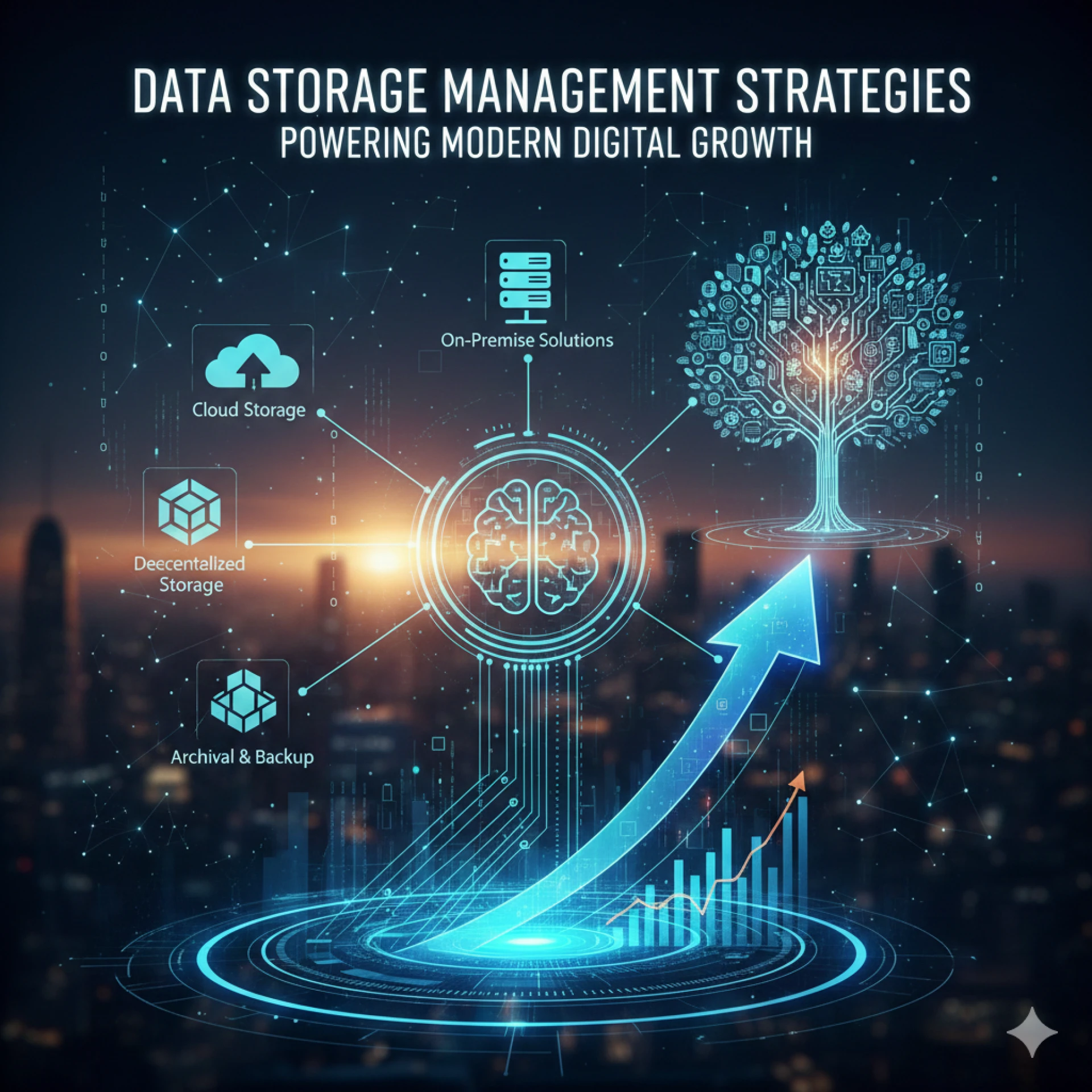
Modern infrastructures rarely rely on a single storage model. Cloud platforms offer flexibility and scalability, while on-premise systems provide control and performance. Hybrid environments combine both. Data storage management connects these models into a unified strategy.
The goal is not to choose one option, but to place data where it makes the most sense. Frequently accessed data may remain on high-speed systems, while backups and archives move to lower-cost storage. A unified management approach ensures visibility across all locations.
Optimizing Costs with Smarter Data Storage Management
Storage costs often grow quietly. Unused data, redundant copies, and outdated backups consume resources without adding value. Data storage management helps identify these inefficiencies and eliminate them.
By analyzing usage patterns, organizations can reduce overprovisioning and avoid unnecessary upgrades. This cost optimization does not sacrifice performance. Instead, it aligns spending with actual business needs and future demand.
Automation and Intelligence in Data Storage Management
Automation is becoming a core element of data storage management. Intelligent systems can monitor usage, predict growth, and adjust resources automatically. This reduces manual effort and human error.
Advanced analytics and AI-driven tools add another layer of insight. They help teams understand how data moves, which systems are under pressure, and where optimization opportunities exist. Over time, storage management becomes proactive rather than reactive.
Data Storage Management for Backup and Recovery
Data loss can result from cyberattacks, hardware failure, or human error. Data storage management ensures that backup and recovery processes are reliable and efficient.
Well-managed storage environments support faster recovery times and reduce downtime. By separating primary data from backup systems and testing recovery workflows regularly, organizations protect their most valuable information.
Building a Future-Ready Data Storage Management Strategy
A successful data storage management strategy starts with understanding business objectives. Storage decisions should support performance, security, and scalability. Clear policies, consistent monitoring, and regular reviews keep systems aligned with changing needs.
As data continues to grow, organizations that invest in smart storage management will gain flexibility and resilience. Instead of reacting to data challenges, they will be prepared to adapt and innovate.
Final Thoughts on Data Storage Management
Data storage management is no longer just an IT concern. It is a strategic function that influences cost control, security, and business agility. By managing data intentionally, organizations unlock greater value from their digital assets while staying prepared for future growth.































Sign in to leave a comment.