In every modern workplace, clear objectives and team alignment are critical to success. Team goal boards offer a visible way to track progress, inspire accountability, and strengthen collaboration. But as workplaces evolve, teams face a key question: should you use digital goal boards or stick with traditional physical team boards? This article compares both approaches to help you decide what works best for your team.
What Are Team Goal Boards?
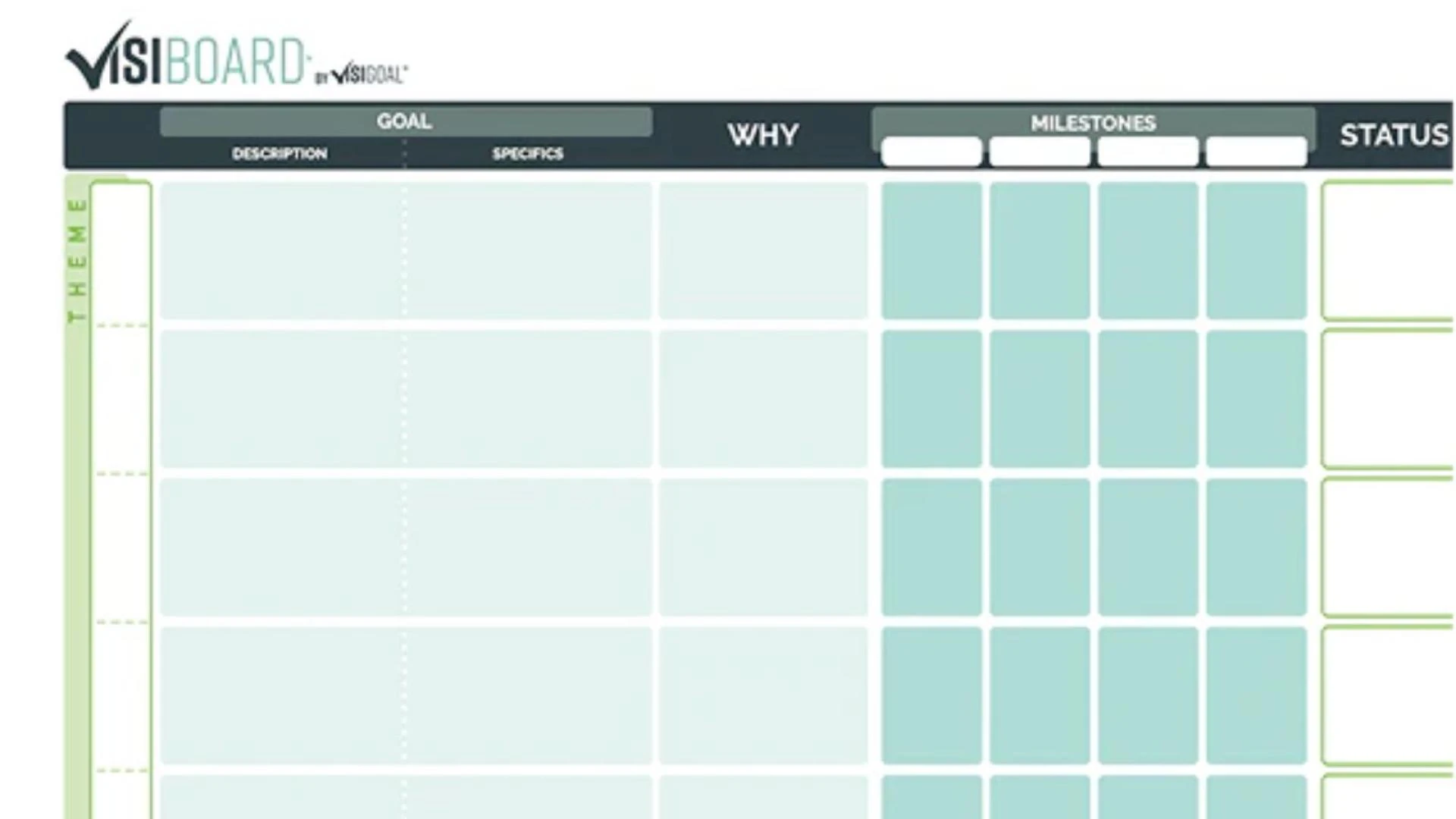
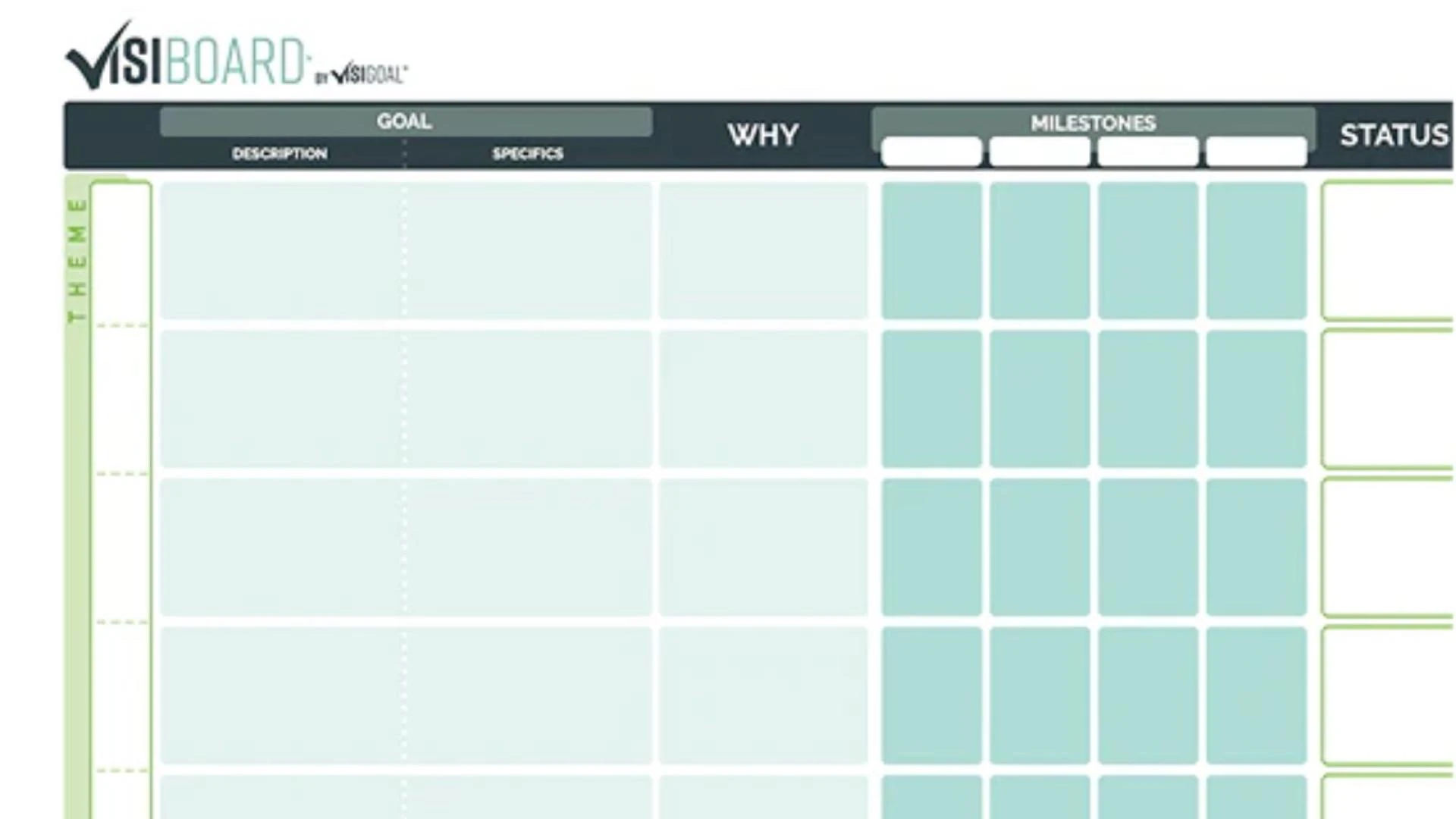
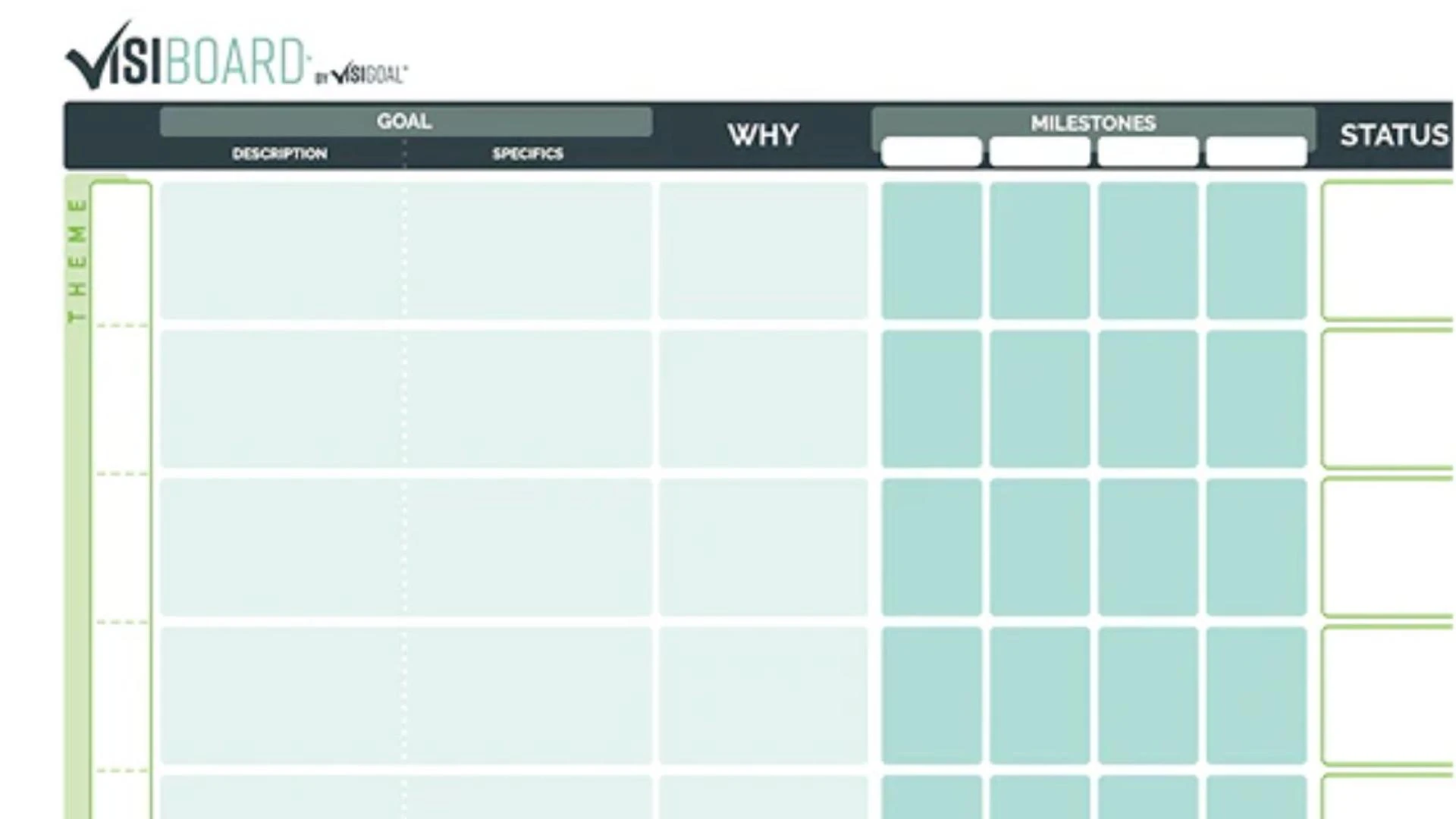
Team goal boards are visual tools that display objectives, milestones, and progress in a central place. They can be hung on office walls, pinned on bulletin boards, or created on digital platforms. Their purpose is simple: make goals transparent and keep teams focused.
Incorporating visual goal setting into daily routines helps teams see priorities, understand responsibilities, and celebrate achievements. Whether your team works in-office, remote, or hybrid, the right type of goal board can elevate performance.
Digital Team Goal Boards: Flexibility and Visibility
Digital team goal boards live online through software like Trello, Asana, or Miro. These tools allow teams to update goals in real time, assign tasks, and track measurable results.
Pros of digital boards:
- Real-time updates: Everyone sees the latest progress instantly, which is ideal for remote or hybrid teams.
- Easy to share: Links can be sent across departments or clients without printing.
- Automated tracking: Notifications and analytics help teams stay on target without manual effort.
Digital goal boards also support integrations with calendars, project management apps, and communication tools. This enhances workflow and makes goal tracking part of everyday tools your team already uses.
However, digital boards may feel less engaging if your team prefers tactile interactions. Not everyone responds to screens the same way, and information can get lost in digital noise if not managed well.
Physical Team Goal Boards: Tangible and Inspiring
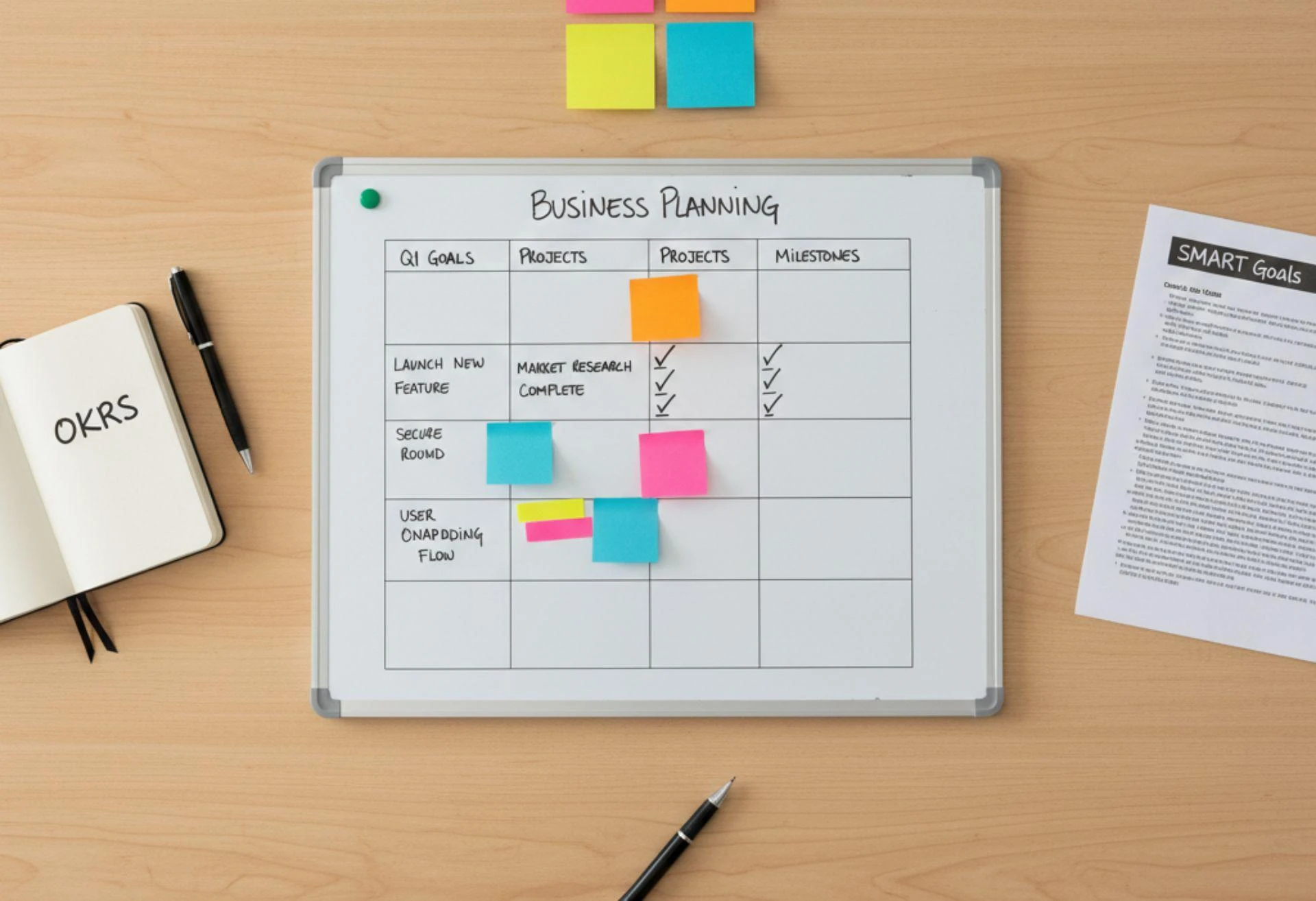
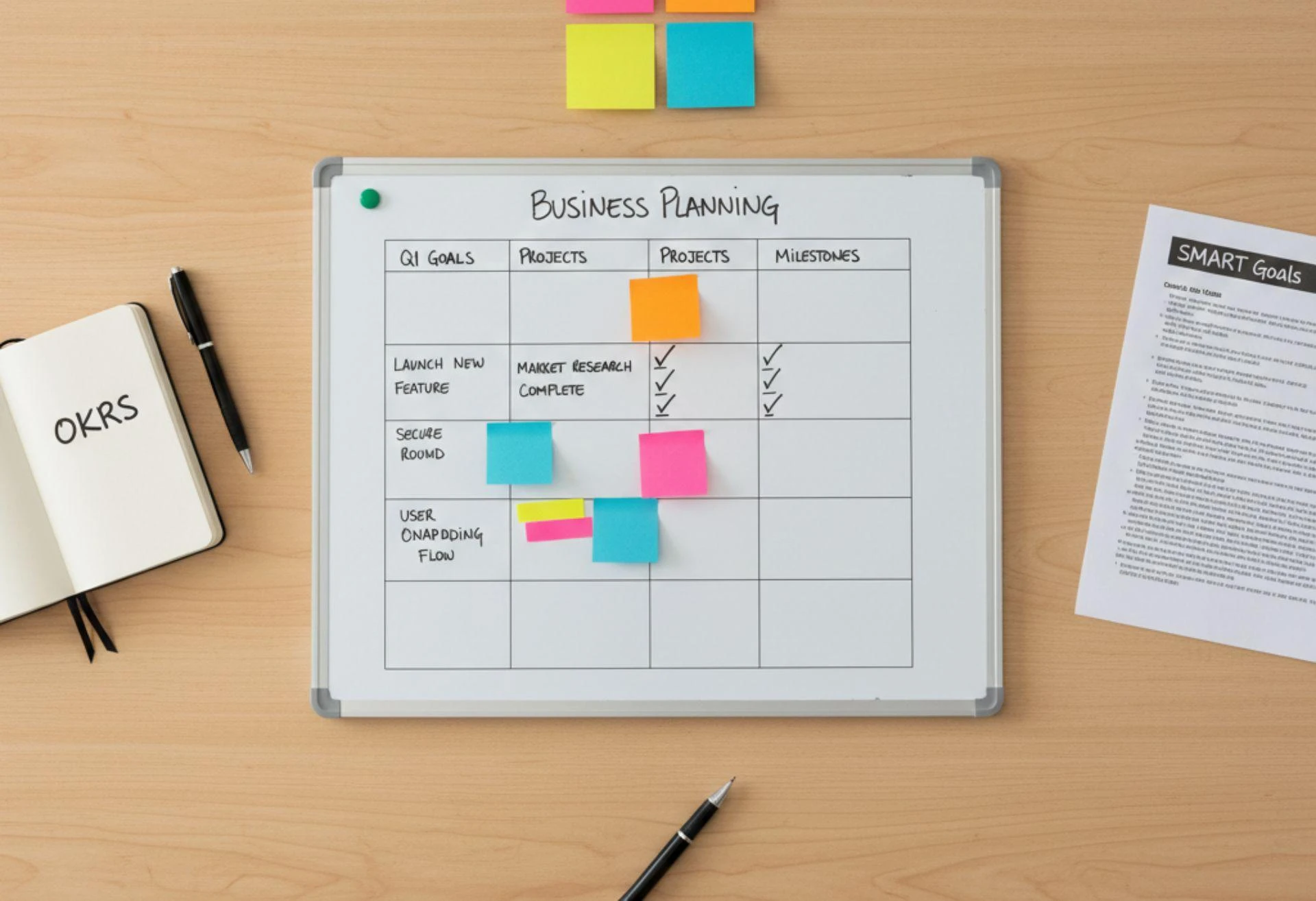
Physical team goal boards are traditional visual displays - think whiteboards, corkboards, or wall charts in shared spaces. These boards bring goals into the physical world and are especially effective in office environments.
Benefits of physical boards:
- High visibility: When placed in common areas, they become a daily reminder of shared objectives.
- Team engagement: Writing goals, moving sticky notes, and updating progress manually can increase ownership.
- Instant feedback: Team members can gather around, discuss changes, and celebrate wins together.
Physical team boards work well in collaborative spaces where people regularly meet. They reinforce culture and create a sense of shared purpose. The challenge? They are less effective for remote workers and lack automated tracking features.
Choosing What Works for Your Team
There’s no one-size-fits-all answer. The best choice depends on your team’s environment and workflow:
- Remote or hybrid teams often benefit more from digital goal boards that sync in real time.
- In-office teams may find physical boards more motivating and easier to engage with.
- Some teams prefer a hybrid approach, using a physical board for high-level goals and a digital board for day-to-day task tracking.
Whichever format you choose, the key is consistency. Regularly update your goals, include your team in planning, and review progress together. Effective goal setting for teams turns aspirations into structured action.
Conclusion
Both digital and physical team goal boards have unique advantages. Digital tools offer flexibility, instant updates, and seamless collaboration across distances. Physical boards bring visibility and a tactile experience that can strengthen team culture. Evaluate your team’s needs, work style, and communication patterns before deciding. In many cases, blending both approaches delivers the best results and keeps everyone aligned toward shared success.


























Sign in to leave a comment.