



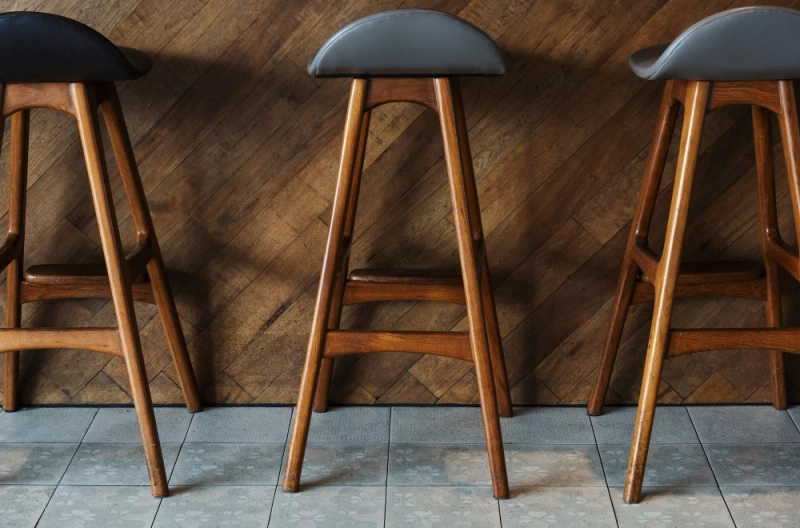
When furnishing a kitchen island, home bar, or commercial counter space, one of the most fundamental decisions you'll face is whether to choose bar stools with backrests or the sleeker, more compact backless alternatives. Backless stools offer undeniable advantages: they're visually lighter, tuck completely under counters when not in use, cost less on average, and create cleaner sight lines in open-concept spaces. But here's the question that determines whether you'll actually be comfortable using these stools: do you genuinely need back support for the amount of time people will spend sitting, or will backless stools work fine for your specific situation? Understanding the practical implications of this choice helps you avoid buyer's remorse when your beautiful backless stools turn out to be uncomfortable for your actual usage patterns.
For anyone evaluating seating options, understanding the functional differences between backed and backless bar stools goes beyond aesthetics to real ergonomic considerations that affect how people actually use the seating you provide—whether in homes, restaurants, or commercial spaces where comfort directly impacts how long customers linger and how satisfied they feel with their experience.
When Backless Stools Work Perfectly Well
Quick Meals and Short-Duration Use
Backless bar stools excel in situations where sitting duration is predictably short—typically 20-30 minutes or less. Quick breakfasts at kitchen islands, casual snacking, brief coffee stops, or grabbing a quick bite at a counter all fall within timeframes where most people sit comfortably on backless stools without missing back support.
In these scenarios, backless stools' advantages become compelling. They slide completely under the counter, maximizing floor space in compact kitchens. They create visual openness that makes spaces feel larger. And their lower cost allows you to furnish more seating locations for the same budget.
High-Turnover Commercial Settings
Bars and restaurants that want to encourage turnover—venues where quick service and frequent table cycling are business models—often deliberately choose backless stools. Without back support encouraging lingering, customers naturally leave after finishing their food or drinks, opening seats for new patrons. This isn't necessarily manipulative; it's designing furniture to match your business model.
Fast-casual restaurants, coffee shop counters, and high-volume bars often find backless stools perfectly appropriate for their operational needs and customer expectations.
Space-Constrained Environments
In genuinely tight spaces—narrow kitchens, small apartments, or compact bar areas—backless stools' ability to disappear completely under counters can be the difference between functional space and cramped, obstructed pathways. The 6-10 inches of depth that backrests add matter enormously in spaces where every inch counts.
Active, Stand-and-Sit Use Patterns
Some seating areas see "perching" behavior rather than extended sitting—people leaning against stools while standing, briefly sitting, then standing, or using stools as transitional seating while cooking or working. For these active use patterns, backrests become unnecessary and even inconvenient obstacles to fluid movement.
When Backrests Become Essential
Extended Sitting Duration
The critical threshold where backrests transition from nice-to-have to essential is around 30-45 minutes of continuous sitting. Beyond this duration, the strain of maintaining an upright posture without back support becomes increasingly uncomfortable. Your core muscles fatigue from the constant engagement required to stay upright, and you begin slouching or shifting position frequently—signs of genuine discomfort.
For sit-down meals lasting 60-90 minutes, social gatherings where people linger, work or study sessions at kitchen islands, or entertainment spaces where people watch TV or games while seated, backrests aren't luxury features—they're functional necessities.
Older Adults and Mobility Considerations
People with reduced core strength, back problems, or mobility limitations need back support for comfortable sitting for any duration. Older adults particularly benefit from backrests that provide the support needed to sit and stand safely without excessive strain. If your household includes elderly family members or if your commercial space serves a senior demographic, backrests become important accessibility features rather than optional comforts.
Residential Socializing and Family Use
Kitchen islands in family homes function as social hubs where people gather for conversations, homework sessions, coffee chats, and informal meals. These activities inherently involve extended sitting—often an hour or more. In these environments, backless stools become uncomfortable compromises that discourage the lingering social interaction you actually want to facilitate.
The irony is that you create beautiful, inviting spaces that people don't want to spend time in because the seating is uncomfortable. Your kitchen island becomes a transitional space rather than a gathering spot because the furniture doesn't support the behavior you're trying to encourage.
The Hybrid Solution: Strategic Mixing
Many designers and homeowners find success with hybrid approaches that use both stool types strategically. Backless stools at one end of a kitchen island for quick breakfast seating or food prep assistance, combined with backed stools at the opposite end for lingering and conversation, provide flexibility that accommodates diverse uses.
This approach captures backless stools' space efficiency where it matters while providing comfortable seating where extended use is expected.
Backrest Design Variations
Not all backless stools are created equal, and neither are all backrests. Low-back stools with minimal lumbar support, mid-back stools with substantial back coverage, and full-back stools with extensive support represent a spectrum of options between completely backless and fully backed alternatives.
For many situations, mid-back stools offer the optimal compromise—enough support for comfortable extended sitting without the visual bulk or space requirements of full-back designs. They tuck more completely under counters than full-back options while providing the core support that backless stools lack.
Making the Right Choice
Your decision should be based on an honest assessment of actual use patterns rather than idealized visions of how spaces will be used. Ask yourself: how long do people typically sit at this location? Who will be using these stools (ages, physical capabilities)? How much space do I actually have? And what behavior am I trying to encourage—quick use or lingering?
Working with knowledgeable furniture retailers like Seats and Stools provides access to expertise about how different stool types perform in various applications. They've seen which choices lead to satisfied customers and which lead to returns or complaints, and they can guide you toward options that match your specific needs rather than just selling you whatever looks impressive in the showroom.
The verdict: backless stools work wonderfully for their appropriate applications, but become uncomfortable compromises when used beyond their ergonomic limitations. Choose based on actual use patterns, not just aesthetics.