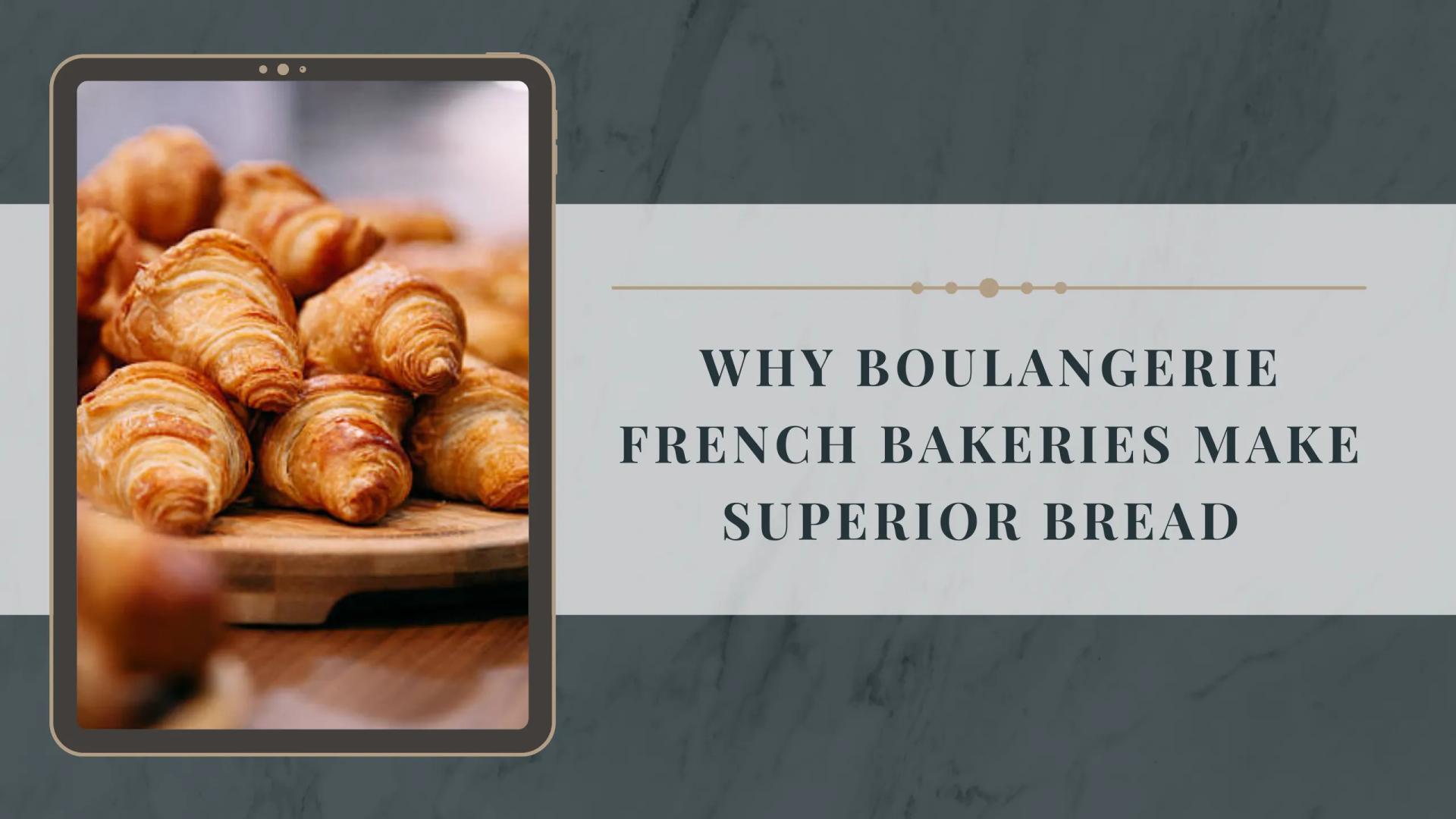

If you have ever walked past a boulangerie French bakery and stopped in your tracks at the smell of freshly baked bread, you already understand something profound. There is a reason French bread has earned global admiration for centuries. It is not just about flour and water — it is about a tradition so deeply rooted in culture that France legally protects it. This post explores exactly what makes a boulangerie French bakery stand apart, and why authentic French bread remains in a class of its own.
What Is a Boulangerie and Why Does It Matter?
A boulangerie is not simply a bakery. In France, the title carries legal weight. To be officially called a boulangerie, the establishment must make its bread on-site from scratch using traditional methods. Pre-made or frozen dough is strictly prohibited. This law, enforced since 1993, ensures that every loaf leaving a boulangerie is genuinely handcrafted.
This standard of authenticity is what separates a true French bread bakery from mass-produced alternatives. When a baker earns the boulangerie designation, they are committing to a craft — not a convenience.
Centuries of Artisan Bread Baking Tradition
French baking tradition dates back over 700 years. The baguette, croissant, and pain de campagne did not appear overnight. Each evolved through generations of refinement, regional influence, and a cultural obsession with getting bread exactly right.
French bakers train for years under strict apprenticeship programmes. They study fermentation science, flour composition, hydration ratios, and oven behaviour. This deep technical knowledge, combined with genuine passion, produces bread with a texture, crust, and flavour profile that industrial bakeries simply cannot replicate.
Artisan bread baking in France is considered a skilled trade — as respected as any other profession. That respect translates directly into every loaf baked.
The Role of Premium Ingredients in French Bread
Superior bread begins long before it enters the oven. Boulangerie French bakeries source high-quality, often locally milled flour with precise protein content. They use natural fermentation starters — sometimes decades old — that develop complex flavour over long, slow rises.
Unlike commercial bread, authentic French bread contains no artificial preservatives, stabilisers, or improvers. The ingredient list is remarkably short: flour, water, salt, and yeast. Yet the result is remarkably complex in flavour, aroma, and texture.
This commitment to clean, premium ingredients is a cornerstone of French baking philosophy. Quality is never compromised for convenience or cost-cutting.
The Science Behind That Perfect Crust and Crumb
One of the most admired qualities of authentic French bread is the contrast between a crackling crust and an open, airy crumb. Achieving this requires precise control over temperature, steam, and timing.
Traditional boulangeries use stone-deck ovens that distribute heat evenly and retain it consistently. Steam is injected at the start of baking to keep the dough surface supple, allowing maximum oven spring before the crust sets. The result is that signature golden, crisp exterior with a soft, chewy interior.
This level of technical control is what home ovens and industrial facilities struggle to match. The best French bakery experience is one where these variables are managed by a skilled artisan with years of practice.
Why Sourdough French Bread Stands Above the Rest
Sourdough French bread holds a special place in boulangerie culture. The use of a levain — a natural wild yeast starter — produces bread with a mild tang, superior shelf life, and remarkable depth of flavour. Long fermentation, sometimes lasting 24 to 48 hours, breaks down gluten chains and improves digestibility.
This slow process cannot be rushed. It demands patience, skill, and an intimate understanding of how dough behaves across different temperatures and humidity levels. The reward is bread that nourishes as much as it satisfies.
Experiencing Authentic French Bread Closer to Home
You do not need a flight to Paris to experience boulangerie-quality bread. Establishments rooted in genuine French baking tradition bring that same craft, care, and authenticity to every loaf they produce.
La French Taste carries that spirit forward — honouring the techniques, ingredients, and standards that define what a true boulangerie French bakery stands for. From the slow fermentation process to the carefully sourced flour, every detail reflects a deep respect for French baking tradition.
When you bite into bread made this way, you taste the difference immediately. It is richer, more complex, and far more satisfying than anything produced at scale.
Final Thoughts
A boulangerie French bakery is not just a place to buy bread. It is a living expression of culinary heritage, technical mastery, and genuine care for what people eat. Superior bread is the natural result of superior standards, and those standards have been refined over centuries for good reason.
Next time you reach for a loaf, ask yourself: was this made the French way? If the answer is yes, you are in for something truly exceptional.

























Sign in to leave a comment.