




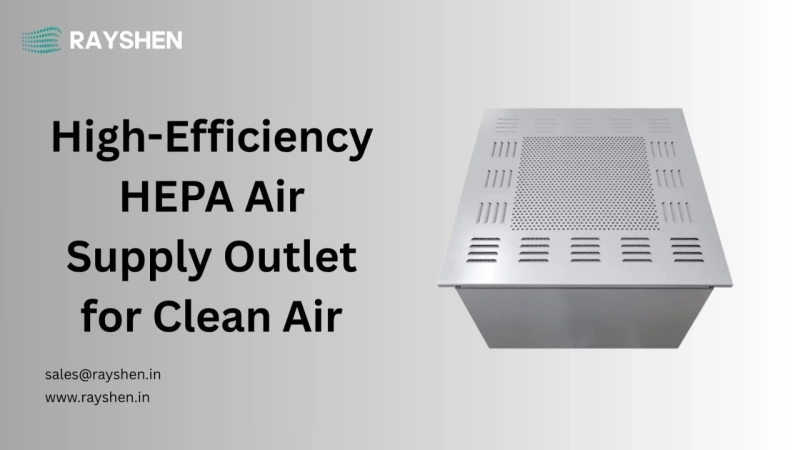
Maintaining air purity is the foundation of any controlled environment. In industries such as pharmaceuticals, biotechnology, electronics, and healthcare, even microscopic particles can disrupt processes or compromise safety. This is why HEPA technology plays a central role in modern clean room equipment. From filtration systems to personnel entry controls, HEPA-based solutions ensure that cleanrooms meet strict contamination control and regulatory standards. At Rayshen, HEPA-driven cleanroom solutions are engineered to deliver consistent, reliable, and long-term performance.
Understanding HEPA and Its Role in Cleanrooms
HEPA, or High-Efficiency Particulate Air filtration, is designed to remove at least 99.97% of airborne particles as small as 0.3 microns. In a cleanroom environment, this level of filtration is essential to control dust, microbes, and other airborne contaminants.
A hepa filter is not a standalone component; it is integrated into various types of cleanroom equipment to create a controlled airflow system. By continuously filtering and circulating air, HEPA systems help maintain cleanroom classifications and protect sensitive operations.
Applications of HEPA in Clean Room Equipment
HEPA technology is used across multiple cleanroom systems, each serving a specific contamination control function.
HEPA in Fan Filter Units (FFUs)
An FFU, also known as a fan filter unit, is one of the most common applications of HEPA filtration. FFUs combine a high-efficiency fan with a hepa filter to supply clean, filtered air directly into the cleanroom.
These units are typically ceiling-mounted and designed to create uniform airflow across critical work zones. Rayshen FFUs are built for low energy consumption, stable airflow, and minimal noise, making them ideal for pharmaceutical and laboratory cleanrooms.
HEPA in Air Showers
An air shower is installed at cleanroom entry and exit points to prevent contaminants from entering controlled areas. High-velocity air jets, filtered through HEPA systems, remove dust and particles from personnel and materials before they enter the cleanroom.
Rayshen air showers use advanced HEPA filtration to ensure that only clean air is released into the chamber, reducing the contamination load carried into sensitive spaces.
HEPA in Central Air Handling and Circulation Systems
In addition to FFUs and air showers, HEPA filters are also used in centralized air handling systems. These systems continuously clean recirculated air, helping maintain consistent temperature, pressure, and particle levels throughout the cleanroom.
This application is particularly important in large cleanroom facilities where uniform air quality must be maintained across multiple zones.
Supporting HEPA Filtration with Cleanroom Hygiene Equipment
While HEPA systems focus on airborne contamination, surface and personal hygiene are equally important. Supporting equipment ensures that contamination is controlled from every angle.
Role of SS Sinks in Cleanroom Hygiene
A stainless steel ss sink is an essential hygiene component in cleanrooms and laboratories. Used for handwashing and sanitation, SS sinks help prevent the transfer of contaminants from personnel to cleanroom surfaces.
Rayshen SS sinks are designed with smooth, easy-to-clean surfaces that resist microbial growth, complementing the airborne contamination control provided by HEPA systems.
Benefits of Using HEPA in Clean Room Equipment
Integrating HEPA technology into cleanroom equipment offers several key advantages.
Superior Air Quality
The primary benefit of HEPA filtration is the consistent removal of fine particles from the air. This ensures that cleanrooms maintain their required cleanliness levels even during continuous operation.
Regulatory Compliance
HEPA-based cleanroom equipment helps facilities comply with ISO, GMP, and other regulatory standards. Consistent air quality is a critical factor during inspections and audits.
Improved Product Quality and Yield
Clean air reduces the risk of defects, contamination, and product loss. This is especially important in pharmaceutical manufacturing and electronics assembly, where even minor contamination can lead to costly failures.
Enhanced Personnel Safety
By removing airborne contaminants, HEPA systems protect workers from exposure to harmful particles, creating a safer and healthier work environment.
Best Practices for Using HEPA-Based Cleanroom Equipment
To maximize the benefits of HEPA filtration, proper usage and maintenance are essential.
Proper System Design
Cleanroom airflow should be designed to support unidirectional or controlled airflow patterns. Correct placement of FFUs and air returns ensures effective contamination removal.
Regular Inspection and Testing
HEPA filters should be routinely tested for leaks, airflow resistance, and efficiency. Monitoring pressure drop helps determine the right time for filter replacement.
Scheduled Maintenance
Timely replacement of HEPA filters and servicing of FFUs and air showers ensures long-term system performance and energy efficiency.
Staff Training
Personnel should be trained to understand how cleanroom equipment works and why HEPA filtration is critical for contamination control.
Why Choose Rayshen for HEPA Cleanroom Solutions
Rayshen provides a complete range of HEPA-based cleanroom equipment, including FFUs, air showers, SS sinks, and integrated filtration systems. Each product is engineered to meet the demanding requirements of modern cleanrooms while ensuring durability and ease of maintenance.
With a focus on quality, performance, and compliance, Rayshen helps organizations build cleanroom environments they can trust.
Conclusion
HEPA technology is the backbone of effective cleanroom contamination control. Its integration into essential clean room equipment such as FFUs, fan filter units, air showers, and supporting hygiene systems like SS sinks ensures consistent air quality and operational reliability.
By choosing Rayshen’s HEPA-driven cleanroom solutions, organizations can achieve superior contamination control, regulatory compliance, and long-term efficiency—making HEPA an indispensable element of any high-performance cleanroom.