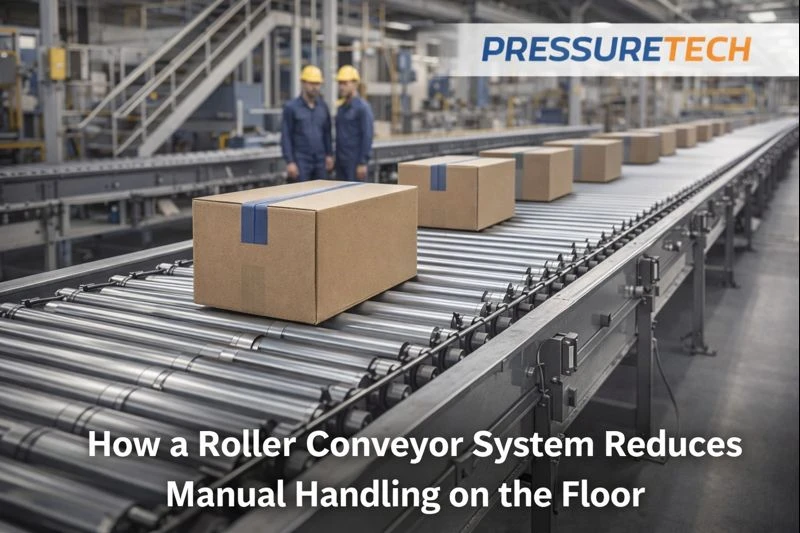

Most strain on a production floor rarely comes from one heavy lift; it builds from repeated handling, such as pulling cartons off pallets, carrying totes around corners, and setting items down twice before the next step even starts. When volume rises, those touches become lost minutes and tired shoulders, especially where traffic and staging collide. A roller conveyor system helps by giving the product a defined path and steadier handoffs, so hands are used for guiding, scanning, and quick checks rather than hauling and re-lifting. It does not remove people from the work; it reduces friction points that absorb time and add strain throughout the day. This article will guide you through how that shift reduces manual handling on the floor.
Where the extra lifting really comes from
Before a line is installed, engineers trace the walking path, because that is where manual handling hides: a carton gets lifted to clear a gap, a tote is carried around a blocked aisle, and items are set down twice when the next station sits just out of reach. Those small moves look harmless in a plan, yet they create fatigue and slow throughput across a shift, especially when people compensate with quick twists. When movement is mapped honestly, the goal becomes straightforward: reduce carries, reduce awkward turns, and keep loads at a stable working height.
When the line starts doing the pushing
Not every stretch needs power, so engineers apply it where pushing turns into lifting, such as long bridges between zones, gentle inclines, and corners where people keep stopping to restart a heavy carton; with powered roller conveyors for long accumulation runs, product moves in controlled sections and zone logic can isolate a jam, which reduces the sudden surges that make people grab and drag loads by hand. Spacing becomes more prz`edictable during peak hours, and the work shifts from forceful pushing to light guidance, which is usually what operators feel first.
Smoother handoffs, fewer touches
Manual handling often hides in the handoff, because a worker lifts a tote to turn it, sets it down, then lifts again to feed the next step when heights and angles do not match. A well-leveled roller conveyor line keeps the load at a consistent working height, so hands can guide, scan, and square cartons without fighting gravity or chasing a drifting edge; engineers tune side guides, transfer plates, and approach speed so items glide instead of snagging, since a clean transfer prevents spills, misroutes, and the quick rescues that strain wrists over long lists.
Small layout moves that cut strain
Most lifting drops when the layout removes the reasons people carry items between steps, so engineers test changes during the busiest hour and adjust one thing at a time. They ask operators what feels awkward:
- Put the indeed where pallets land, not across traffic
- Keep the highest-touch stations close, with clear reach space
- Leave turning space so carts do not block changeovers
- Add simple stops so cartons pause without being grabbed
- Mark a staging edge so piles stay off the route
- Small moves like these cut handling without new headcount.
Keeping the system usable on rough days
A conveyor reduces lifting only if it stays predictable on rough days, because debris on rollers, poorly placed sensors, or hard-to-reach guards can pull people back into carrying when bypassing feels faster than fixing. Engineers plan lockout points, cleaning access, and simple accumulation so small interruptions are handled quickly and safely, without turning a minor issue into a restart event. When maintenance is realistic, the benefits hold; over time, better warehouse ergonomics show up as fewer rescues, fewer awkward reaches, and fewer unplanned pauses, even when volume spikes or staffing changes.
Conclusion
Manual handling drops when movement is planned around real routes, consistent heights, and predictable spacing, not around quiet-shift assumptions. Power is added where it removes the most pushing, and transfers are tuned so cartons glide instead of being lifted again. When the layout stays serviceable on rough days, gains hold, and rescues drop across the line.
In some installations, Pressure Tech Industries is chosen for a practical approach that listens to operators and states limits clearly. Support is shaped around access, maintenance reality, and steady flow, so the system fits daily work without overbuilding the layout or adding drama.
FAQs
Q1. Will a conveyor remove all manual work?
No, because people still load, scan, and deal with exceptions, especially when mixed sizes arrive together. The practical goal is to reduce carries, twists, and repeat lifts so the work feels more controlled and less fatiguing.
Q2. What makes manual handling creep back after an upgrade?
Clutter near the run, tight turns, and frequent micro-stops often bring back pushing and lifting, even if the layout looked fine at handover. A short walk during the busiest hour usually shows where cartons are being rescued and what triggered it.
Q3. Where should we start if products vary a lot in weight?
Start with the route that creates the most touches, not the one that looks neat on paper, then count how many times items are lifted or set down. Redesign that single stretch first and review it after a week of real use.
Sign in to leave a comment.