




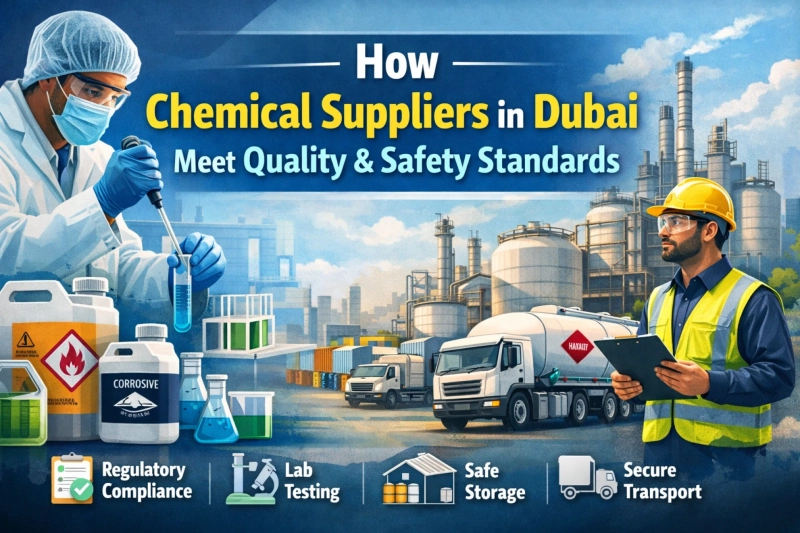
Walking through an industrial zone in Dubai feels different. The air hums. Trucks move with quiet confidence. Paperwork matters here, yet so does trust. Somewhere between the lab coats, storage tanks, and clipboards, quality and safety quietly shape every decision. We’ve spent years watching how Chemical Suppliers in Dubai operate, and honestly, it’s not just about ticking boxes. It’s a mindset. Sometimes strict, sometimes cautious, sometimes a little obsessive. For good reason.
Dubai sits at a crossroads. Chemicals move in and out toward construction, manufacturing, water treatment, oil and gas, food processing, even cosmetics. One small lapse can ripple far. That pressure shows in how suppliers behave daily, not only during audits.
Regulatory Expectations That Don’t Leave Much Room for Guesswork
Dubai doesn’t treat chemical handling casually. Authorities expect clarity. Suppliers answer to bodies like Dubai Municipality, ESMA, and Civil Defense. Documents stack up fast. Material Safety Data Sheets get reviewed. Storage layouts get checked. Transport routes get questioned.
We’ve seen warehouses paused mid-operation over labeling issues. Not dramatic. Just firm. Labels matter. Batch numbers matter. Hazard symbols matter. It’s part of how chemical trading in Dubai earned its reputation across the Middle East.
Regulation here feels alive. Inspectors don’t rely on theory alone. They walk floors. They open drums. They ask warehouse staff questions, not just managers. Some suppliers get nervous about that. Others welcome it.
Supplier Audits That Feel Personal, Not Abstract
Audits aren’t rare events. They come often. Internal reviews sit alongside external checks from clients and authorities. We’ve watched teams rehearse audits like actors before a play, then relax once the routine becomes habit.
Quality audits cover sourcing, testing, storage, dispatch. Safety audits go deeper. Fire suppression. Spill control. Ventilation. Training records. It sounds heavy, and sometimes it is. Still, experienced chemical suppliers in Dubai treat audits as maintenance, not punishment.
One warehouse supervisor once said audits make him sleep better. That stuck with us.
Laboratory Testing That Goes Beyond Minimum Specs
Testing isn’t optional here. Incoming raw materials get checked. Finished chemicals get sampled again. Some suppliers maintain in-house labs. Others work with accredited third-party laboratories across the UAE.
Tests vary by chemical type. Purity levels. Moisture content. pH balance. Contaminant traces. Even color and odor get attention. Small details. Annoying details, maybe. Yet clients notice when consistency stays intact month after month.
In sectors like pharmaceuticals, food-grade chemicals, and water treatment chemicals in Dubai, tolerance margins stay tight. One failed batch can mean rejection across an entire shipment.
Storage Practices That Feel Overcautious—Until You Understand Why
Chemical storage in Dubai looks organized to the point of obsession. Segregated zones. Clear aisles. Temperature controls. Secondary containment systems under drums. Flammable materials far from oxidizers. Acids nowhere near alkalis.
Some visitors find it excessive. Then they hear stories. Heat spikes. Shipping delays. Leaking containers. Dubai’s climate doesn’t forgive mistakes. Heat changes chemical behavior. Suppliers know this well.
We’ve seen thermometers checked more often than clocks.
Safety Training That Repeats Itself for a Reason
Training sessions happen often. New hires attend induction programs. Long-term staff attend refreshers. Same slides. Same drills. Same warnings. People roll their eyes sometimes. Then they attend a spill simulation.
That’s when repetition makes sense.
Chemical safety training in Dubai covers PPE usage, emergency response, first aid, fire control, handling protocols. Warehouse teams practice evacuations. Drivers practice containment steps. Supervisors track attendance carefully.
Mistakes still happen. Training reduces damage when they do.
Transportation Controls That Extend Beyond the Warehouse Gate
Once chemicals leave the warehouse, responsibility stays. Transport regulations feel strict. Approved vehicles only. Drivers trained in hazardous material handling. Route planning to avoid sensitive zones. Emergency contact sheets inside cabins.
Some shipments move at night to reduce exposure risks. Some require escort vehicles. Paperwork follows every drum, pallet, tanker.
Logistics partners matter. Chemical suppliers in Dubai choose transport companies slowly. Trust builds over time, not contracts alone.
Client Qualification That Filters Risk Early
Not every buyer gets approved instantly. Suppliers assess clients too. End-use matters. Storage capability matters. Compliance history matters.
It feels awkward sometimes. A buyer wants chemicals fast. Supplier asks questions. Many questions. Still, that caution protects both sides.
Industries like manufacturing, construction, oilfield services, and cleaning chemicals rely on safe downstream handling. Suppliers know their responsibility doesn’t end at delivery.
Digital Tracking Without Making It the Star
Systems track batches, expiry dates, test results, shipment history. Software helps. Still, people stay involved. Screens don’t replace judgment.
We’ve seen experienced warehouse managers spot issues before systems flag them. A leaking seal. A strange smell. A drum slightly warmer than others. Those instincts matter.
Technology supports quality. It doesn’t replace it.
International Standards Without the Buzzwords
ISO certifications show up everywhere. ISO 9001. ISO 14001. ISO 45001. Suppliers display certificates proudly, though most clients barely glance anymore. What matters is behavior behind the paper.
Environmental controls get attention. Waste disposal. Effluent treatment. Emission monitoring. Dubai expects chemical suppliers to respect surroundings, not only balance sheets.
Global clients notice this alignment. It helps Dubai remain a trusted chemical trading hub.
Human Accountability Still Carries Weight
At some point, standards stop being documents. They become habits. People speak up. People pause shipments. People question instructions.
We’ve seen junior staff challenge senior managers over safety concerns. That culture didn’t appear overnight. It grew from pressure, training, and consequences.
Mistakes cost money. Accidents cost reputations. Dubai doesn’t forget easily.
Why Buyers Keep Coming Back Anyway
Despite the rules, or maybe because of them, buyers trust chemical suppliers in Dubai. Reliability matters. Consistency matters. Safety matters.
Clients know delays happen. Inspections happen. Extra paperwork happens. Still, products arrive compliant. Specs stay stable. Support stays responsive.
That quiet dependability keeps long-term contracts alive.