




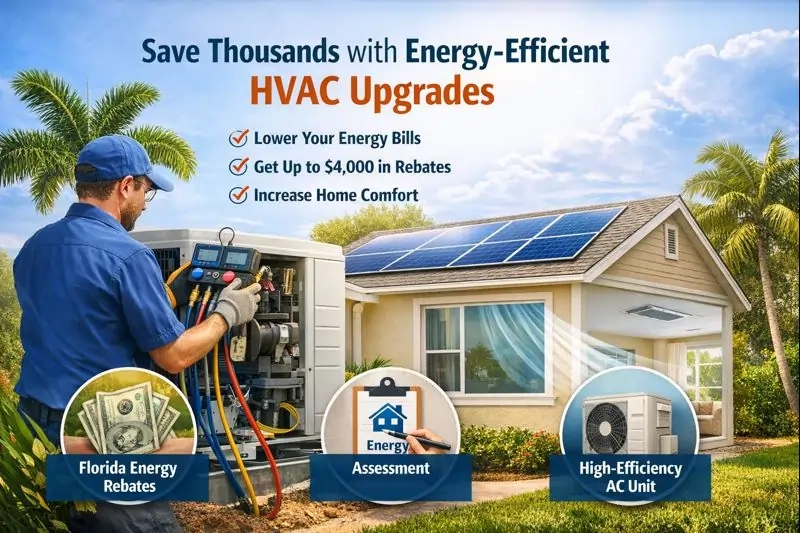
Florida homeowners are no strangers to high energy bills. With long summers, constant air conditioning use, and rising electricity costs, inefficient HVAC systems can quietly drain hundreds of dollars every year. Fortunately, many homeowners are now discovering that upgrading to energy-efficient HVAC systems can significantly reduce monthly costs while improving indoor comfort.
What makes these upgrades even more attractive is the availability of Florida energy rebates programs, which help offset installation costs and make modern HVAC systems more affordable.
Why HVAC Efficiency Matters in Florida Homes
In Florida, air conditioning accounts for a large portion of household energy use. Older HVAC systems often work harder than necessary, consuming more electricity to maintain indoor temperatures. Over time, this inefficiency leads to:
- Higher monthly utility bills
- Uneven cooling throughout the home
- Increased wear and frequent repairs
- Reduced indoor air comfort
Energy-efficient HVAC systems are designed to cool homes more effectively while using less energy. These systems operate with improved components, better airflow, and modern technology that adapts to a home’s cooling demands.
The Cost of Delaying an HVAC Upgrade
Many homeowners delay replacing their HVAC system because of upfront costs. However, continuing to run an outdated system can be more expensive in the long run. Older units often lack modern efficiency standards and require frequent maintenance, leading to higher repair expenses and wasted energy.
In Florida’s climate, an inefficient system running year-round can add thousands of dollars in excess energy costs over time. That’s where energy efficiency upgrades and rebate programs come into play.
How Energy-Efficient HVAC Upgrades Reduce Energy Bills
Upgrading to a high-efficiency HVAC system offers immediate and long-term benefits. Homeowners typically notice:
- Lower electricity bills due to reduced energy consumption
- Improved temperature consistency across rooms
- Better humidity control, which is critical in Florida
- Quieter system operation
- Increased home comfort year-round
These improvements not only enhance daily living but also reduce strain on the electrical grid and support more sustainable energy use.
Understanding Florida Energy Rebate Programs
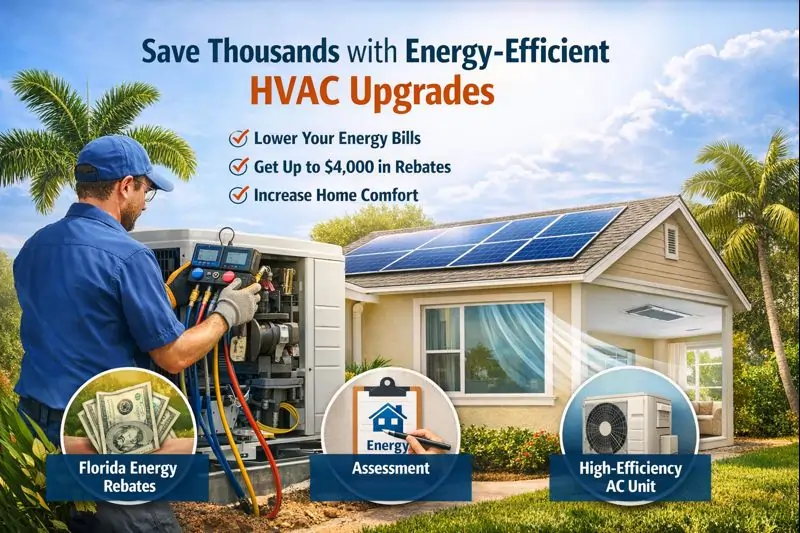
Florida offers various energy efficiency rebate opportunities designed to encourage homeowners to upgrade outdated systems. These rebate programs help reduce the upfront cost of energy-efficient installations, including HVAC upgrades.
While rebate availability and terms can vary, many programs focus on improvements that significantly reduce household energy consumption. HVAC system upgrades are among the most common qualifying improvements due to their impact on overall energy use.
Rebates may be applied as discounts, credits, or direct payments, depending on the program and contractor involvement.
The Role of Home Energy Assessments
Before qualifying for many rebate programs, homeowners are encouraged to complete a home energy assessment. This assessment evaluates how energy is used throughout the home and identifies areas where energy loss occurs.
During an energy assessment, professionals typically inspect:
- HVAC system performance and efficiency
- Ductwork for leaks or airflow issues
- Insulation levels in the attic
- Windows and doors for air leaks
- Overall energy consumption patterns
The assessment provides clear recommendations that help homeowners prioritize upgrades that deliver the greatest energy savings and rebate eligibility.
Why Professional Installation Is Essential
Energy-efficient HVAC systems must be installed correctly to perform as intended. Improper installation can reduce efficiency, increase operating costs, and even void rebate eligibility.
Licensed HVAC contractors ensure that systems are properly sized, installed, and configured to meet Florida building codes and energy standards. Professional installation also helps homeowners meet the requirements set by energy rebate programs, which often mandate licensed work for qualification.
Long-Term Value Beyond Monthly Savings
Energy-efficient HVAC upgrades offer benefits that go beyond immediate utility bill reductions. Homeowners may also experience:
- Increased property value
- Improved indoor air quality
- Reduced maintenance and repair costs
- Longer system lifespan
- Greater appeal to future buyers
In competitive real estate markets, energy-efficient features are increasingly seen as valuable home improvements rather than optional upgrades.
Timing Your HVAC Upgrade for Maximum Savings
Many homeowners wait until their system fails before upgrading. However, planning an upgrade proactively can unlock better options, better pricing, and easier rebate qualification.
Scheduling an upgrade during off-peak seasons or after completing an energy assessment allows homeowners to explore available rebates and financing options without pressure.
Final Thoughts
Energy-efficient HVAC upgrades are one of the most impactful home improvements Florida homeowners can make. With rising energy costs and growing awareness of energy efficiency programs, there has never been a better time to evaluate an existing HVAC system.
By combining modern HVAC technology with energy rebate opportunities, homeowners can significantly reduce their energy bills, improve comfort, and protect their long-term investment. A professional energy assessment and licensed installation are key steps in maximizing savings and ensuring eligibility for available rebates.
For Florida homeowners seeking comfort, efficiency, and real financial savings, upgrading an HVAC system is not just an expense - it’s a smart investment.