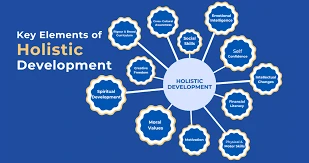

Holistic education models have been emerging as one of the most significant changes in the era where the traditional rote learning method is often found inadequate. The above-said approaches aim at the comprehensive development of a child not only intellectually but also emotionally, socially, and physically, thus producing the individuals who are capable of dealing with the challenges of the real world.
These programs are spread from the remotest villages to the metropolitan cities and are thus changing the face of education widely which is not only about the grades but also about the development of the positive qualities like resilience, creativity, and community sense. In cooperation with the NGOs, which are primarily responsible for this kind of education, in the present list, we discuss 7 such examples that are leading to the transformation of lives in different countries across the world.
1. India's Community-Centric Schools Empowering Underserved Youth
In India, holistic models combine vocational education with core subjects in order to educate the impoverished in a manner that will help break the cycle of poverty. For example, the Christel House (https://christelhouse.org/) goes beyond the traditional school model by providing holistic support in areas like nutrition, health, and career guidance together with academics, which is the way to success for students from poor families.
On the other hand, the Pratham which mainly focuses on experiential learning through community participation, has made similar strides in the literacy rate and self-confidence of millions of people in states like Uttar Pradesh and Maharashtra through this way.
2. Finland's Play-Based Learning Revolutionizing Early Education
One of the biggest characteristics of Finland's education system that is free from unnecessary tensions and is therefore highly praised all over the world is the fact that it values play, being out of the house, and the emotional health of the child instead of standardized tests. Such a holistic approach has resulted in student joy and excellent international PISA rankings.
Additionally, NGOs like Save the Children Finland work with schools to implement mental health curriculums; thus, kids are given the opportunity to master social skills at a very young age. The system's power changes even the teacher training programs which lead the reforms in the neighboring countries like Estonia.
3. South Africa's Focus on Trauma-Informed Education
South Africa, on the contrary to the hard socio-economic times, has the advantage of holistic models that work on resolving trauma caused by the past of apartheid and the inequalities that followed. There are programs that unite therapy with various art forms and physical activities not only to heal but also to educate the affected ones.
Christel House is present in this country too and at the same time it is giving the youth a safe place with the after-school programs, an environment of support including family counseling, which is a way to a great improvement in graduation rates. The likes of IkamvaYouth provide combined services of tutoring and mentorship, hence, youth from townships first get the power then they go on higher education and entrepreneurial activities.
4. Mexico's Indigenous-Inclusive Curricula Preserving Culture
Holistic education in Mexico is based on the respect of native roots and the inclusion of the study of culture in the subjects of STEM and languages. The main feature of this culturally responsive model is that it is a remedy for the problem of dropouts in the countryside.
The projects that receive the support from the NGOs such as the Christel House which is running the schools that are mainly focused on bilingual teaching and community health, have witnessed the students not only getting good grades but also holding their traditions. The same way the Mexican part of Room to Read is working for girls' education through libraries and life skills workshops, thus bringing gender equity to such places as Chiapas.
5. Kenya's Tech-Integrated Holistic Programs
There are new education models in Kenya, which combine the teaching of the digital and the environmental aspects, and thus the education landscape of Kenya is changing.
The classrooms that are powered by the sun are not only teaching coding but also are making the students aware of the green economy through the practice of sustainable farming. Shining Hope for Communities (SHOFCO), the organization, is also adding health clinics and leadership training as the components of schools, thus, creating less dropout in schools.
This is the same as the efforts of other African NGOs such as Educate!, which is mainly concerned with the gaining of the skills of entrepreneurship to bring about economic change.
6. The U.S.'s Mindfulness and SEL Integration
The centerpiece of the integrated programs in the U.S. is social-emotional learning (SEL), embraced at most by the schools that have introduced mindfulness as a remedy to the stress. There are programs, for example, in California that show the students have got their focus and empathy skills better through the medium of mindfulness.
The US branch of Christel House, especially in Indianapolis, is providing a combination of nutrition with academics and college prep, a way that the urban youth are serviced effectively. The nonprofits like CASEL which are the driving force behind SEL frameworks, are local players in the field of setting standards that help policy makers and leads to the decrease of the behavioral problems flow.
7. Australia's Remote Indigenous Education Models
Australia's holistic educational methods for the Aboriginal aim at, among other things, bringing back the connection with the culture and learning from the land. For instance, the bush schools teach the students the subject of science by using traditional knowledge, thus, the students become more involved.
The likes of the Australian Indigenous Mentoring Experience (AIME) can be the places where the youth of First Nations get their role models and help with their studies, thus, the gap is closed. The model which is similar to the work done by the worldwide groups like World Vision showing that the respect of cultural identity is the key to educational success.
These are only a few of many instances of how a holistic education is not a universal solution but a flexible system that brings real effects such as better retention rates and empowered communities.
Thanks to the support of NGOs like the global network of Christel House that is helping the realization of such models, more and more countries are becoming their followers. What would be your next step if you are inspired? You could help these causes to bring the change to a higher level.


























Sign in to leave a comment.