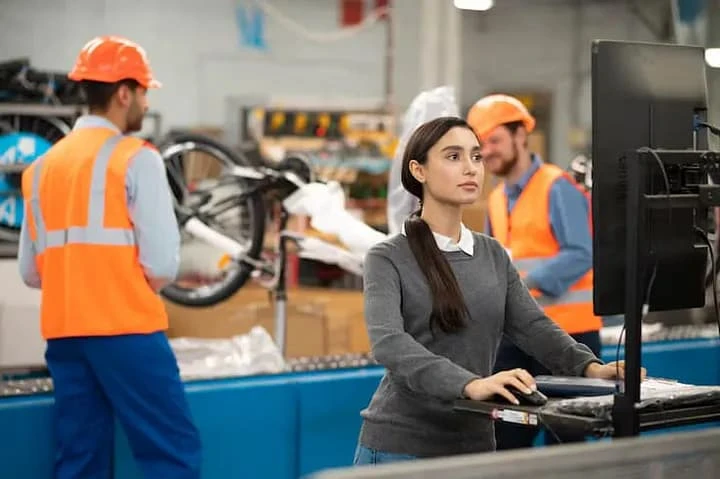

In today’s rapidly evolving industrial landscape, manufacturing IT management has emerged as a pivotal factor in driving productivity, efficiency, and innovation. As we approach 2025, the fusion of information technology with traditional manufacturing processes is not just a trend but a necessity for businesses aiming to stay competitive and agile. This integration transforms how factories operate, how data is utilized, and how decisions are made, ultimately reshaping the productivity paradigm in manufacturing.
The essence of manufacturing IT management lies in the strategic implementation and oversight of digital systems that support manufacturing operations. This includes everything from real-time monitoring and predictive maintenance to supply chain optimization and quality control. By leveraging advanced IT tools, manufacturers can transcend the limitations of manual processes, reduce downtime, and optimize resource allocation, thus fostering an environment where productivity flourishes.
The Evolution of Manufacturing IT Management: A Technological Renaissance
Manufacturing has traditionally been a domain characterized by heavy machinery, manual labor, and intricate supply chains. However, the digital revolution has ushered in a new era where manufacturing IT management acts as the backbone of smart factories and Industry 4.0. This evolution is powered by the convergence of several technological innovations including the Internet of Things (IoT), artificial intelligence (AI), cloud computing, and big data analytics.
As IoT devices become ubiquitous on the factory floor, they generate massive volumes of real-time data that require sophisticated IT management systems to process, analyze, and act upon. These smart sensors monitor machine performance, environmental conditions, and production metrics, feeding information into centralized platforms where AI algorithms can detect patterns, predict failures, and suggest enhancements. The result is a significant reduction in unplanned downtime and improved operational efficiency.
Cloud computing further amplifies the benefits by enabling scalable, flexible, and accessible IT infrastructures. Manufacturers can now deploy applications and store data without the constraints of physical servers, allowing for seamless collaboration across departments and geographic locations. This interconnectedness facilitates quicker decision-making and rapid response to market changes, key drivers of productivity in a fast-paced manufacturing environment.
Data-Driven Decision Making: The Heartbeat of Enhanced Productivity
One of the most transformative effects of manufacturing IT management is the shift from intuition-based decision-making to data-driven strategies. With comprehensive data collection and advanced analytics, manufacturers gain unprecedented visibility into every facet of their operations. This transparency allows managers to identify bottlenecks, inefficiencies, and quality issues with pinpoint accuracy.
For instance, predictive analytics tools can forecast machine failures before they occur, enabling proactive maintenance schedules that avoid costly production halts. Similarly, data insights can optimize inventory management by aligning supply with demand, reducing excess stock and minimizing waste. This intelligent resource management not only cuts costs but also accelerates production cycles, enhancing overall throughput.
Moreover, IT management systems facilitate continuous improvement by providing detailed performance reports and benchmarking capabilities. Manufacturing teams can track key performance indicators (KPIs) in real time, compare them against industry standards, and implement iterative improvements. This cycle of monitoring and refinement drives sustained productivity gains and fosters a culture of operational excellence.
Integration and Interoperability: Breaking Down Silos for Seamless Operations
A critical challenge in manufacturing has long been the fragmentation of processes and systems, leading to inefficiencies and communication gaps. Effective manufacturing IT management addresses this by integrating disparate systems such as Enterprise Resource Planning (ERP), Manufacturing Execution Systems (MES), and Supply Chain Management (SCM)—into a cohesive digital ecosystem.
This interoperability ensures that data flows smoothly across departments, providing a unified view of production status, inventory levels, and customer orders. When stakeholders have access to consistent and timely information, coordination improves dramatically, reducing errors and delays. For example, real-time updates on raw material availability can prompt automatic adjustments in production schedules, preventing downtime and optimizing labor utilization.
Furthermore, integrated IT management supports agile manufacturing practices by enabling rapid reconfiguration of processes to meet changing market demands. This agility is crucial in 2025’s competitive landscape, where product life cycles are shortening and customization is increasingly sought after. By breaking down silos and fostering collaboration, manufacturing IT management becomes a catalyst for innovation and responsiveness.
Cybersecurity: Safeguarding Productivity in a Connected World
As manufacturing operations become more interconnected through IT systems, they also become more vulnerable to cyber threats. Ensuring robust cybersecurity is therefore an integral aspect of manufacturing IT management that directly impacts productivity. Cyberattacks, data breaches, or system outages can halt production lines, compromise intellectual property, and erode customer trust.
In response, manufacturing IT management incorporates comprehensive security protocols including network segmentation, encryption, multi-factor authentication, and continuous monitoring. These measures protect critical assets and ensure business continuity, allowing manufacturers to operate confidently in a digital environment.
Moreover, investing in cybersecurity builds resilience against emerging threats and regulatory compliance requirements. This proactive stance not only safeguards productivity but also enhances reputation and competitive advantage in a marketplace increasingly sensitive to data privacy and security.
Workforce Empowerment through Digital Tools and Training
The human element remains central to manufacturing productivity, and manufacturing IT management plays a vital role in empowering the workforce. Digital tools such as augmented reality (AR) for maintenance guidance, mobile applications for real-time communication, and collaborative platforms for knowledge sharing enhance worker efficiency and reduce errors.
Equally important is the emphasis on upskilling employees to navigate and leverage advanced IT systems effectively. Continuous training programs integrated with IT management strategies ensure that personnel are not only adept at operating new technologies but also capable of contributing to process improvements and innovation.
By aligning technology with human capabilities, manufacturing IT management fosters a more engaged, skilled, and productive workforce, essential for meeting the challenges and opportunities of 2025.
Conclusion: Embracing Manufacturing IT Management for a Productive Future
The transformative power of manufacturing IT management in improving productivity by 2025 is undeniable. By harnessing cutting-edge technologies, fostering data-driven decision-making, enabling seamless integration, safeguarding operations through cybersecurity, and empowering the workforce, manufacturing enterprises position themselves for sustained success in an increasingly complex and competitive environment.
To navigate this dynamic landscape effectively, partnering with expert technology providers is essential. Andromeda Technology Solutions stands ready to help businesses unlock the full potential of manufacturing IT management, delivering tailored strategies that drive operational excellence and innovation.






























Sign in to leave a comment.