
“Over the past three years, pickleball match participation has surged about 223.5%.” —SFIA
That’s where understanding the difference between skill level, match format, and the type of competition is important.
In this guide, we’ll understand how these factors shape pickleball matches and help players choose games that match their goals, comfort level, and playing style.
How Skill Level Changes Pickleball Matches
Pickleball matches don’t all feel the same, even when the rules stay consistent. Skill level plays a major role in how pickleball matches feel, flow, and challenge players.
Even with the same court and rules, the experience can be very different depending on who is playing.
Beginner-Level Pickleball Matches
- Slower pace with shorter rallies
- Focus on learning consistency rather than winning points
- More missed shots and relaxed play
- Friendly environment with less pressure
- Ideal for building confidence and understanding game rhythm.
Intermediate-Level Pickleball Matches
- Noticeably faster rallies and better shot placement
- Players begin using strategy instead of just returning the ball
- Fewer unforced errors and longer exchanges
- Matches feel more structured and competitive
Advanced-Level Pickleball Matches
- High-speed rallies with sharp angles and quick reactions
- Strong emphasis on positioning, anticipation, and control
- Very few mistakes, making each point meaningful
- Matches demand both physical stamina and mental focus
As skill level increases, pickleball matches shift from learning-focused to performance-driven, changing not just how players compete but how the entire match feels.
How Match Format Shapes the Experience
The format of a match has a big impact on how pickleball matches are played and enjoyed. Even players at the same skill level can have very different experiences depending on the format.
Singles Pickleball Matches
- Require more movement and full-court coverage
- Place greater physics demand on player
- Emphasize speed, endurance, and shot placement
- Points tend to be quicker, with fewer extended exchanges
Doubles Pickleball Matches
- Focus more on teamwork and communication
- Rely heavily on positioning and coordinated movement
- Involve less running but more strategic thinking
- Create a balanced mix of competition and social interaction
Open Play vs. Structured Match Formats
- Open play matches are flexible, casual, and often rotate partners
- Structured matches use fixed teams, clear scoring, and defined match flow
- Open play feels social and relaxed, while structured formats feel more competitive.
Choosing the right match format can significantly affect comfort, enjoyment, and overall performance during pickleball matches.
Competition Type: Casual Play vs. Competitive Matches
Beyond skill level and format, the type of competition plays a key role in shaping pickleball matches. Some matches are designed for enjoyment and social play, while others focus on performance and results.
According to USA Pickleball, “In 2024, they approved 142 tournaments, which included 13 Golden Ticket events and the Biofreeze USA Pickleball National Championships, which is the sport's biggest competition.”
This shows how competitive matches are organized and why players encounter varied match experiences.
- Casual pickleball matches are usually relaxed and flexible. Players may adapt rules to fit time limits, mix skill levels, and focus more on fun than outcomes. These matches encourage conversation, experimentation, and steady improvement without pressure.
- Competitive pickleball matches follow standardized rules and scoring. Players are grouped by skill level, matches move at a faster pace, and every point matters. The environment is more focused, with emphasis on consistency, strategy, and mental toughness.
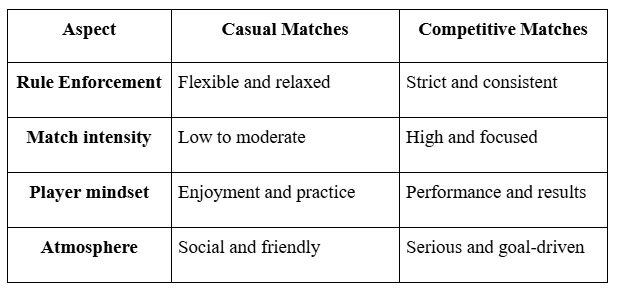
Understanding this distinction helps players choose pickleball matches that align with their comfort level and competitive goals.
How Scoring & Rules Feel Different Across Matches
As per USA Pickleball, “The Pickleheads record now has 68,458 courts, with 18,455 of which are new in 2024.”
These simple stats highlight the explosive demand of pickleball matches across the world.
While the basic rules of pickleball stay the same, the way scoring and rules are applied can feel very different from one match to another.
This often affects the pace, flow, and overall experience of pickleball matches.
Casual Matches
These matches often adjust scoring to fit available time, allowing games to move quickly and stay relaxed. Small pauses for clarification or replays are common and rarely disrupt the flow.
Competitive Matches
These matches follow standard scoring systems closely, with clear side-outs, point tracking, and minimal interruptions. This creates a more focused and structured rhythm.
Rule Enforcement
Rule enforcement is lighter in social play, where learning and fairness matter more than precision. In competitive settings, rules are applied consistently to ensure equal play.
Momentum Matters More
Momentum matters in competitive matches, as each point can influence the outcome, while casual matches prioritize continuity and enjoyment.
These differences may seem subtle, but they significantly shape how players experience pickleball matches at various levels and settings.
Matching Your Goals with the Right Pickleball Matches
Choosing the right pickleball matches becomes easier when you’re clear about what you want from the game. Different match styles support different goals, and aligning the two leads to a better overall experience.
- If your goal is steady improvement, structured matches with players at a similar skill level offer consistency and meaningful feedback.
- If you enjoy social interaction, casual or open-play matches provide a relaxed setting with less pressure and more flexibility.
- If you like competition, organized matches with clear rules and scoring create the challenge and focus you may be looking for.
- If time is limited, shorter or flexible match formats help you stay engaged without long commitments.
Understanding your priorities helps you choose pickleball matches that feel rewarding rather than overwhelming.
Frequently Asked Questions (FAQs)
Are pickleball matches the same at every skill level?
No! As skill levels increase, pickleball matches become faster, more strategic, and more consistent, with fewer unforced errors and higher expectations.
Which pickleball match format is better for regular play?
That depends on personal preference. Doubles matches are popular for regular play due to their balance of strategy and social interaction, while singles suits players who enjoy physical intensity.
Do competitive matches require tournament experience?
Not at all! Many competitive matches are organized by skill level, allowing players to participate comfortably without prior tournament experience.
How long do pickleball matches usually last?
Match length varies based on format and competition type. Casual matches may be shorter and flexible, while competitive matches often follow standard scoring and last longer.
What type of pickleball matches are best for improving skills?
Structured matches against players of similar ability tend to support faster improvement by offering consistent challenges and clear feedback.
The Bottom Line
Pickleball matches can feel very different depending on skill level, format, and competition type, and understanding these differences makes it easier to choose the right playing environment.
For ongoing insights, news, and updates around pickleball matches, The Pickleball Gazette offers valuable perspectives for players who want to stay informed and make smarter choices.
Explore! Learn! Stay connected with The Pickleball Gazette to elevate your experience!



























Sign in to leave a comment.