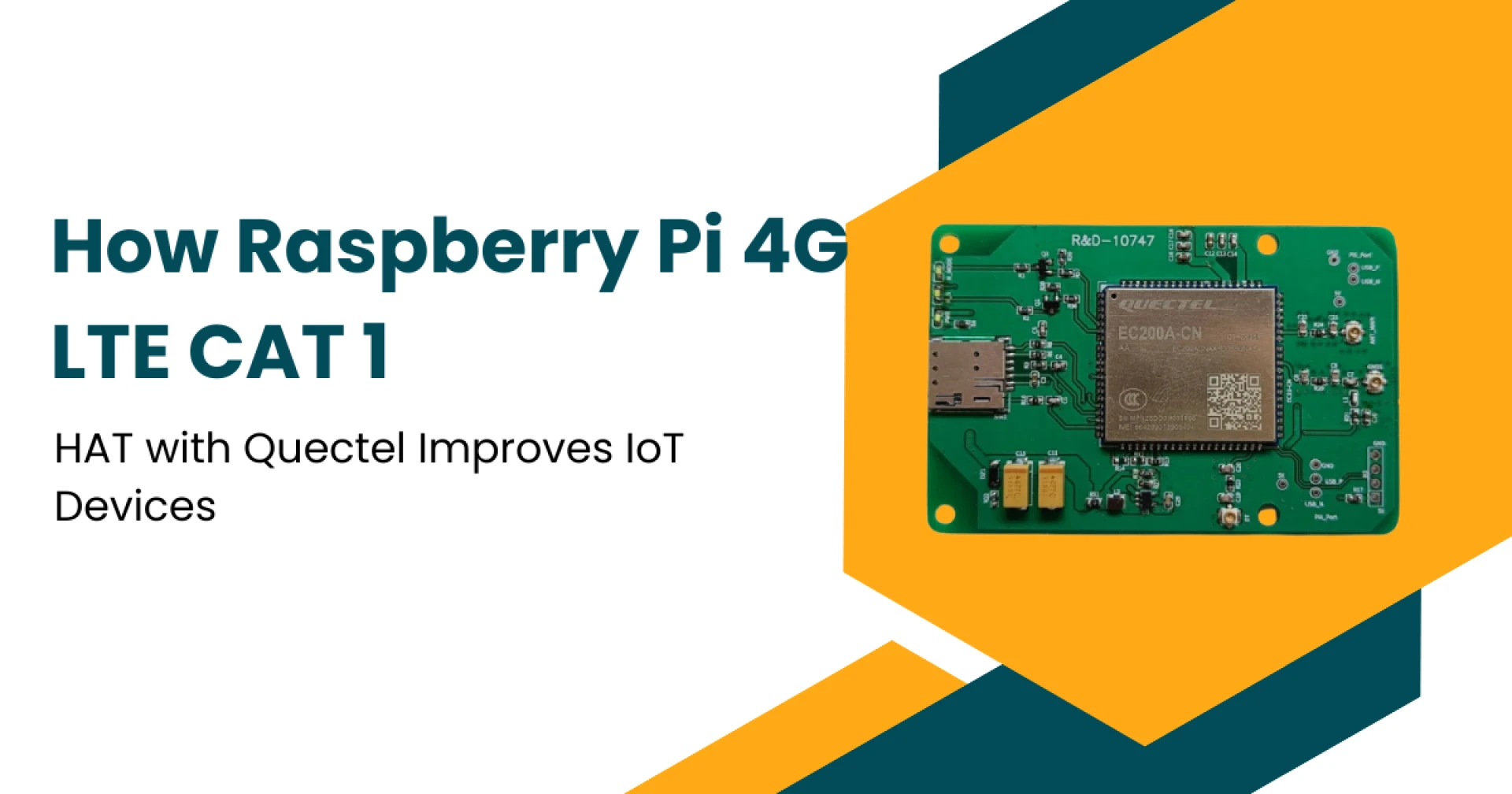

IoT systems continue to expand across factories, cities, farms, and retail. Many of these systems need reliable wireless links. Wi-Fi does not work in many remote or mobile areas. Cellular links fill this gap. The Raspberry Pi 4G LTE CAT 1 HAT with Quectel gives the Raspberry Pi stable cellular reach with modest cost and power draw.
Reports from industry groups show strong growth in IoT. Global IoT device counts passed 18 billion units in 2024, with steady increases each year. Many of these devices need cellular since fixed links remain limited in large regions. CAT 1 modules fit many of these systems due to their balanced speed and broad coverage.
This article explains how the Raspberry Pi 4G LTE CAT 1 HAT with Quectel boosts IoT performance. All sections are written for engineers and technical planners.
What LTE CAT 1 Means for IoT
LTE CAT 1 uses standard LTE networks. It supports downlink speeds near 10 Mbps and uplink speeds near 5 Mbps. These rates suit most IoT tasks that use burst data or periodic updates. The category supports full mobility and handover between cells.
CAT 1 sits between low-rate NB-IoT and high-rate CAT 4. Designers who need camera snapshots, telemetry bursts, GPS data, or firmware updates often pick CAT 1 because the link stays stable across wide regions.
Overview of the Raspberry Pi 4G LTE CAT 1 HAT with Quectel
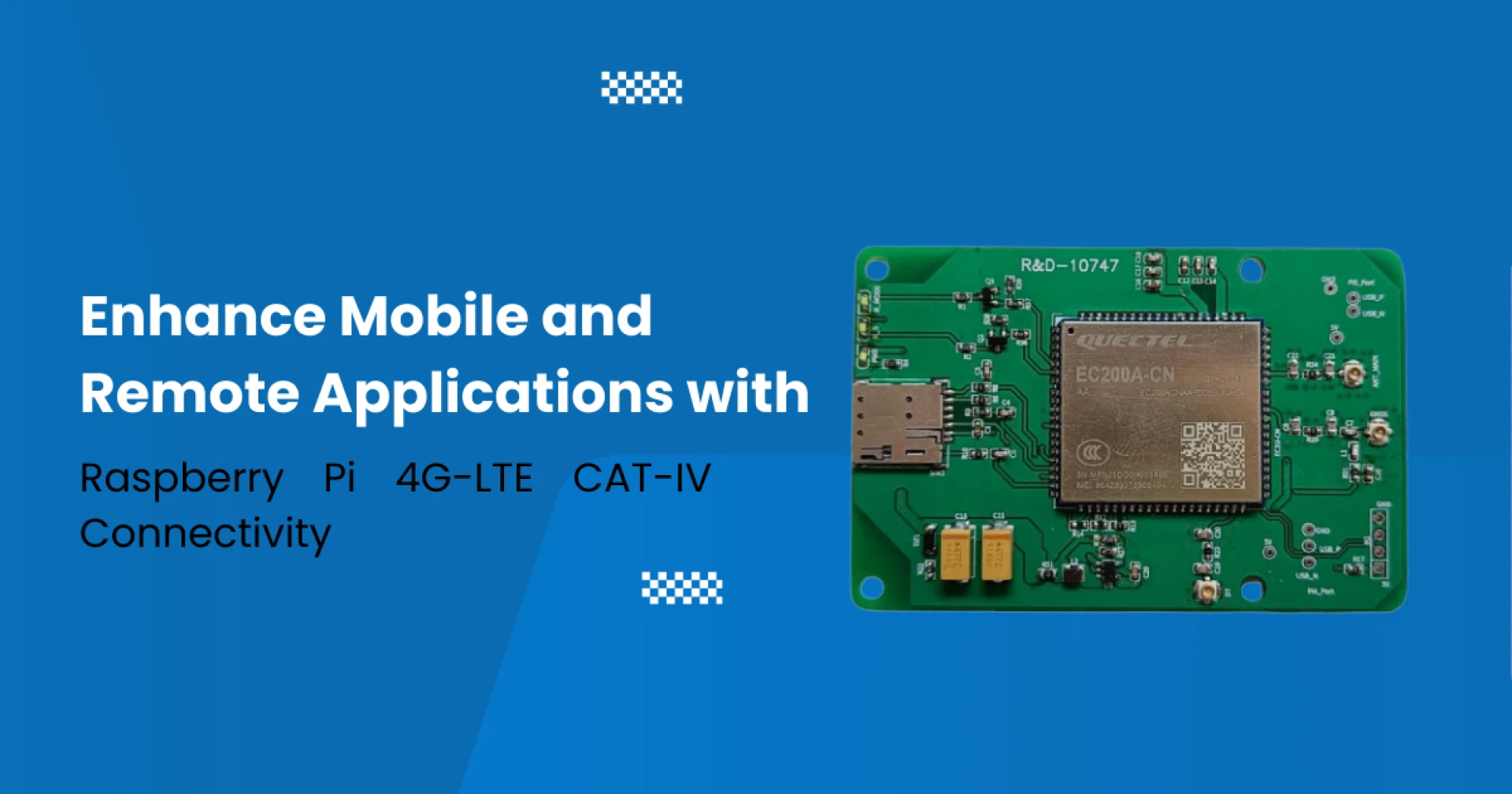
The HAT mounts on a Raspberry Pi and adds:
- a Quectel CAT 1 modem,
- LTE antenna connectors,
- a SIM slot,
- power control circuits,
- USB or UART interfaces,
- optional GNSS support.
The HAT works with Raspberry Pi OS. The Pi detects the modem over USB or serial lines. Quectel modules have mature AT command sets and integrate easily with Linux tools.
This setup turns a Raspberry Pi into a small cellular gateway or field controller.
Key Technical Benefits
1. Stable Throughput for Real IoT Loads
CAT 1 gives enough bandwidth for many field systems. Telemetry sensors may send 1–5 KB each minute. A Pi gateway can buffer these packets and send them in short bursts. The HAT can also support:
- small image uploads,
- system health logs,
- IoT command packets,
- GPS location data.
The link stays stable when devices move across cells. This matters for logistics boxes, utility vehicles, and mobile robots.
2. Broad Coverage in Remote Zones
LTE towers exist in wide regions. Many rural and semi-urban sites lack wired networks. CAT 1 modules connect to common LTE bands used globally. This gives IoT installers wide deployment freedom.
The HAT supports external antennas. Installers mount high-gain antennas to improve weak-signal areas. This helps farms, mines, wind farms, and road systems.
3. Low Power for Battery Devices
CAT 1 uses less energy than high-rate LTE categories. Quectel modules support power-saving features. These include idle sleep, extended DRX cycles, and timed wake functions.
A Pi Zero or Pi Compute Module paired with a CAT 1 HAT can run from solar systems or large battery packs. Field tests show that smart duty cycles cut radio energy use by 50–70% in many sensor setups.
4. Reliable GNSS Support
Many Quectel CAT 1 modules also include GNSS. The HAT exposes this capability through dedicated antenna ports. The Pi can read:
- GPS,
- GLONASS,
- BeiDou,
- sometimes Galileo.
IoT devices that track location can run both cellular and GNSS through a single board. Fleet tracking, asset monitoring, and package tracking benefit directly.
5. Strong Developer Ecosystem
The Raspberry Pi has a large Linux ecosystem. Engineers can use:
- ModemManager,
- NetworkManager,
- PPP,
- QMI or MBIM drivers,
- Python libraries for AT control.
The Quectel module exposes multiple USB interfaces. Users can manage data, control, GNSS, and diagnostics channels. Many engineers value this clean integration during prototyping.
Software Integration
1. Setup on Raspberry Pi OS
Most CAT 1 HATs expose a USB modem on boot. The Pi loads CDC or QMI drivers and shows several /dev/ttyUSB* ports. Tools like mmcli, qmicli, and minicom can control the module.
2. Data Connection Options
Engineers can choose:
- PPP mode for simple setups,
- QMI mode for faster links,
- MBIM mode for modern drivers.
QMI gives the best latency and throughput. MBIM offers clean integration with NetworkManager.
3. MQTT and Secure Cloud Links
Most IoT systems use MQTT for cloud links. The HAT only provides the data layer. Security must run on the Pi. Engineers should:
- use TLS 1.2 or higher,
- rotate certificates,
- enable endpoint checks,
- restrict open ports on the Pi.
With these steps, IoT devices can send secure telemetry through MQTT, HTTPS, or custom protocols.
Real-World Use Cases
1. Smart Meter Gateways
Smart meters send usage data at fixed intervals. CAT 1 handles these loads with ease. A Pi gateway aggregates meter packets and transmits them every hour. This lowers radio use and data charges.
2. Mobile Asset Trackers
Goods in transit need location data. A CAT 1 module sends GPS data and event logs. Small images can be added during tamper alerts. The link remains stable even at highway speeds.
3. Small Retail Kiosks
Retail systems need fallback Internet. A Pi kiosk with CAT 1 failover keeps PoS terminals active when wired links drop. The low power draw helps rural shops with unstable power grids.
4. Industrial Controllers
Factories need remote diagnostics. Engineers can access the Pi through SSH tunnels for quick checks. CAT 1 is enough for logs, configuration updates, and status snapshots.
Performance Considerations
1. Latency
CAT 1 latency is moderate. Typical values range from 40–80 ms. This suits control loops that do not need real-time limits.
2. Data Costs
Many operators offer IoT-friendly plans. Monthly data blocks from 100 MB to 1 GB handle most field setups. Good buffering and compression reduce monthly charges.
3. Signal Strength
External antennas often improve link stability. Installers should check RSRP, RSRQ, and SINR values before final mounting. A simple sweep during installation avoids long-term issues.
Design Factors to Review
1. Antenna Choice
Antenna quality impacts link stability. Use certified LTE antennas. Keep cable lengths short. Avoid sharp bends.
2. Power Supply
The modem may draw short bursts of higher current. Designers should use stable regulators. Undersized supplies cause modem resets.
3. SIM Selection
Choose M2M SIMs for long-life deployments. These SIMs support roaming and remote provisioning. They also tolerate harsh temperatures.
4. OS Maintenance
Engineers should patch the Raspberry Pi OS. Security updates matter in field systems. Schedule updates during low-traffic hours.
Security Guidelines
1. Reduce Attack Surface
Disable unused services. Block unused ports. Limit SSH access to key-based login. Never store cloud credentials in plain text.
2. Encrypt All Traffic
Most IoT threats target weak transport links. TLS protects data from eavesdropping. Device certificates protect authenticity.
3. Add Local Watchdogs
Use health checks on the modem link. Restart the link when registration fails. Watchdogs improve long-term stability.
Stats to Understand Market Demand
Here are helpful industry numbers for planners:
- Cellular IoT growth reached over 20% year-on-year in many regions based on sample operator reports.
- CAT 1 modules hold strong market share in mid-tier IoT due to balanced cost.
- IoT companies report 30–60% lower power use when switching from CAT 4 to CAT 1 for periodic tasks.
- Field tests show over 95% connection uptime with CAT 1 in most urban and semi-urban regions.
These figures show why CAT 1 remains popular for mid-range IoT loads.
Future Growth and Upgrade Paths
CAT 1 still holds strong value. Many projects planned for the next five years use CAT 1 because:
- LTE networks remain active worldwide,
- operators maintain broad LTE coverage,
- module prices stay stable.
If future needs change, engineers can replace the HAT with CAT M or 5G modules. The Raspberry Pi platform supports this modular path.
Conclusion
The Raspberry Pi 4G LTE CAT 1 HAT with Quectel brings reliable cellular connectivity to IoT devices. It offers solid speed, low energy use, broad coverage, and mature software support. It supports telemetry, tracking, retail, and industrial deployments. It also stays cost-friendly compared to higher LTE categories.
Engineers gain a stable, flexible, and long-life platform. The HAT expands what the Raspberry Pi can handle in remote and mobile environments. With proper antenna design, secure software, and correct power setup, this module helps IoT teams build strong field devices that run for years.



























Sign in to leave a comment.