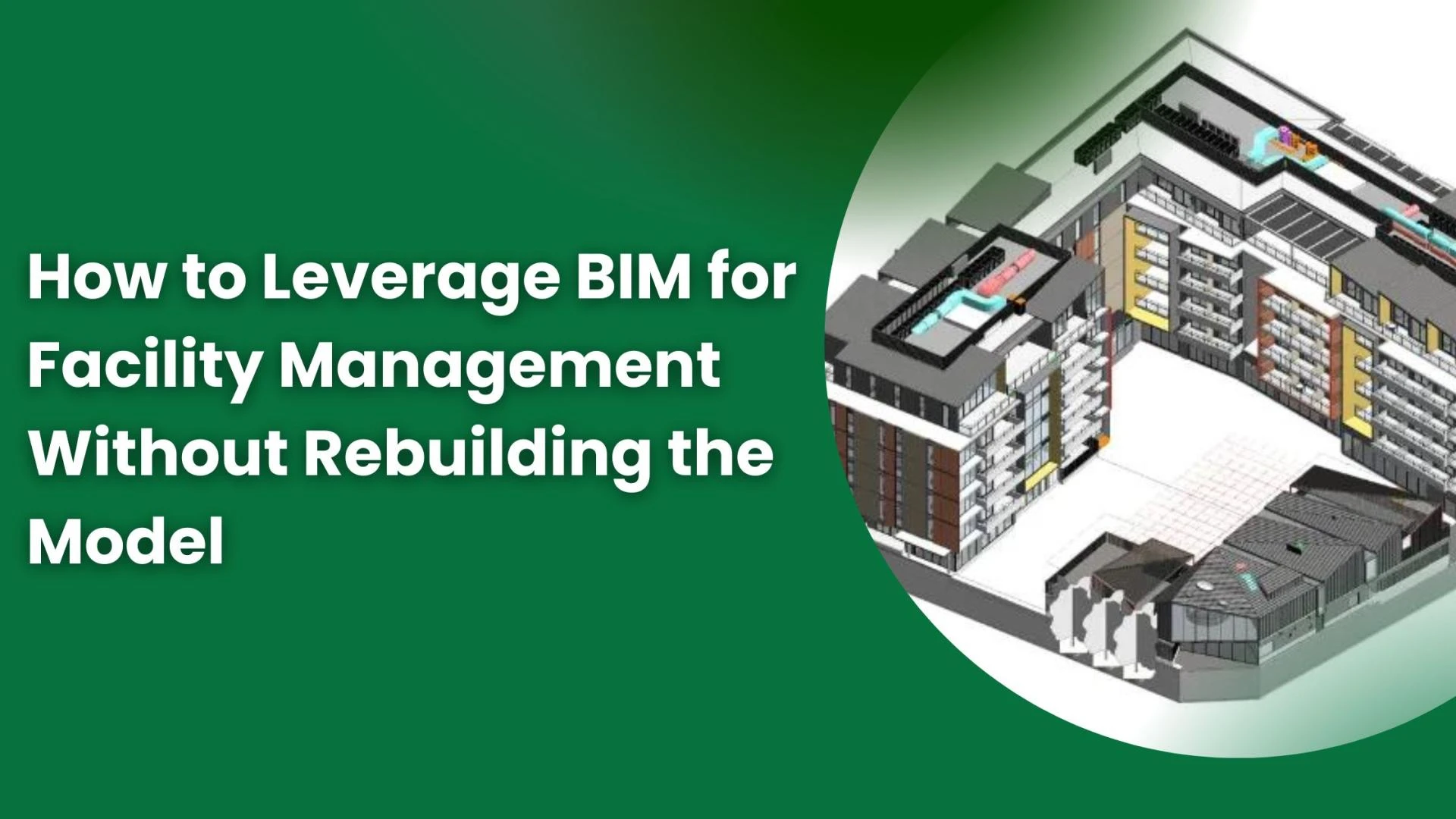

Ever looked at a completed BIM model and thought, "Great, but how do I actually use this thing for day-to-day facility stuff without starting from scratch?" You're not alone! It feels like a massive digital asset that's locked away the second the building is handed over.
Well, good news! This post is your secret handshake into the world of BIM for Facility Management, where you don't have to waste time rebuilding the model. We're going to dive into simple, smart ways to pull all that valuable building data straight into your FM workflows. Get ready to save a ton of headaches and probably some money, too.
Bridging the Gap Between Design and Operations

Construction-focused BIM models are typically created for coordination, documentation, and clash detection. Once the project transitions to operations, priorities shift toward performance, maintenance schedules, equipment tracking, and asset lifecycle management. This shift exposes a gap: while the model holds rich geometric data, it often lacks the operational details needed for daily facility use.
Instead of starting over, facility managers can repurpose the existing BIM through BIM Consulting Services that audit, clean, and align the model with real operational needs. The process isn’t about increasing detail but about refining usability, turning the model into a reliable source of information for long-term building management.
Leverage Existing Spatial Data for Resource Planning
One of the easiest wins for FM is utilizing the accurate spatial information already present in the BIM model. The model inherently defines floor levels, room boundaries, square footage, and adjacent spaces with high precision.
Facility teams can directly extract this core spatial data, room names, areas, and volumes, and push it into their FM system. This eliminates the need for manual measurements or redrawing outdated 2D floor plans. This spatial foundation is critical for immediate operational uses such as accurate desk and space booking, automatically calculating cleaning efforts based on accurate area measurements, and conducting granular energy consumption analysis broken down by floor or zone.
Clean, Standardize, and Connect
Inconsistent data is one of the biggest obstacles to using BIM for facility management. Multiple versions, conflicting naming conventions, and redundant parameters can make the model unreliable. Standardizing data formats, especially using structures like COBie, streamlines integration with systems like CMMS and IWMS.
With properly formatted data, facility managers can connect the model directly to maintenance systems. This allows real-time asset tracking, streamlined repair scheduling, and simplified record management. Building Information Modeling Services help link these systems so that every update in the model reflects immediately in the operational dashboard.
Focus on Asset Intelligence, Not Just Geometry
The operational power of BIM lies in the information it holds about assets, not in visual details. Focusing on high-value or high-maintenance systems, HVAC units, lighting, or fire safety equipment, creates a leaner and more efficient model.
When the BIM data is structured around operational priorities, facilities can monitor conditions, schedule maintenance, and manage energy performance all within the same framework. This turns BIM from a design archive into a real-time asset management platform.
Align BIM with Facility Workflows
Every facility operates with unique maintenance routines, reporting structures, and operational cycles. Adapting the BIM model to these workflows increases usability across departments. Maintenance teams can log work directly into the model, management can track costs, and engineers can plan upgrades based on performance data.
By integrating BIM Services with day-to-day activities, facility teams develop a consistent digital workflow. The model becomes a single, trusted source of truth, minimizing data duplication and miscommunication.
Incremental Updates Over Full Reconstruction
Rebuilding a BIM model can be expensive and unnecessary. A more sustainable approach involves updating the existing model incrementally, adding relevant data, linking new assets, or integrating IoT sensors for real-time performance monitoring.
This progressive strategy maintains operational continuity while keeping data current. Over time, the model evolves naturally alongside the facility, supporting both immediate and future management goals.
The Role of Continuous Data and Smart Integration
Modern BIM Consulting Services support cloud integration and smart data connections. By linking the BIM environment to live facility systems, managers can visualize performance trends, anticipate maintenance issues, and make data-driven decisions.
This approach transforms the model into a living digital twin that evolves with every system update or maintenance activity. It’s not about technology for technology’s sake, it’s about keeping information accessible, usable, and relevant throughout the building’s life.
Final Thoughts
Leveraging BIM for facility management doesn’t require a complete rebuild, it requires a smarter way to use existing models. Through careful auditing, data alignment, and incremental updates, BIM transitions from a design tool into a long-term operational partner.
With professional Building Information Modeling Services and experts, organizations can unlock the full lifecycle potential of their digital assets. The future of facility management lies not in rebuilding but in refining what already exists, transforming BIM into a continuously valuable asset for smarter, more connected operations.


























Sign in to leave a comment.