





Managing daily marketing duties can feel overwhelming, especially as teams juggle content creation, customer outreach, analytics, and campaign execution. Many businesses now rely on digital marketing automation to lighten this heavy load while maintaining quality and consistency. With the right systems in place, routine actions become faster, more accurate, and far easier to handle.
Why Reducing Workload Matters for Growing Businesses
Heavy manual work slows progress, increases human error, and drains energy that could be spent on deeper planning or creative efforts. When repetitive actions continue to stack up—such as responding to leads, scheduling posts, or sending follow-up emails—teams lose the capacity to grow efficiently. By bringing automation into these tasks, time opens up for more thoughtful decisions and stronger customer experiences.
How Digital Marketing Automation Lightens Daily Responsibilities
Automation tools handle routine duties that previously required active involvement. Instead of spending hours on tasks that repeat every day, teams allow systems to perform them consistently in the background. Below are several areas where workload decreases significantly.
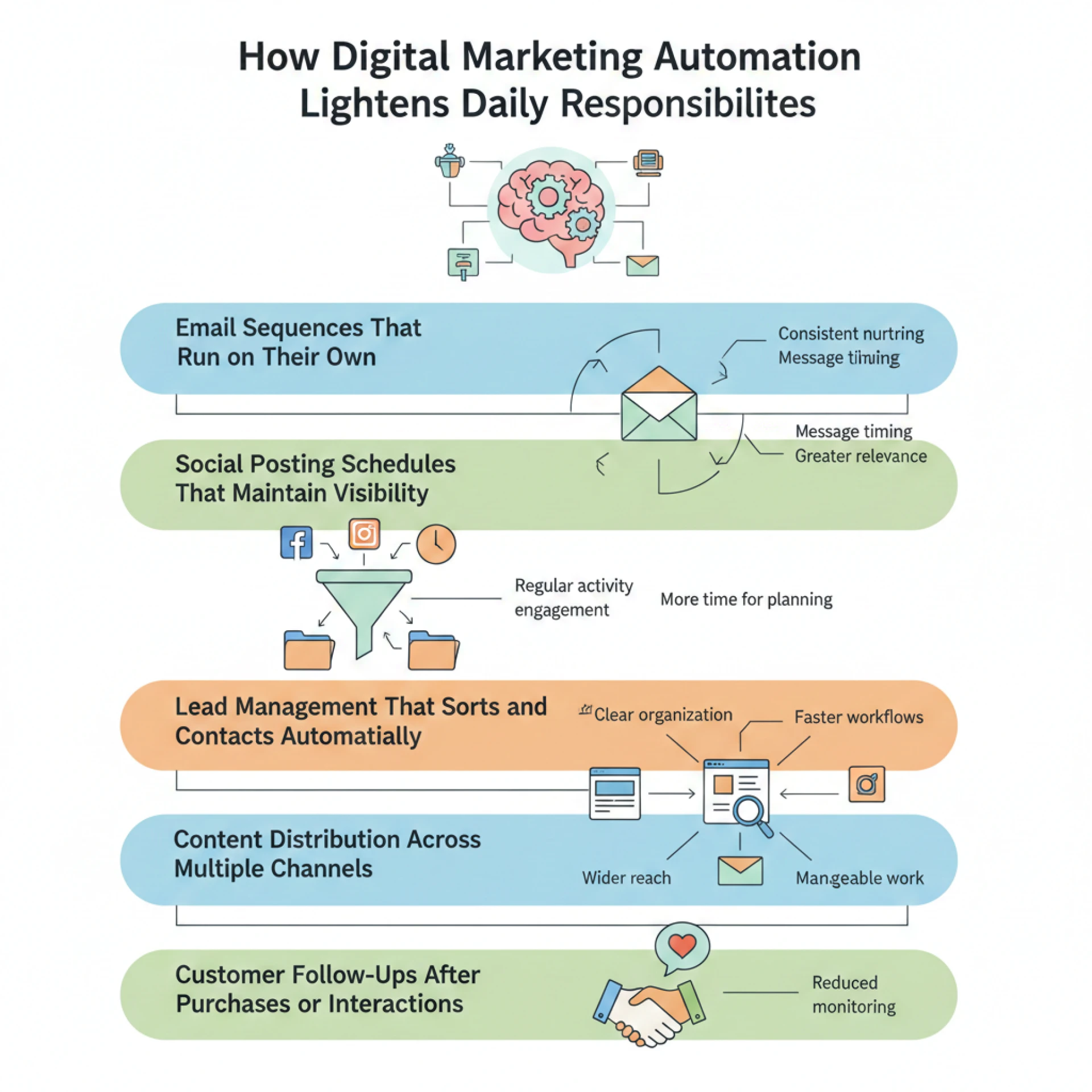
Email Sequences That Run on Their Own
Email continues to be a powerful communication channel, but writing and sending messages one by one consumes valuable hours. With automation, emails can be arranged in a sequence that sends based on user actions, interests, or timelines.
Key advantages include:
- Consistent nurturing without needing manual follow-up
- Message timing based on user activity
- Greater relevance using pre-set actions and triggers
By setting a structured path, prospects stay engaged, and teams spend far less time monitoring every step.
Social Posting Schedules That Maintain Visibility
Keeping a brand active on multiple social platforms can be tiring. Instead of logging in daily, automation tools support scheduled posting. Teams can prepare content in advance and assign specific times for each upload.
This approach offers:
- Regular activity without last-minute scrambling
- Higher engagement due to consistent presence
- More time to focus on planning and creative thinking
With automation, social channels stay active even during busy weeks.
Lead Management That Sorts and Routes Contacts Automatically
Sorting leads manually often results in slow replies or missed opportunities. Automation systems categorize incoming leads, send instant replies, and pass them to the right team member.
Benefits include:
- Instant engagement, which boosts interest
- Clear organization, avoiding confusion
- Faster workflows, reducing time spent reviewing each lead
Teams no longer need to scan inboxes for priority messages; the system handles it early in the process.
Content Distribution Across Multiple Channels
Publishing content across websites, email newsletters, and social platforms takes effort. Automation technology shares content in several locations simultaneously, giving each article wider reach without increasing workload.
This helps brands maintain strong visibility across channels while keeping work manageable.
Customer Follow-Ups After Purchases or Interactions
Customers appreciate acknowledgment, updates, and reminders. Instead of manually replying to each inquiry or purchase, automation tools send thank-you messages, support information, or check-in notes.
This supports stronger relationships and reduces the need for constant monitoring.
Building an Effective Automation Setup
To achieve smoother workflows, businesses can follow a structured setup process. Each step contributes to a strong system that supports daily marketing needs.
1. Identify Tasks That Consume the Most Time
Before adding automation tools, teams must pinpoint the tasks that drain the most energy. Common examples include:
- Email follow-ups
- Posting schedules
- Lead responses
- Reporting and analytics
- Customer reminders
By finding these areas, businesses can focus automation where it has the largest impact.
2. Choose Tools Suited to Current Goals
The right platform depends on the company’s tasks and communication channels. Email-based brands may need advanced sequence tools, while content-heavy businesses may rely more on posting and scheduling features.
A well-chosen tool reduces frustration and makes adoption easier for the team.
3. Map Out Automation Paths Clearly
Before building workflows, teams should outline each path step by step. These paths might include:
- Welcome sequences
- Lead scoring steps
- Abandoned cart reminders
- Blog distribution flows
This helps the system run smoothly and avoids confusion later.
4. Keep Messages Clear and Human-Focused
Automation should never feel robotic. Messages must match the brand voice and speak directly to customer needs. Personal touches such as names, interests, and behavior-based prompts enhance the experience even when the process runs automatically.
5. Review System Performance Regularly
Automation works best when fine-tuned. Teams should check analytics, open rates, response times, and social engagement. Regular adjustments ensure that each workflow continues to support goals effectively.
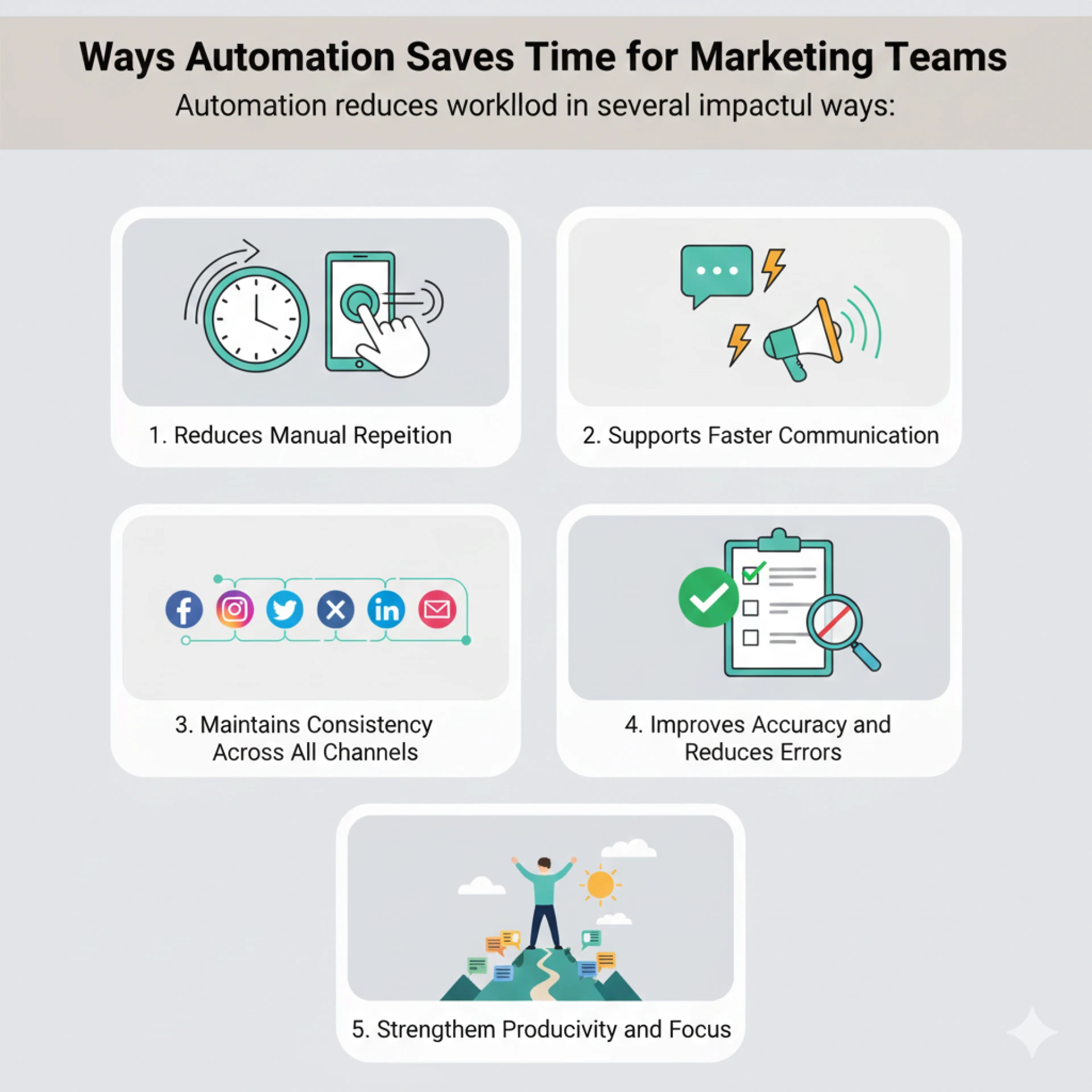
Ways Automation Saves Time for Marketing Teams
Automation reduces workload in several impactful ways:
Reduces Manual Repetition
From posting content to sending emails, repetitive actions disappear from daily schedules. This shift gives teams far more room for planning and creative tasks.
Supports Faster Communication
Immediate responses through automated tools keep customer interest alive while reducing the need for constant monitoring.
Maintains Consistency Across All Channels
With automation, brand messaging stays steady across platforms. Whether through emails, social posts, or content sharing, consistency requires far less manual intervention.
Improves Accuracy and Reduces Errors
Automation removes the risk of sending messages late, forgetting follow-ups, or missing important leads. This leads to smoother customer interactions.
Strengthens Productivity and Focus
By taking small tasks off employees' plates, energy can shift toward long-term goals such as refining campaigns, expanding brand presence, and building stronger creative assets.
Conclusion
Digital marketing automation acts as a supportive system that handles time-consuming tasks while helping teams work with greater clarity and focus. By reducing repetitive actions, improving communication, and keeping campaigns running smoothly, automation becomes an essential part of modern marketing efforts. With thoughtful setup and consistent review, businesses create a workflow that encourages growth without overwhelming their teams.