
Cloud cost reporting is known to play an important role in managing cloud expenses efficiently. However, organizations often struggle to decide between building their own cost reporting system (in-house) or investing in a paid cloud cost reporting tool. Each approach has its advantages and trade-offs, and the right choice depends on your company’s needs, resources, and long-term goals.
Why Do You Need a Cloud Cost Reporting Tool?
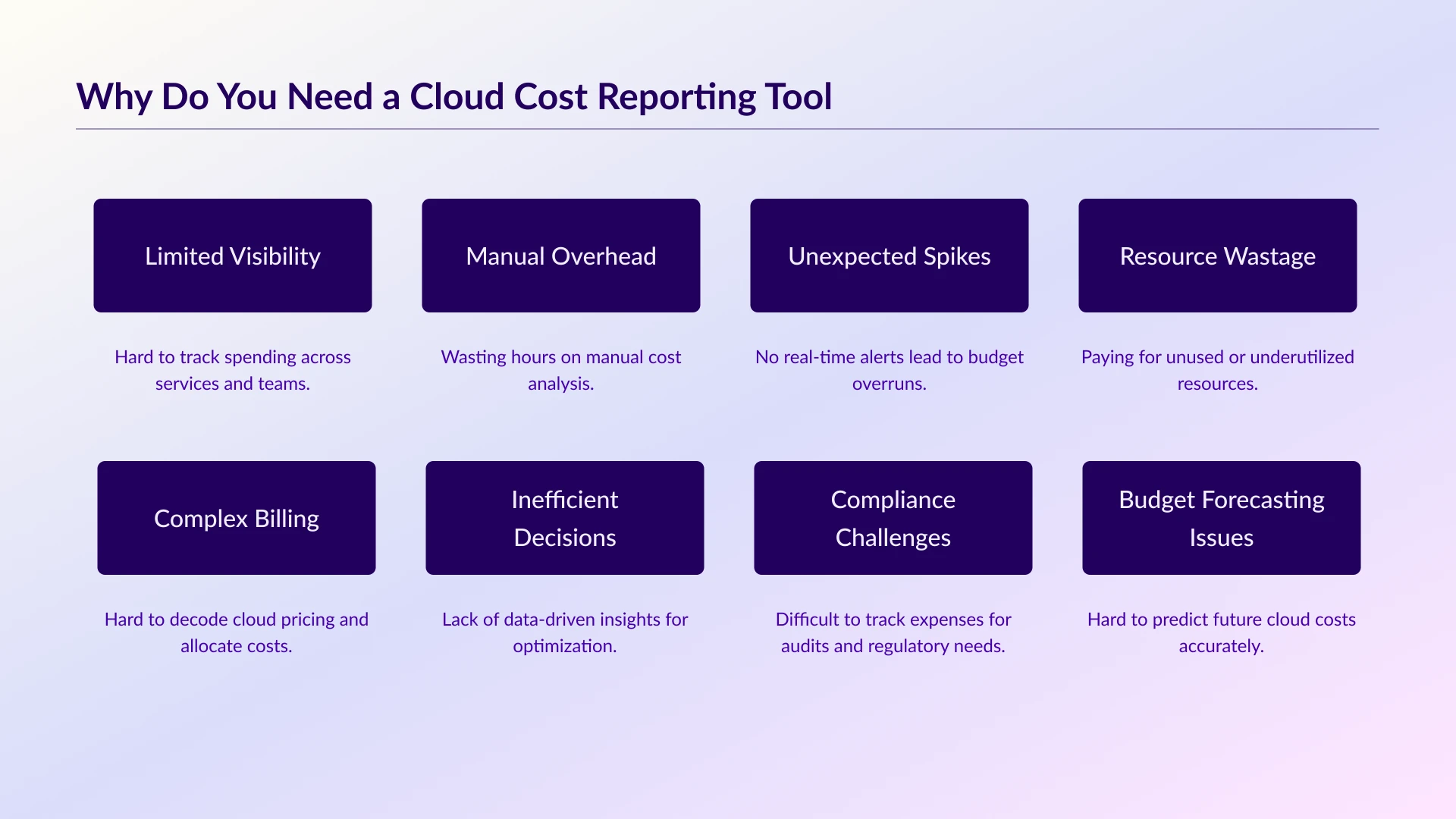
Managing cloud costs without proper reporting tools can be overwhelming and lead to several challenges:
- Limited Visibility: Organizations struggle to track spending across multiple cloud services, departments, and projects, making it difficult to understand where money is being spent.
- Manual Processing Overhead: Without automated tools, teams waste countless hours collecting, processing, and analyzing cloud spending data manually, leading to delays and human errors.
- Unexpected Cost Spikes: Organizations often discover cost overruns too late without real-time monitoring and alerting capabilities, resulting in budget overruns and financial strain.
- Resource Wastage: Lack of detailed insights makes it challenging to identify unused or underutilized resources, leading to unnecessary spending on idle resources.
- Complex Billing Structures: Cloud providers' complex pricing models and billing structures make it difficult to understand and allocate costs accurately without specialized tools.
- Inefficient Decision Making: Without proper reporting tools, organizations lack the data-driven insights needed to make informed decisions about cloud resource allocation and optimization.
- Compliance Challenges: Meeting regulatory requirements and maintaining audit trails becomes complicated without systematic tracking and reporting of cloud expenditure.
- Budget Forecasting Issues: Organizations struggle to predict future cloud costs accurately, making it difficult to plan budgets and allocate resources effectively.
These pain points highlight why investing in a cloud cost reporting tool is essential for organizations looking to maintain control over their cloud spending and optimize their cloud infrastructure effectively.
Let’s break down the key differences between in-house reporting and paid cloud cost reporting tools. The goal here is to guide you in the right direction.
The In-house Approach: Creating Your Cloud Cost Reporting System
Pros
- Full Customization: An in-house system lets you create reports that fit your organization’s specific needs, including only the metrics that matter. This customization is key for managing cloud costs well.
- No Vendor Lock-In: You control the data processing and visualization, which means you won’t depend on third-party tools. This independence is important as your business grows.
- Initial Cost Savings: If you have a skilled engineering and finance team, building your own system might seem cheaper than paying for a tool at first. But remember to think about the long-term development and maintenance costs.
Cons
- High Development & Maintenance Effort: Setting up a solid cloud cost reporting system takes a lot of engineering work. Teams need to design, build, test, and maintain it, leading to ongoing costs that can outweigh any initial savings.
- Limited Features: In-house systems often miss advanced features like detecting unusual costs, automated reporting, detailed cost breakdowns, and real-time insights that are important for effective cost management.
- Scalability Challenges: As your cloud usage increases, keeping up with an in-house system can get complicated and costly, needing constant updates and improvements. These challenges can make it hard to track spending trends over time.
- Security & Compliance Risks: Making sure access controls are in place and meeting security standards for an in-house system adds complexity and risk. It’s crucial to address these risks early in development.
While creating your own cloud cost reporting system offers benefits like customization and potential savings, it also comes with serious challenges that organizations need to weigh against the benefits of paid tools.
The Paid Approach: Using a Cloud Cost Reporting Tool
Pros
- Detailed Cost Breakdown: Paid cloud cost reporting tools like Amnic give a clear view of cloud expenses, allowing you to sort costs by provider, billing ID, SKU, and more. This helps businesses understand their spending better.
- Automated Reports & Sharing: You can save time by scheduling reports to be sent automatically to stakeholders. This keeps everyone informed about finances and improves visibility of cloud spending.
- Ready-Made & Custom Dashboards: Access ready-made dashboards for network, storage, and compute costs right away, or create your own dashboards for specific insights that meet your business needs.
- Team Collaboration & Access Control: Good teamwork and access control are important for managing cloud costs. Role-based access allows different teams (finance, engineering, and executives) to see the relevant cost data while keeping it secure with proper permissions.
- AI Insights: Many paid tools use machine learning and AI to spot unusual spending patterns, suggest ways to save money, and help with budgeting and forecasting.
- Easy Integration: Paid cloud cost management tools work well with major cloud providers like AWS, Azure, and GCP, as well as SaaS applications. This makes it simple to gather cost data and track spending trends.
Cons
- Subscription Fees: Paid solutions come with ongoing costs, but these often outweigh the hidden expenses of handling things yourself.
- Learning Curve: Some platforms may be user-friendly but still require some initial training for teams to use them effectively.
- Dependence on Vendors: While paid tools are convenient, relying on a third-party service means businesses must depend on the vendor for updates, features, and possible price changes.
5 Common Cloud Cost Reporting Mistakes (And How to Avoid Them)
Many organizations struggle with cloud cost reporting due to common pitfalls like:
- Incomplete cost visibility leads to hidden expenses.
- Ignoring shared costs skews financial accountability.
- Lack of granularity makes it hard to track spending patterns.
- Manual reporting wastes time and increases errors.
- No anomaly detection results in unnoticed cost spikes.
These mistakes can lead to budget overruns and inefficiencies. Understanding these challenges and how to address them is crucial for optimizing cloud spending. Check out this blog on the top 5 cloud cost reporting mistakes and how to avoid them to ensure your cost management strategy stays on track.
Which One Is Right for You?
If your organization has a dedicated FinOps team and can keep developing, an in-house cloud cost reporting tool might work for you. However, even large companies often end up with technical issues and high maintenance costs when they build their own system.
On the other hand, if you want a ready-to-use, scalable solution, a paid cloud cost reporting tool like Amnic is a better option. Investing in an automated platform gives you real-time insights, cost-saving strategies, and smooth teamwork on cloud expenses. This can save your organization time and money over time.
Moreover, paid tools are always improving to meet market needs, adding features like AI-driven insights, automatic anomaly detection, and support for multiple clouds. These updates are crucial for managing costs effectively and could take years to create in-house.
Ready to manage your cloud expenses? Consider exploring solutions like the Amnic tool and see how they can simplify your financial operations while letting you easily set up cost reports.























Sign in to leave a comment.