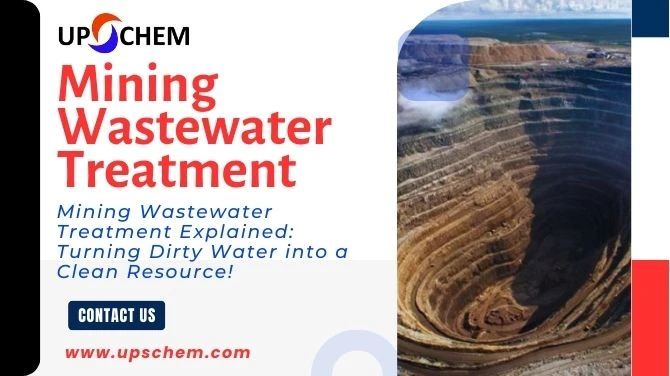
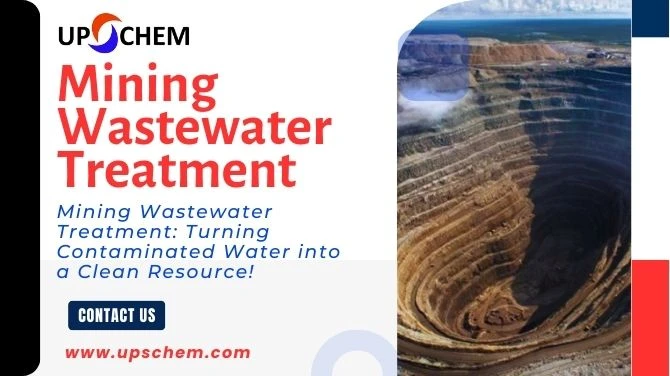
In recent decades, industries across the globe have faced increasing scrutiny regarding their environmental practices. Among these sectors, the mining industry stands out due to its immense consumption of natural resources and its by-product: large volumes of contaminated water, or mining wastewater. As environmental regulations tighten and sustainability becomes a corporate imperative, the efficient management of mining wastewater has shifted from an operational challenge to a strategic priority. That’s where Mining Wastewater Treatment steps in.
At Shandong UPS Chemical Co., Ltd., we specialize in delivering advanced chemical solutions for wastewater treatment, helping mining companies transform polluted water into a reusable and often environmentally safe resource.
Introduction to Mining Wastewater
The mining process, whether for coal, metal ores, or industrial minerals, typically involves the disruption and processing of vast quantities of earth and rock. During various stages — such as ore extraction, crushing, washing, and mineral separation — water plays a vital operational role. However, once water comes into contact with waste rock or chemicals used in processing, it becomes mining wastewater, a complex mixture of solids, heavy metals, acids, oils, and chemical reagents.
Composition and Environmental Impact
Mining wastewater is far from uniform; its exact composition depends on factors such as the type of mine, the minerals extracted, and the chemicals used in processing. However, common contaminants typically include:
- Heavy metals (e.g., arsenic, lead, mercury, cadmium)
- Suspended solids
- Sulphates and sulphides
- Acid mine drainage (AMD)
- Cyanides and flotation reagents
- Oil and grease
- Radioactive elements (in uranium and rare earth mining)
Each of these components can have devastating ecological impacts. For instance, acid mine drainage, formed when sulfide minerals oxidize upon exposure to air and water, lowers pH levels in local water sources, making them highly acidic, corrosive, and harmful to life forms.
The Importance of Mining Wastewater Treatment
Given the high environmental risk, the treatment of mining wastewater is not an optional practice — it is an essential one. But the benefits of Mining Wastewater Treatment go beyond compliance:
- Environmental Protection: Prevents contamination of rivers, lakes, and underground aquifers.
- Regulatory Compliance: Meets the standards set by environmental bodies and avoids fines or shutdowns.
- Community Relations: Improves local trust, reduces protests, and supports social license to operate.
- Water Reuse: Reduces fresh water intake by recycling treated water within mining operations.
- Operational Efficiency: Enhances equipment life span and downstream processing by reducing corrosion and fouling agents.
By implementing effective treatment systems, mining companies not only reduce their environmental footprint but also uncover opportunities for cost savings and resource recovery.
Key Technologies in Mining Wastewater Treatment:
Modern Mining Wastewater Treatment combines physical, chemical, and biological methods to remove contaminants and reclaim usable water. Below are the primary techniques used:
1. Physical Methods
Sedimentation and Settling Tanks: Removes heavy solids.
Filtration (Sand, Membrane): For particulate separation.
Flotation: Separates fine particles and oils.
2. Chemical Methods
pH Adjustment: Neutralizes acids using lime or caustic soda.
Coagulation & Flocculation: Aggregates fine particles using agents like polyaluminium chloride (PAC) or ferric chloride.
Heavy Metal Precipitation: Removes metals as insoluble hydroxides/sulfides.
Oxidation/Reduction: Uses agents like chlorine, ozone, or hydrogen peroxide to break down organic material or oxidize metals.
3. Biological Methods
Constructed Wetlands: Plant-based systems to absorb and transform contaminants.
Aerobic & Anaerobic Treatment Tanks: Break down biodegradable matter.
Each technology has its strengths and is often combined in custom-designed treatment trains depending on wastewater quality and reuse goals.
Chemical Solutions for Effective Treatment
At Shandong UPS Chemical Co., Ltd., we provide advanced chemical solutions tailored for Mining Wastewater Treatment. Our range of products includes:
- Coagulants and Flocculants: For efficient sedimentation and removal of fine particles.
- Heavy Metal Precipitants: Specialized reagents to selectively bond with specific metals.
- pH Neutralization Agents: Lime derivatives and pH stabilizers.
- Disinfectants and Oxidizers: To remove pathogens and biorefractory organics.
By pairing our high-performance chemicals with consultant-driven process design, we help mining clients achieve targeted treatment outcomes while ensuring eco-friendliness and cost-efficiency.
Sustainable Practices and Water Reuse
One of the most promising aspects of modern Mining Wastewater Treatment is water reuse. Instead of viewing wastewater as a liability, progressive mining companies are reimaging it as a valuable resource.
Treated wastewater can be:
- Reused in mineral processing circuits
- Employed in dust suppression across mining sites
- Used for underground injection
- Directed to local agriculture or municipal systems (where standards permit)
Technologies such as reverse osmosis, nano-filtration, and advanced oxidation processes make such reuse both feasible and safe. Shandong UPS works closely with clients to choose cost-effective chemical aids to assist in these advanced treatments.
Regulatory Compliance and Industry Standards
Compliance with environmental regulations is non-negotiable. Different countries and jurisdictions have set stringent discharge standards related to:
- Mineral concentration limits
- pH ranges
- Total suspended solids (TSS)
- Chemical oxygen demand (COD)
For example, the European Union’s Water Framework Directive and US EPA's Clean Water Act impose rigorous rules for mining effluent discharge.
Our solutions help mining operators meet both international and local environmental compliance requirements while maintaining cost-effective operations.
Challenges and Limitations
Despite technological advancements, several challenges persist in the Mining Wastewater Treatment sector:
- Variable Water Chemistry: Difficulties in applying one-size-fits-all treatment strategies.
- Treating Acid Mine Drainage: Requires specialized and often expensive processes.
- Remote Mine Locations: Limit infrastructure and make logistics costly.
- Sludge Disposal: Treated wastewater often produces large quantities of sludge, requiring safe handling.
At Shandong UPS Chemical Co., Ltd., we continuously innovate to address these challenges, launching chemical products that perform reliably under varying field conditions and minimizing waste generation.
The Role of Chemical Companies like Shandong UPS
We play a critical part in supporting the mining sector's transition to more sustainable practices. With extensive experience in industrial chemistry and a strong focus on R&D, Shandong UPS:
- Designs site-specific chemical treatment programs.
- Supplies high-quality specialty chemicals.
- Provides tech-support for implementation and performance monitoring.
- Offers consultation on long-term sustainability and process optimization.
Our clients trust us not only for our products but also for our commitment to building long-term environmental solutions.
Future Trends in Mining Wastewater Treatment
As we look to the future, emerging trends suggest even more dynamic shifts in wastewater treatment, such as:
- Automation and Smart Monitoring: AI-driven systems to optimize chemical dosing and track water quality in real-time.
- Green Chemistry: Development of biodegradable flocculants and safer metal binders.
- Closed-loop Water Systems: Full recovery and reuse of water on-site.
- Policy-driven Innovation: Incentives for zero-liquid-discharge (ZLD) operations.
Shandong UPS remains at the forefront by investing in sustainable product development tailored for such transformations.
Mining operations are integral to modern infrastructure, technology, and economic development. However, they also come with significant environmental responsibilities. As awareness of water scarcity and ecological preservation grows, Mining Wastewater Treatment has become a keystone strategy for sustainable mining.
Frequently Asked Questions (FAQ)
Q1: What is mining wastewater?
A: Mining wastewater is the water that has been contaminated through various stages of mining operations, typically containing metals, solids, chemicals, and sometimes hazardous materials.
Q2: Why is Mining Wastewater Treatment important?
A: It prevents environmental pollution, ensures regulatory compliance, enables water reuse, and improves operational efficiency at mine sites.
Q3: What chemicals are used in Mining Wastewater Treatment?
A: Common treatment chemicals include coagulants, flocculants, oxidizers, pH neutralizers, and heavy metal precipitants. Shandong UPS supplies all these categories with high efficiency.
Q4: Can treated mining wastewater be reused?
A: Yes, especially with advanced treatment technologies. Depending on the treatment level, water can be reused within mining operations or even for other industrial or agricultural purposes.
Q5: How does Shandong UPS Chemical Co., Ltd. support mining companies?
A: We offer tailored chemicals and treatment solutions, technical support, and ongoing monitoring to simplify the treatment process, reduce costs, and ensure compliance.
























Sign in to leave a comment.