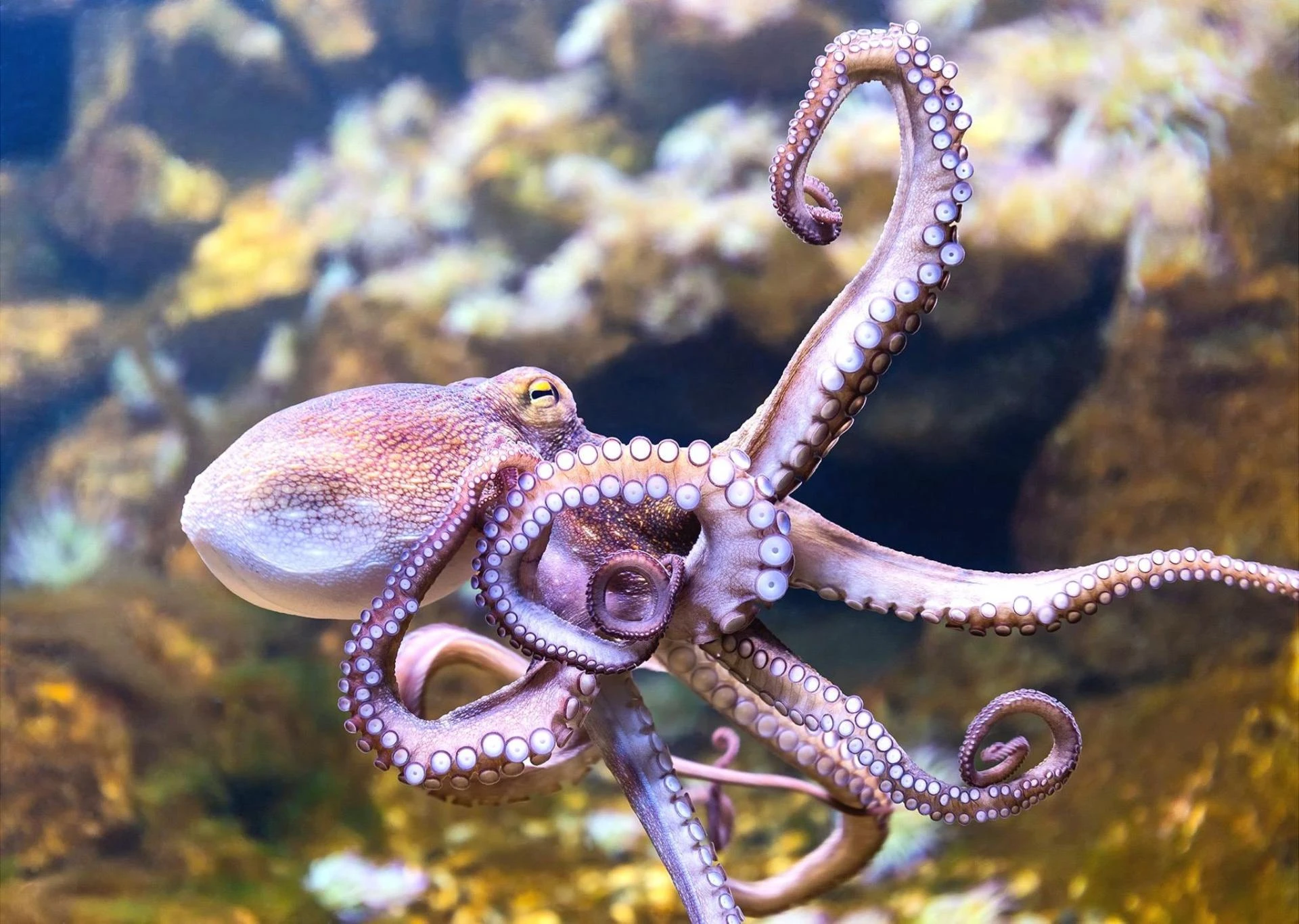

Halal status is an essential aspect of Islamic dietary laws and is of great importance to Muslims. Halal refers to the practices and products that are permissible under Islamic law. When it comes to seafood, the issue of Halal status becomes even more critical as many seafood products are consumed by Muslims worldwide. One such seafood that has raised questions about its Halal status is the octopus. In this article, we will analyze the Halal status of octopus from an Islamic perspective.
Islamic dietary laws are based on the Quranic teachings and the Hadith (Prophetic traditions). The Quran states that Muslims can consume seafood and that it is a provision from Allah (SWT). However, certain conditions must be met for seafood to be considered Halal. For example, the seafood must be from a creature that has scales and fins. This condition means that seafood such as prawns, crabs, and lobsters are considered haram (prohibited) in Islam.
Now coming to octopus, it is a mollusk, and it does not have scales or fins. Therefore, according to the above condition, octopus would be considered haram. However, some scholars have argued that the octopus should be considered Halal because it is not mentioned explicitly in the Quran or Hadith as haram. These scholars argue that since the octopus is not explicitly mentioned as haram, it should be considered permissible.
However, other scholars argue that just because something is not mentioned in the Quran or Hadith does not mean that it is automatically considered Halal. They argue that the Quran and Hadith provide general guidelines, and it is up to the scholars to use their reasoning and deduction to determine the Halal status of a particular food item. In the case of octopus, these scholars argue that since it does not have scales or fins, it should be considered haram.
Moreover, some scholars argue that octopus should be considered haram because it is not slaughtered according to Islamic guidelines. In Islam, the animal must be slaughtered by a Muslim or a person of the book (Jews and Christians) by saying the name of Allah (SWT) and cutting the throat with a sharp knife. This method of slaughter is called Zabiha. However, octopuses are not slaughtered in this manner. Instead, they are usually boiled alive or frozen to death, which is not in accordance with Islamic guidelines.
In conclusion, the Halal status of octopus is a matter of controversy among scholars. Some argue that since it is not explicitly mentioned as haram, it should be considered Halal. However, others argue that since it does not have scales or fins and is not slaughtered according to Islamic guidelines, it should be considered haram. As Muslims, it is our responsibility to seek knowledge and understand the Halal status of the food we consume. We should consult with knowledgeable scholars and follow their advice to ensure that we are consuming Halal food.











Sign in to leave a comment.