
Understanding the Scale of the Great Migration
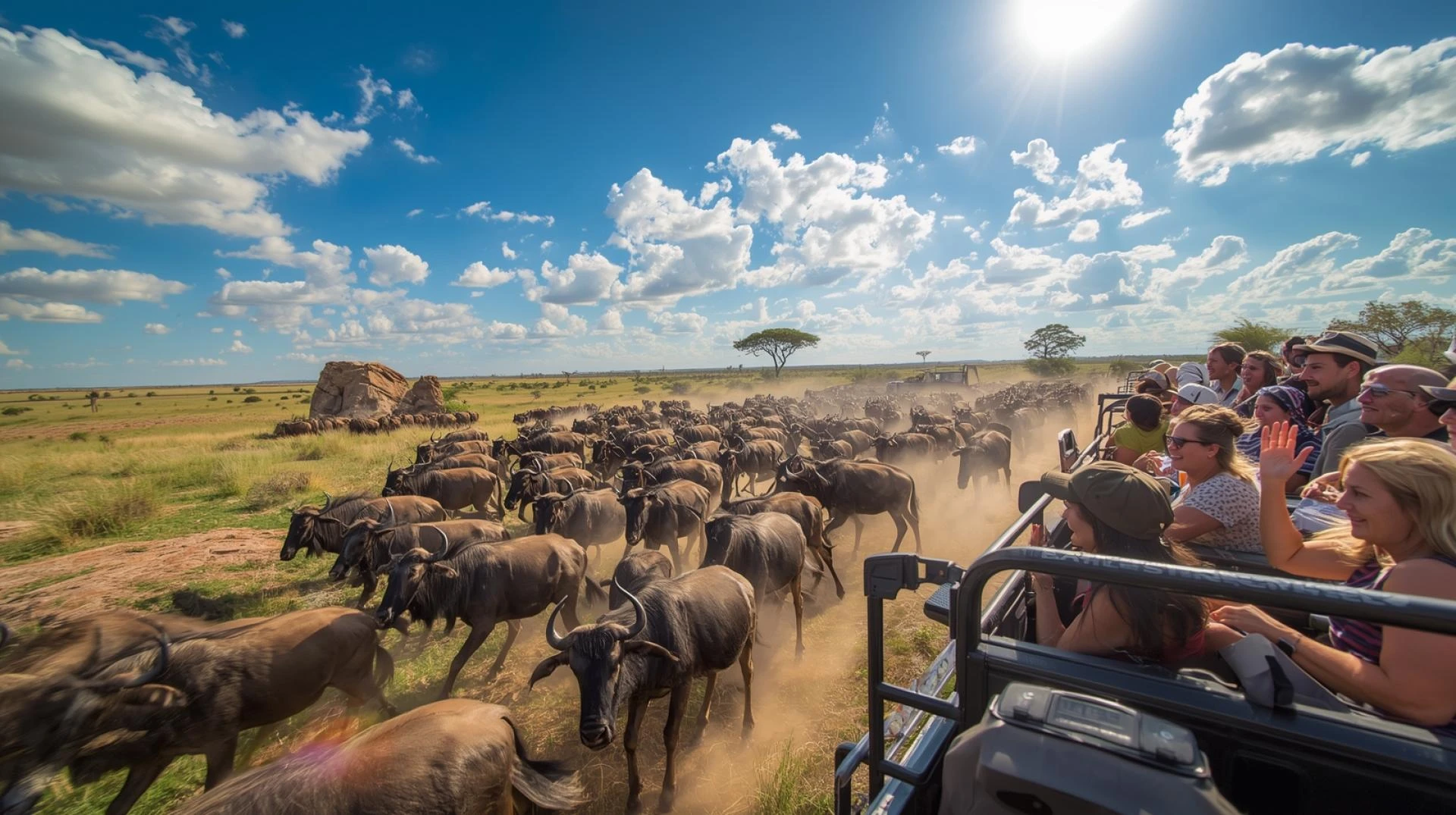
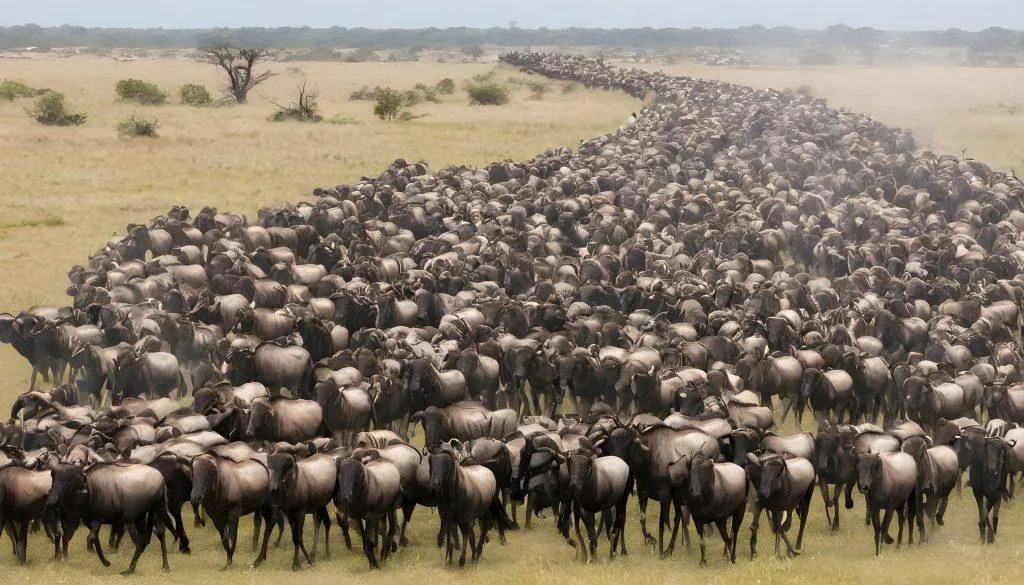
The Great Migration stands as one of the most dramatic wildlife spectacles on Earth. More than a million wildebeest, accompanied by zebras and gazelles, move across the plains of East Africa in search of fresh grazing and water. This continuous cycle creates endless photographic opportunities filled with movement, tension, and raw survival.
You witness massive herds stretching to the horizon, dust rising under pounding hooves, and predators following closely behind. You capture not just animals but emotion, instinct, and rhythm. The migration never truly stops; it shifts direction depending on rainfall and grazing conditions. This constant motion challenges photographers to stay alert and ready for decisive moments.
Choosing the Right Season for Photography
Timing shapes every successful migration photograph. You must align your visit with key seasonal phases to maximize your chances of capturing dramatic scenes. Early in the year, calving season fills the southern plains with newborn wildebeest. You can photograph tender moments between mothers and calves while predators patrol nearby.
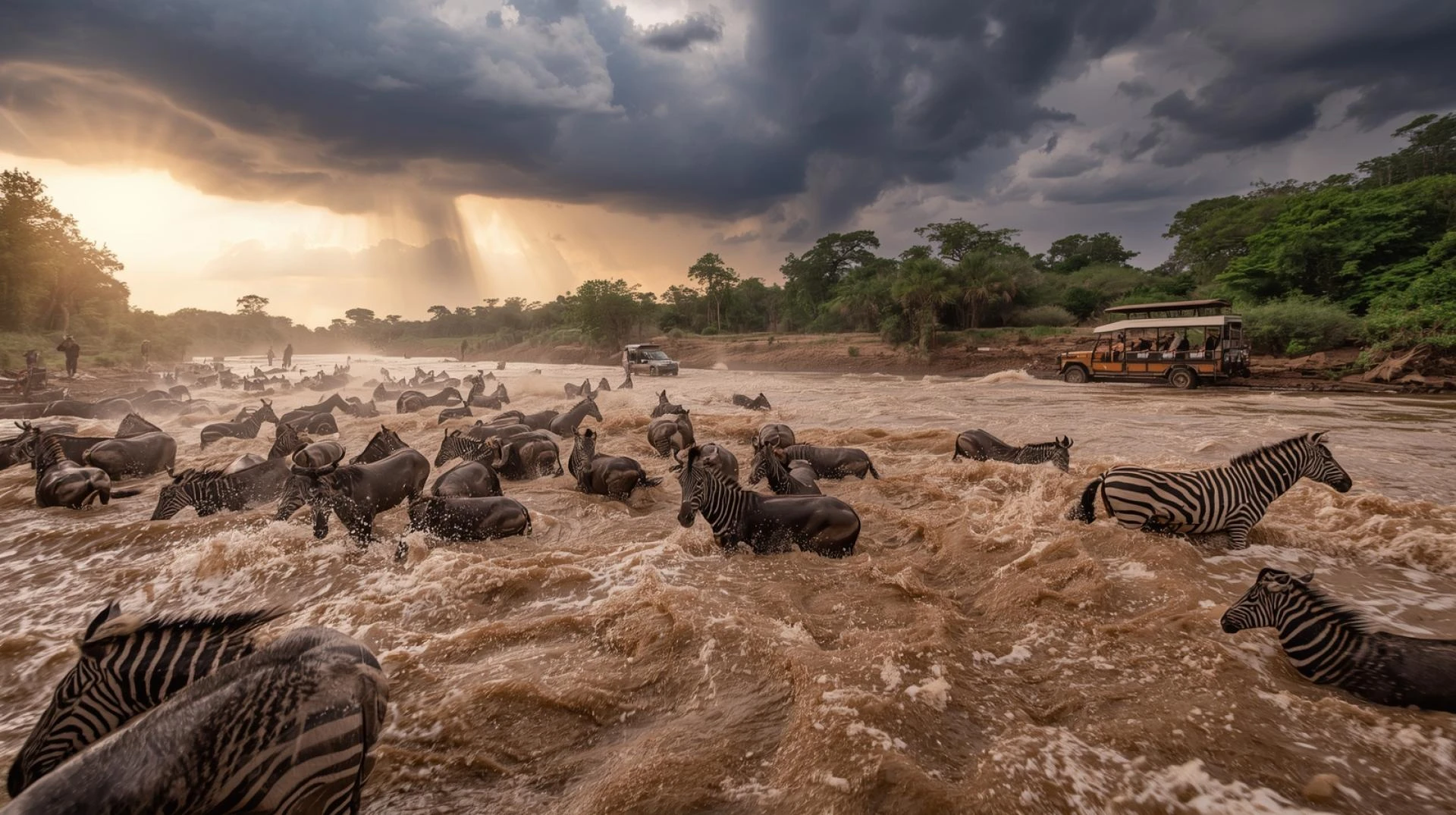
Mid-year brings the famous river crossings. Herds gather at riverbanks, hesitate, and suddenly surge forward into crocodile-infested waters. This period delivers intense action shots full of splashing water and airborne bodies. Later months showcase large herds moving across golden grasslands under vast skies. Each season offers a distinct visual narrative.
You improve your results when you study migration patterns before arrival. You prepare for specific lighting conditions, terrain types, and animal behaviors depending on the season you choose.
Preparing the Right Camera Equipment
You must select equipment that matches the demands of fast-paced wildlife action. A reliable DSLR or mirrorless camera with fast autofocus allows you to track moving subjects effectively. You need a telephoto lens between 200mm and 600mm to capture close-up details without disturbing wildlife.
You should also carry a wide-angle lens to document sweeping landscapes filled with thousands of animals. A sturdy bean bag or monopod helps stabilize your shots inside safari vehicles. Extra batteries and memory cards remain essential because migration scenes unfold quickly and without warning.
You protect your equipment from dust by using protective covers and cleaning tools. Migration landscapes often produce dry, windy conditions that can damage sensitive gear. Proper preparation ensures uninterrupted shooting during critical moments.
Mastering Lighting in Open Landscapes
You control visual impact through thoughtful use of natural light. Early morning and late afternoon offer soft golden tones that enhance textures and silhouettes. You position yourself so that sunlight illuminates animals from the side, creating depth and contrast.
Midday light produces harsh shadows, but you can use it creatively for dramatic high-contrast compositions. You adjust exposure carefully to preserve detail in both bright skies and darker animal bodies. Cloudy days soften light evenly and create balanced wildlife portraits.
You remain patient and flexible because light conditions change rapidly across open plains. When you understand lighting behavior, you elevate your images from simple documentation to compelling storytelling.
Capturing Movement and Action
The migration demands quick reflexes and decisive timing. You anticipate motion by observing herd behavior before action begins. When animals cluster tightly near a riverbank, you prepare for a crossing. When predators crouch in tall grass, you expect a chase.
You use fast shutter speeds to freeze dramatic splashes and airborne leaps. Alternatively, you slow your shutter to create motion blur that conveys speed and chaos. You track subjects smoothly while maintaining focus on key individuals within massive herds.
In the middle of this experience, many travelers join wild wildebeest safaris to witness these dynamic scenes firsthand. You gain access to prime viewing locations that allow you to photograph movement safely and respectfully. Wild wildebeest safaris provide structured access to the migration’s most photogenic moments while ensuring minimal disturbance to wildlife.
Composing Powerful Migration Images
You strengthen your photography by applying strong compositional principles. You use leading lines created by animal trails, riverbanks, or herd formations to guide the viewer’s eye. You position key subjects off-center using the rule of thirds to create balanced yet dynamic frames.
You look for patterns within the chaos. Repeating horns, stripes of zebras, and clustered bodies form striking visual rhythms. You include environmental elements such as acacia trees or dramatic skies to add context and scale.
You avoid overcrowding your frame with too many distractions. Instead, you focus on one primary subject even within a massive herd. Strong composition transforms overwhelming scenes into visually coherent stories.
Photographing River Crossings Safely and Effectively
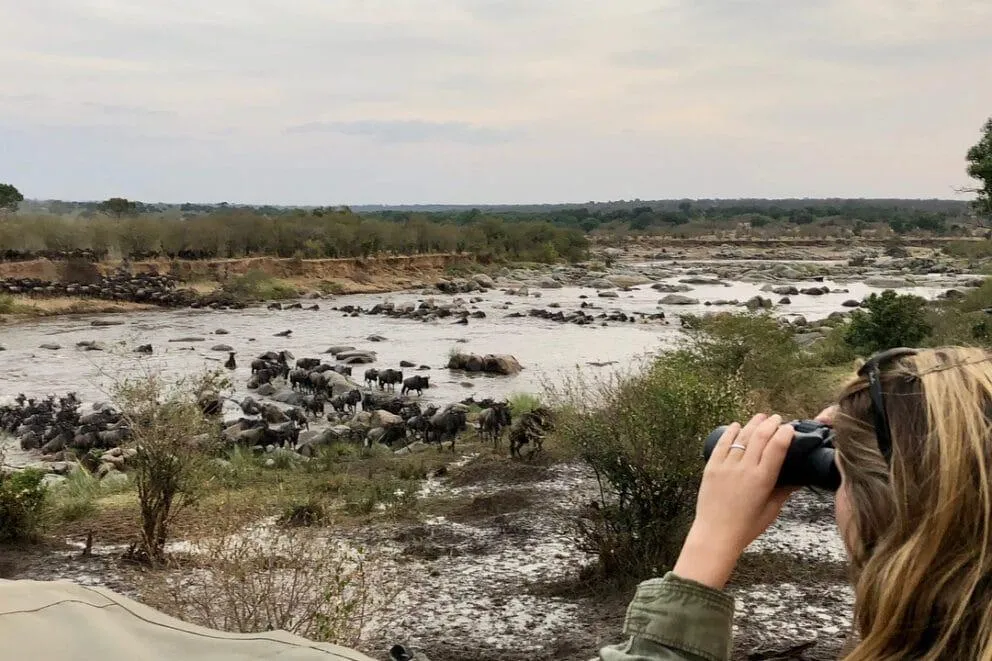
River crossings represent the most iconic scenes of the migration. You observe animals gathering at riverbanks for hours before the first individual jumps. Tension builds as herds hesitate and shuffle nervously.
When the crossing begins, you react quickly. You position your camera to capture splashing water, airborne bodies, and intense expressions. You maintain awareness of crocodile movements and predator activity without losing focus on composition.
Guides during wild wildebeest safaris often anticipate the best crossing points based on herd movement and past patterns. Wild wildebeest safaris enable photographers to position themselves strategically without interfering with animal behavior. You benefit from experienced navigation that maximizes visibility and safety.
Photographing Predators and Dramatic Interactions
Predator-prey interactions add emotional depth to migration photography. Lions, cheetahs, hyenas, and crocodiles follow the herds closely. You must remain alert for sudden chases or ambushes.
You focus on storytelling rather than shock value. You capture sequences that show tension, pursuit, and resolution. You maintain ethical distance and allow natural events to unfold without interference.
Wild wildebeest safaris often prioritize responsible wildlife viewing. Wild wildebeest safaris support ethical guidelines that protect animals and preserve natural behavior. You photograph authentic moments while respecting ecological balance.
Telling a Complete Visual Story
You create stronger portfolios when you document more than dramatic action. You photograph wide landscapes, close-up portraits, quiet grazing scenes, and human interactions with guides. You capture dust clouds at sunset and silhouettes at dawn.
Wild wildebeest safaris offer varied environments that allow you to build a complete narrative. Wild wildebeest safaris move across different terrains, including river systems and open plains. You use this diversity to create a cohesive story that reflects both grandeur and intimacy.
You sequence your images thoughtfully when presenting them. You start with expansive shots, move into detailed portraits, and conclude with powerful action scenes. This approach engages viewers emotionally and visually.
Managing Weather and Environmental Challenges
You adapt quickly to environmental changes. Sudden rainstorms transform dry plains into dramatic landscapes with reflective surfaces. You protect your gear while taking advantage of moody skies and vibrant colors.
Dust storms create atmospheric haze that adds depth to silhouettes. You adjust your camera settings to maintain clarity despite challenging conditions. You remain flexible and embrace unpredictability as part of the experience.
Wild wildebeest safaris operate across changing seasonal conditions. Wild wildebeest safaris expose photographers to diverse weather scenarios that enhance visual storytelling. You use these conditions creatively rather than viewing them as obstacles.
Enhancing Your Experience Through Guided Knowledge
Experienced guides improve your photographic success significantly. They understand animal behavior, migration timing, and optimal viewing locations. You rely on their insights to position yourself effectively.
They communicate herd movements and predict potential crossings. You prepare your equipment before action begins. Their knowledge reduces uncertainty and increases your opportunity for impactful images.
When you join wild wildebeest safaris, you gain access to structured expertise. Wild wildebeest safaris combine logistical planning with wildlife awareness to create efficient photography opportunities. You focus on capturing images rather than worrying about navigation or timing.
Creating Lasting Impact Through Responsible Photography
You approach migration photography with responsibility and respect. You avoid disturbing animals or blocking natural pathways. You follow park regulations and maintain safe distances.
You support conservation by choosing operators who value sustainability. You understand that powerful photography should raise awareness rather than exploit wildlife. Responsible behavior ensures that future generations can experience and document this extraordinary phenomenon.
Conclusion
Photographing the Great Migration demands preparation, patience, and adaptability. You study seasonal timing, master lighting, and anticipate movement. You select appropriate equipment and compose thoughtfully in dynamic environments. You capture both dramatic river crossings and quiet grazing moments to tell a complete story.
Wild wildebeest safaris provide structured access to one of nature’s most extraordinary spectacles. Wild wildebeest safaris enhance your ability to witness and document movement, behavior, and emotion across vast landscapes. When you plan carefully and shoot responsibly, you create images that reflect not only action but also the deeper rhythm of life across the African plains.















Sign in to leave a comment.