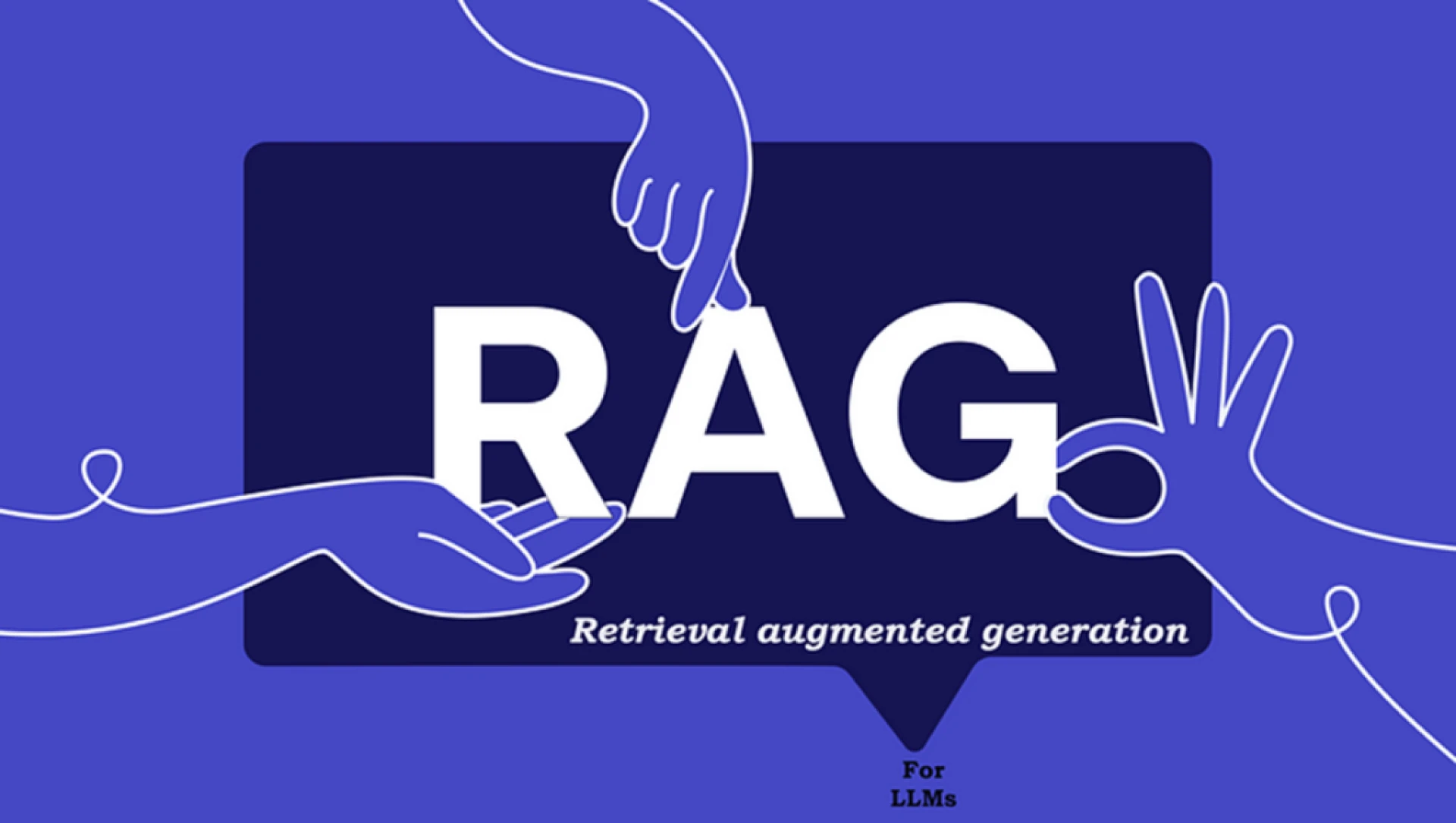

Artificial intelligence has evolved rapidly in recent years, but even the most powerful language models can sometimes generate confident yet inaccurate responses. This limitation, often called hallucination, highlights a key challenge in natural language processing (NLP): how can AI produce not just fluent but factual and contextually accurate information?
Enter Retrieval-Augmented Generation (RAG) — a groundbreaking technique that combines the strengths of information retrieval systems and generative models to deliver responses backed by real data.
In this article, we’ll explore what RAG is, how it works, why it matters, and how it’s transforming the landscape of modern AI systems.
What Is Retrieval-Augmented Generation (RAG)?
Retrieval-Augmented Generation (RAG) is a hybrid AI approach that enhances a model’s output by retrieving relevant information from external data sources before generating a response.
Instead of relying purely on its pre-trained knowledge (which may be outdated or incomplete), a RAG system actively fetches up-to-date context from trusted databases, documents, or knowledge bases.
In simple terms:
RAG = Retrieval (searching) + Generation (writing)
Here’s how it works:
- The retrieval module searches for relevant documents based on the user query.
- The generation module (usually a large language model like GPT or T5) uses the retrieved data to craft a well-informed answer.
This makes RAG systems far more reliable, transparent, and factually accurate compared to traditional models.
Why RAG Matters: Bridging Knowledge Gaps in AI
Language models are powerful, but they have one major weakness: they don’t know what they don’t know. Once trained, their knowledge is frozen.
For example:
If you ask a model trained in 2022 about a 2024 event, it might confidently make something up — because it can’t access new data.
RAG solves this by letting models fetch relevant, real-world information dynamically. This bridging of knowledge gaps brings several advantages:
🔍 Key Benefits of RAG
- Factual Accuracy: Retrieves verified data before answering.
- Up-to-Date Knowledge: Integrates current information beyond the model’s training cutoff.
- Explainability: Allows users to trace the response back to retrieved sources.
- Efficiency: Reduces the need for retraining large models frequently.
How Does RAG Work? (Step-by-Step Breakdown)
Let’s understand the workflow of a RAG system in a simplified way:
1. User Query
A user asks a question — for example:
“What are the key differences between RAG and HyDE models?”
2. Retrieval Module
The system encodes the query into a vector embedding (a numerical representation of the meaning). It then searches through a vector database (like Qdrant or FAISS) to find the most relevant documents or text chunks.
3. Document Selection
The retrieved documents might include research papers, web pages, or internal company data relevant to the question.
4. Generation Module
The model takes the original query + retrieved content as input and generates a coherent, factual answer.
5. Final Response
The output is a human-like response grounded in the retrieved data — not just what the model “remembers.”
Real-World Example: RAG in Action
Imagine a customer support chatbot for a software company.
- Without RAG, it relies on pre-trained data and may give outdated or incorrect instructions.
- With RAG, it can retrieve the latest help documentation and provide accurate answers instantly.
Example:
User: “How do I reset my password in the latest version of the software?”
RAG-powered chatbot: Retrieves updated docs → Reads the section → Generates a clear, step-by-step guide using real data.
This is how RAG improves reliability and builds user trust.
Key Components of RAG Architecture
To build a robust RAG system, you need three major components:
1. Retriever
This part searches for relevant information from a large dataset. It typically uses dense vector embeddings to match the meaning of the query with stored content.
- Common retrievers: BM25, Dense Passage Retrieval (DPR), or bi-encoders.
2. Generator
The generator creates the final response by synthesizing the retrieved documents with the query.
- Common generators: BART, T5, or GPT-based models.
3. Knowledge Source
This could be anything from:
- Company databases
- Wikipedia articles
- Research papers
- Support manuals
- Web crawled data
The knowledge source acts as the external “brain” of the system.
The Role of Vector Databases in RAG
At the heart of every RAG system is the vector database — a specialized storage system designed to handle embeddings efficiently.
When queries and documents are represented as vectors, the database can quickly find semantic similarities — even when the wording differs.
Popular Vector Databases:
- Qdrant – Highly optimized for similarity search and scalability.
- Pinecone – Cloud-native vector search platform.
- FAISS – Open-source library for efficient similarity search.
These databases make RAG systems lightning-fast and scalable across millions of documents.
Prompt Compression and Query Optimization
One challenge in RAG systems is dealing with long context inputs. Large amounts of retrieved text can overwhelm the generator model.
This is where prompt compression comes in.
Prompt Compression Techniques:
- Summarizing retrieved documents before feeding them to the generator.
- Using rerankers to prioritize only the most relevant text chunks.
- Embedding-based scoring to eliminate redundant content.
These methods help the model focus on the most valuable information — improving both speed and accuracy.
Challenges in RAG Systems
While RAG offers immense potential, it’s not without limitations.
Common Challenges:
- Retrieval Noise: Irrelevant or low-quality documents can pollute the context.
- Latency: Searching through large databases can slow down response time.
- Storage Costs: Maintaining and updating vector indexes can be expensive.
- Alignment Issues: The generator may still misinterpret or ignore retrieved facts.
Developers often use techniques like reranking, context filtering, and feedback loops to mitigate these issues.
RAG vs Traditional Generative AI
FeatureTraditional LLMRAG SystemData SourcePre-trained data onlyExternal + Pre-trained dataKnowledge FreshnessStaticDynamicAccuracyProne to hallucinationFactual and groundedExplainabilityOpaqueTraceable to sourcesScalabilityNeeds retrainingEasy to scale with new data
RAG represents a more sustainable and modular approach to AI — one that separates learning from knowledge retrieval.
Applications of RAG Across Industries
RAG isn’t just a research concept — it’s being actively adopted across multiple domains.
🔧 1. Customer Support
RAG-powered bots retrieve real-time knowledge base content to answer complex queries accurately.
📚 2. Education
Personalized tutoring systems use RAG to fetch relevant learning materials for students.
🧠 3. Healthcare
Doctors and researchers use RAG-driven assistants to access medical studies and guidelines instantly.
🏢 4. Enterprise Search
Employees can query large document repositories using natural language and get precise, summarized answers.
💻 5. Software Development
AI coding assistants retrieve technical documentation and suggest accurate code snippets.
The Future of RAG: Toward Smarter AI Systems
RAG is not just a short-term fix — it’s shaping the future of knowledge-grounded AI.
With continuous advancements like HyDE (Hypothetical Document Embedding), Rerankers, and Self-RAG architectures, models are becoming increasingly context-aware and self-improving.
Imagine a future where AI doesn’t just “recall” information but can also reason, verify, and update its own knowledge dynamically. That’s the true potential of Retrieval-Augmented Generation.
Final Thoughts
Retrieval-Augmented Generation is transforming how AI understands and interacts with information. By merging retrieval and generation, RAG enables systems that are both knowledge-rich and contextually accurate.
Whether you’re building intelligent chatbots, virtual assistants, or enterprise tools, understanding and leveraging RAG will give you a clear advantage in crafting reliable and scalable AI solutions.
The journey of AI is moving from memorization to grounded reasoning — and RAG is leading the way.
























Sign in to leave a comment.