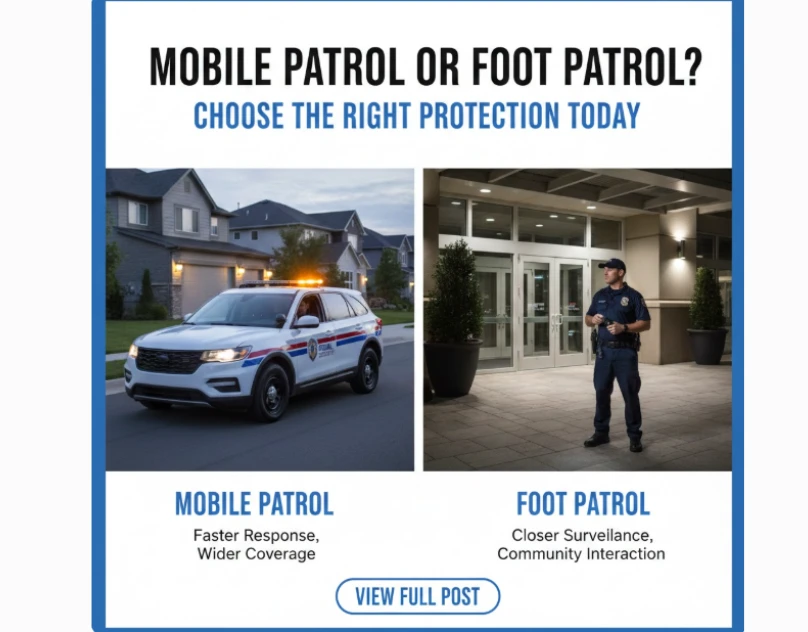

Choosing the right security solution for your Los Angeles property can feel overwhelming. Should you invest in a security guard mobile patrol or stick with traditional foot patrol services? Both methods have their place in modern security strategies, yet each serves different purposes. Understanding these differences helps you make informed decisions about protecting your assets, employees, and customers.
This guide breaks down everything you need to know about mobile patrol security officer services compared to foot patrols. By the end, you’ll understand which option—or combination—works best for your specific security needs.
What Is Mobile Patrol Security?
Mobile patrol involves security officers who travel between multiple locations using vehicles. These guards cover larger areas more quickly than foot patrols, making them ideal for expansive properties or businesses with multiple sites.
A mobile patrol security officer typically drives a marked vehicle equipped with communication systems, emergency supplies, and, sometimes, surveillance equipment. They conduct random checks at predetermined intervals, which creates an unpredictable presence that deters criminal activity.
Many Los Angeles businesses prefer mobile patrols because they offer cost-effective coverage for large areas. Rather than stationing guards at every location, one mobile unit can monitor several sites throughout the night.
Understanding Foot Patrol Security Services
Foot patrol security represents the traditional approach to security services. Guards walk predetermined routes within a specific area, maintaining a visible presence that reassures employees and visitors while deterring potential threats.
These officers can access areas where vehicles cannot go—narrow walkways, building interiors, parking structures, and landscaped areas. Their slower pace allows them to notice details that mobile patrols might miss, such as broken locks, suspicious packages, or maintenance issues.
Foot patrols excel in environments where personal interaction matters. Security guards can greet employees, assist visitors, and respond immediately to situations without needing to return to a vehicle first.
Key Differences Between Mobile and Foot Patrols
Coverage Area and Speed
Security guard mobile patrol units cover significantly more ground in less time. A single mobile officer can visit five to ten locations during one shift, spending 15-30 minutes at each site. This makes them perfect for properties spread across Los Angeles or businesses with multiple branches.
Conversely, foot patrols focus on thorough coverage of smaller areas. Guards might spend their entire shift walking the same property, ensuring every corner receives attention multiple times throughout the night.
Response Time Considerations
Mobile patrols can reach different locations quickly when emergencies arise. If an alarm sounds at one property, the nearest mobile unit can respond within minutes, even if they’re currently patrolling another site.
However, foot patrol guards already stationed on-site respond immediately to incidents. They don’t need to drive anywhere—they’re already there. This immediate presence proves invaluable during active security situations.
Visibility and Deterrence
Both patrol types deter crime, but in different ways. Mobile patrol vehicles with clear security markings create a strong visual deterrent. Criminals notice marked security vehicles and often choose easier targets elsewhere.
Foot patrol guards provide a constant, visible presence within a specific area. Their physical presence on walkways, in lobbies, or around parking lots makes potential wrongdoers think twice before acting.
Cost Comparison: Which Option Fits Your Budget?
Budget considerations play a significant role in security decisions. Generally, mobile patrol security officer services cost less per location when covering multiple sites. You’re essentially sharing security costs across several properties.
A single mobile patrol might cost $35-50 per hour in Los Angeles, but that officer monitors several locations. When you divide the cost across multiple sites, each location pays significantly less than it would to hire dedicated foot patrol guards.
Foot patrols typically cost more per location because guards dedicate their entire shift to one property. Expect to pay $40-60 per hour for professional foot patrol services in the Los Angeles area.
Nevertheless, combining both approaches often provides the best value. Many businesses use foot patrols during high-traffic hours and switch to mobile patrols overnight when fewer people are present.
Ideal Situations for Mobile Patrol Security
Mobile patrols work exceptionally well for:
- Multiple business locations across Los Angeles require overnight security.
- Large industrial facilities with expansive perimeters
- Commercial properties where after-hours checks suffice
- Vacant buildings needing periodic monitoring
- Construction sites spread across wide areas.
Businesses with limited security budgets but multiple locations benefit tremendously from mobile patrol services. The unpredictable timing of mobile checks keeps potential intruders guessing, which enhances overall security.
Additionally, mobile units can respond to alarm calls at multiple properties without maintaining full-time guards at each location. This flexibility makes them practical for growing businesses.
When Foot Patrol Security Makes More Sense?
Certain situations demand the constant presence that only foot patrols provide:
- Retail stores during business hours require customer service.
- Hospital campuses where security guards assist staff and visitors
- Educational institutions need a visible safety presence.
- High-value facilities storing sensitive materials or expensive inventory
- Event venues requiring crowd management and immediate response capabilities
Properties with high foot traffic, valuable assets, or complex layouts benefit from dedicated foot patrol guards. These officers learn every detail of their assigned property and notice when something seems out of place.
Furthermore, foot patrol guards build relationships with employees and regular visitors. This familiarity improves overall security because guards recognize when unfamiliar individuals enter restricted areas.
Combining Mobile and Foot Patrols for Maximum Protection
Many security-conscious businesses in Los Angeles implement hybrid approaches. They station foot patrol guards during peak hours and transition to security guard mobile patrol coverage during quieter periods.
This strategy optimizes both security effectiveness and budget efficiency. For instance, a shopping center might employ foot patrols from 10 AM to 9 PM when customers are present, then switch to mobile patrols for overnight security.
Hybrid approaches also work well for large campuses. Core buildings receive dedicated foot patrols while outlying structures get regular mobile patrol checks. This ensures comprehensive coverage without unnecessary expense.
Technology Integration with Modern Patrol Services
Today’s patrol services incorporate advanced technology that enhances both mobile and foot patrols. GPS tracking systems verify that mobile units visit assigned locations at scheduled times. Property owners can access real-time reports showing exactly when guards arrived and how long they stayed.
Similarly, foot patrol guards use checkpoint systems to prove they’ve walked the entire route. These systems typically involve scanning QR codes or NFC tags placed at strategic locations throughout the property.
Both patrol types now utilize mobile apps for instant incident reporting. Guards photograph problems, document observations, and communicate with dispatch centers in real-time. Property managers receive immediate notifications about any issues discovered during patrols.
Making the Right Choice for Your Los Angeles Property
Selecting between mobile and foot patrols depends on several factors specific to your situation. Start by assessing these key considerations:
First, evaluate your property size and layout. Expansive properties with multiple buildings naturally benefit from mobile patrol efficiency. Compact facilities with complex interiors might require thorough foot patrol.
Next, consider your security risks. High-value inventory, sensitive data, or elevated crime rates in your area may justify a dedicated foot patrol. Properties with lower risk profiles often find mobile patrols sufficient.
Think about your operating hours, too. Businesses open to the public typically need foot patrols during operating hours. After closing, mobile patrols can maintain security at reduced cost.
Finally, review your budget realistically. While security is never optional, different approaches offer varying cost-to-benefit ratios. Sometimes, starting with one patrol type and adjusting based on results makes sense.
Questions to Ask Security Companies
When evaluating security providers in Los Angeles, ask these important questions:
How many properties can one mobile patrol security reasonably cover during one shift? Companies should explain their response times and visit frequencies for each location.
What training do foot patrol guards receive regarding customer service and emergency response? Guards representing your property should maintain professional standards.
Can the security company provide references from similar businesses? Talking to current clients reveals how well the company delivers on promises.
What reporting systems does the company use? Modern security companies should offer detailed digital reports accessible through web portals or mobile apps.
How does the company handle guard absences or emergencies? Reliable providers maintain backup personnel who can cover shifts without gaps in your security coverage.
Local Considerations for Los Angeles Security
Los Angeles presents unique security challenges that influence patrol choices. The city’s size means mobile patrols must navigate significant distances between properties, potentially affecting response times during peak traffic hours.
Crime patterns vary dramatically between Los Angeles neighborhoods. Properties in higher-crime areas might require more frequent mobile patrol visits or dedicated foot patrol presence during vulnerable hours.
Local regulations also matter. Some Los Angeles municipalities have specific licensing requirements for security guards. Ensure any security company you hire maintains proper licensing and insurance for Los Angeles County operations.


























Sign in to leave a comment.