




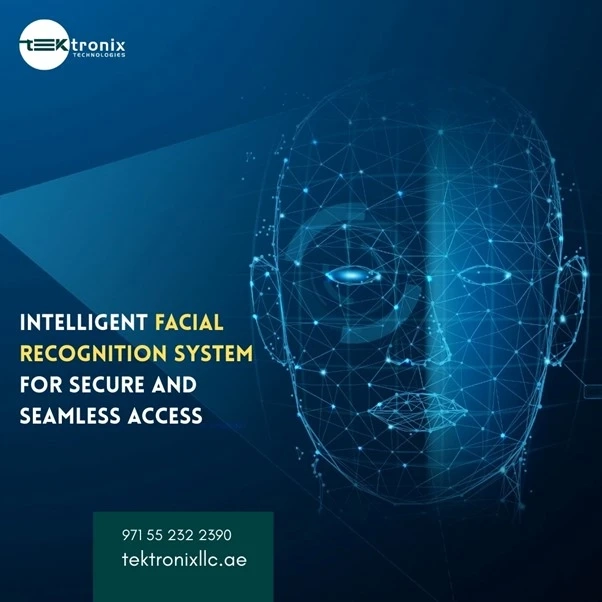
The UAE is always an innovator in smart government and innovative security initiatives for the public. While cities get smarter and their populations grow more active the methods of policing are developing quickly. The most transformational technology that is shaping the future of police force is face recognition. From body-worn patrol vehicles to police equipment and command centers technology for facial recognition is changing the way UAE police force prevent crimes can respond more quickly and protect the public whilst ensuring efficiency and accuracy.
This article examines the ways in which the facial recognition systems are being implemented into the everyday police work as well as how they operate in the real world of patrols as well as why they are the future of police across the UAE.
The UAE: a Smart Policing Era.
UAE police have shifted away from reactive methods towards proactive, intelligent strategies. Intelligent patrols rely on automation, data as well as AI to spot potential dangers before they escalate. Face Recognition is a key element in this process by allowing police officers to locate people in real-time without interrupting the public's movement.
Contrary to conventional ID checkpoints the facial recognition system allows for seamless authentication of identities in public places like metro stations, airports malls and other large gatherings. This improves security, as well as preserving the UAE's mission of a smooth, friendly policing system for citizens.
How Facial Recognition Works on Patrol
The core component of the modern-day patrol system is the facial recognition system, which is a combination of sensors, AI algorithms and safe databases. Officers who are equipped with smart cameras and connected to mobile command systems are able to instantly scan faces at any time.
The technology can recognize faces inside a video frame. This is followed by facial recognition, which compares the recognized faces to watch lists and authorized databases. This entire procedure takes only minutes, allowing authorities to respond promptly if necessary.
Key Points
Real-time identification that does not require physical contact enhances the safety of officers as well as public comfort.
Facial Identification and Face Verification in Daily Operations
Face Recognition is vital during the police patrols that are in high footfall zones. It assists law enforcement officers to quickly detect people that are wanted, missing people and suspects with no any manual intervention. It is particularly helpful at large events, when traditional security checks are not practical.
Face Verification confirms that an individual is authentically who they claim to be. In the case of security checks or during investigations officers are able to verify identity by comparing live faces against an official report. This provides a high level of precision and minimizes human errors.
Facial Analysis: Beyond Simple Identification
Modern face analysis is more than just recognizing faces. AI systems are able to analyse facial characteristics including expressions, expressions and behaviour to aid in with policing methods. This assists in crowd surveillance behaviour assessment and in determining patterns that could indicate possible dangers.
The use of facial analysis helps make data-driven choices which allows command centers to distribute patrol resources efficiently. This also helps in enhancing the practice of preventive policing which is one of the primary goals of UAE police.
Facial Authentication and Secure Identity Confirmation
Facial authentication is becoming more popular for secure policing settings like areas with restricted access as well as evidence rooms and control centres. Instead of passwords or cards the authorized employees are authenticated using facial biometrics. This decreases the chance of unauthorized access or access to information that is not authorized.
For units that patrol this ensures only authorized officers have access to sensitive information and systems to ensure internal security and improving efficiency.
Facial Tracking for Real-Time Situational Awareness
facial tracking permits law enforcement officers to monitor a person's movements across several camera feeds, without the need for any manual surveillance. For patrol situations it is a great tool to track suspects in the public space while maintaining the visual consistency.
Through the integration of facial tracking into the citywide surveillance systems, UAE police can respond quicker, better coordinate and reduce the chance that suspects will evade the detection.
Facial AI, Iris Recognition, and 3D Facial Recognition
Modern advanced facial AI technology improves precision even in difficult environments including low lighting as well as crowd density and partially visible faces. If combined together with Iris recognition the systems can attain greater accuracy, especially in highly-secure situations.
3D Face Recognition enhances the reliability by mapping the facial structure and depth which makes it impossible to fool systems using photos or videos. Patrols where the conditions of the environment tend to shift quite often can be the situations in which the technology may be very helpful.
Liveness Detection: Fraud and Spoofing Prevention.
Spoofing is one of the most important biometrics problems. Liveness Identification addresses this issue by ensuring that the face that is identified is of a real person. It examines the micro movement and the profundity of movements and natural responses to confirm the originality of the photograph. In the case of UAE security, detection of liveness guarantees that the facial recognition systems remain secure as well as reliable and invulnerable from manipulation in patrol operations.
Privacy, Ethics, and Responsible Use
Face recognition is a great way to gain benefits, UAE insists on the ethical and responsible use of facial recognition. System implementation is governed by strict guidelines to guarantee data security control, access to data, as well as transparency.
In balancing the need for innovation and privacy, UAE policing sets an international standard for responsible usage of facial recognition for security for the general public.
The Road Ahead for Facial Recognition in UAE Policing
As AI technology advances and improve, facial recognition technology will be ever more precise, quicker and contextually aware. The future patrol system can seamlessly combine Facial Detection, Facial Analysis as well as Face Tracking into one unified intelligence platform.
This development is in line with the UAE's goal of safe cities, better governance, and a trust-based public sector driven by technology.
Conclusion
The next phase of UAE police is in the use of intelligent technology that is proactive and the use of facial recognition is in the middle of this shift. Through the use of facial recognition systems, face identification, facial authentication, 3d facial recognition and liveness detection police organizations can improve efficiency in patrol and improve safety for the public and tackle dangers with unparalleled speed and accuracy. As these technology developments evolve, they'll redefine the manner in which police services are delivered throughout the UAE.
FAQs
1. How does facial recognition aid police patrols in the UAE?
Face Recognition allows real-time identification and monitoring. This allows patrol officers to respond more quickly and to respond more precisely.
2. What's the main difference between Identification and Verification?
Face ID determines the identity of a person inside the database. Facial Verification determines if a individual matches with a particular identification.
3. Does the Facial Recognition correct in large areas?
Yes, the latest facial AI as well as 3D facial Recognition guarantees high precision even in large crowds.
4. What is the most effective solution to Liveness Detection to enhance security?
Liveness detection is employed to discourage the aspect of spoofing by ensuring that the face of the individual is that of a living being.
5. Does Facial Recognition Systems make us safe?
In the UAE, Facial Recognition Systems adhere to stringent guidelines to ensure data security, ethical use of data, not to mention privacy protection.
For more information contact us on:
Tektronix Technology Systems Dubai-Head Office
+971 50 814 4086
+971 55 232 2390
Office No.1E1 | Hamarain Center 132 Abu Baker Al Siddique Rd – Deira – Dubai P.O. Box 85955
Or click on the below link for more information: