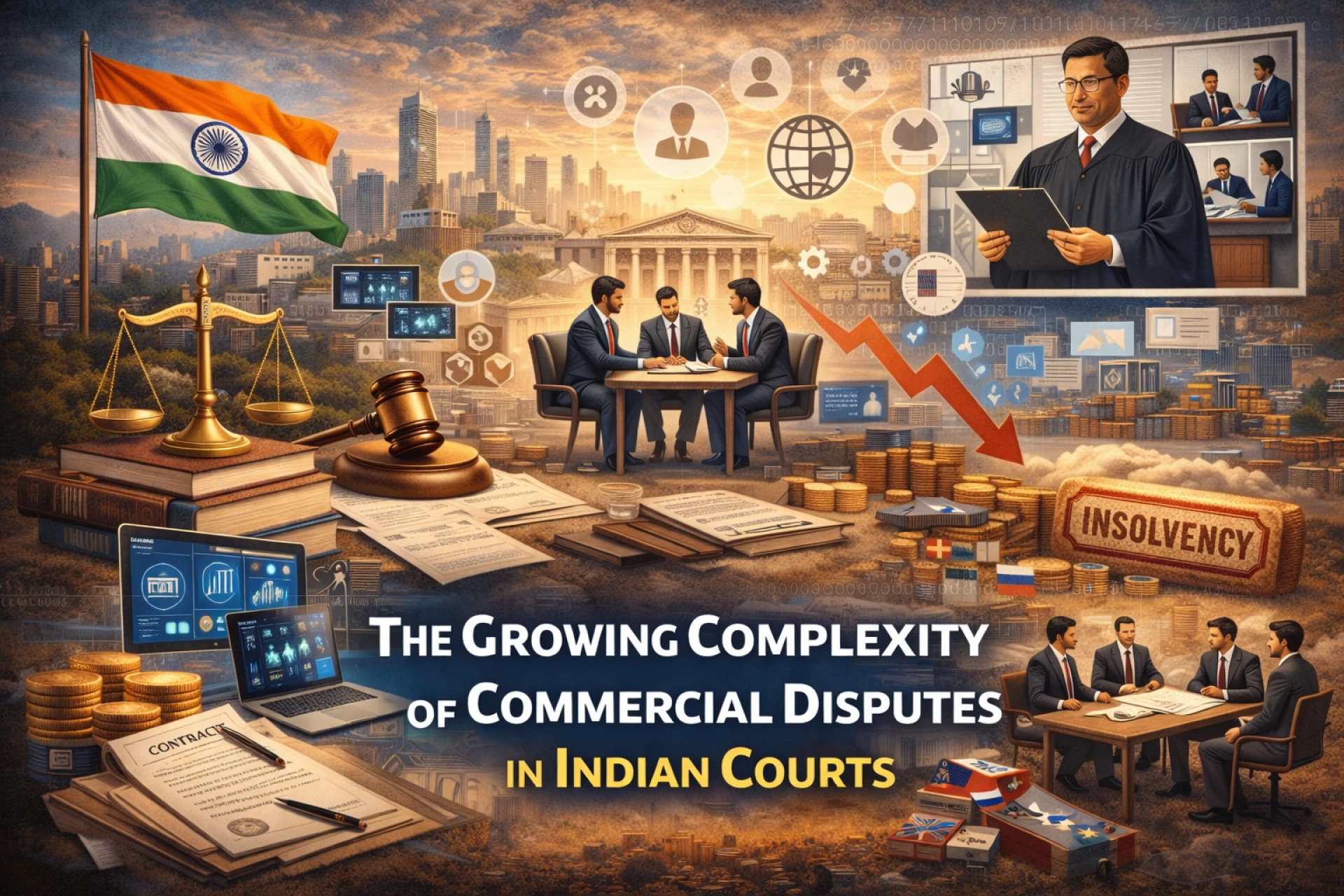


The Growing Complexity of Commercial Disputes in Indian Courts
Commercial disputes in India have evolved far beyond simple contractual disagreements. As businesses expand across sectors and borders, disputes reaching Indian courts now involve layered contracts, financial structures, regulatory obligations, and multiple stakeholders. This growing complexity reflects the changing nature of commerce and places new demands on courts, litigants, and legal professionals.
This article explores why commercial disputes in Indian courts have become more complex, how the judicial system is responding, and what businesses should understand while navigating this challenging environment.
Changing Business Structures and Transactions
Modern business transactions rarely involve a single agreement between two parties. Commercial relationships today rely on detailed contractual frameworks covering financing, supply chains, intellectual property, data usage, and risk allocation.
A single project may involve shareholders, lenders, contractors, regulators, and third party service providers. When disputes arise, courts must examine interconnected rights and obligations rather than isolated breaches. This multi layered structure increases both factual and legal complexity.
Judges are often required to understand business models, industry practices, and commercial intent to resolve disputes fairly.
Rise of High Value Commercial Litigation
The financial stakes involved in commercial disputes have increased significantly. Infrastructure projects, corporate acquisitions, joint ventures, and shareholder exits frequently result in litigation involving large monetary claims.
Such disputes often include extensive documentation, expert evidence, and competing financial interpretations. Courts must assess complex valuation methods, accounting records, and performance benchmarks.
High value litigation also leads to aggressive legal strategies, increasing the need for strict procedural control and judicial oversight.
Increased Dependence on Detailed Contracts
Commercial contracts have grown longer and more sophisticated. Clauses dealing with termination, indemnity, limitation of liability, dispute resolution, and governing law now receive greater attention.
Many disputes arise from differing interpretations of contractual language rather than outright non performance. Courts examine wording carefully to determine intent and risk allocation.
Ambiguity in drafting often leads to prolonged litigation. This trend underlines the importance of precision and foresight during contract preparation.
Overlap Between Commercial and Regulatory Issues
Commercial disputes increasingly involve regulatory dimensions. Sectors such as banking, real estate, energy, telecom, and pharmaceuticals operate under strict statutory frameworks.
A contractual dispute may trigger regulatory action or parallel proceedings before specialised tribunals. Courts must balance private contractual rights with public law obligations.
This overlap requires judges and lawyers to navigate both commercial principles and regulatory compliance, adding another layer of complexity.
Insolvency Driven Commercial Disputes
The rise of insolvency proceedings has reshaped commercial litigation. Creditors and debtors pursue remedies across civil courts, commercial courts, and insolvency forums.
Disputes often involve questions of security enforcement, priority of claims, and contractual termination during insolvency. Courts must align insolvency objectives with contractual rights.
This intersection demands specialised knowledge of financial law and insolvency frameworks, making such disputes particularly challenging.
Cross Border Transactions and Jurisdiction Issues
Globalisation has increased cross border business activity. Indian courts now frequently deal with disputes involving foreign companies, overseas assets, and international contracts.
Issues such as jurisdiction, choice of law, and enforcement of foreign judgments require careful judicial analysis. Courts must apply principles of private international law alongside domestic statutes.
These disputes often involve parallel proceedings in different countries, increasing complexity and strategic considerations.
Technology and Digital Evidence
Technology has transformed how businesses communicate and operate. Emails, digital contracts, cloud data, and electronic payment records now form the backbone of commercial evidence.
Courts assess the authenticity and admissibility of digital records while ensuring compliance with procedural rules. Disputes involving data misuse, software licensing, and cyber incidents introduce technical issues unfamiliar to traditional litigation.
Managing and presenting electronic evidence requires skill and technological awareness.
Role of Commercial Courts
The establishment of commercial courts aimed to address delays and inefficiency in complex disputes. These courts follow structured procedures and strict timelines.
While this framework improves efficiency, it also raises expectations from litigants. Pleadings must be precise. Evidence must be well organised. Arguments must remain focused.
Procedural discipline has reduced unnecessary delays but increased the need for careful preparation and expert representation.
Judicial Shift Towards Commercial Awareness
Indian courts have become more commercially aware in their reasoning. Judges increasingly consider economic realities and business consequences while deciding disputes.
Courts discourage speculative claims and procedural abuse. They reward transparency and good faith conduct. This pragmatic approach enhances trust in the judicial system while raising the standard of advocacy.
Commercial disputes now require arguments grounded in both law and business logic.
Alternative Dispute Resolution Influencing Litigation
Mediation and arbitration now influence how commercial disputes are approached. Courts often encourage parties to explore settlement at early stages.
While complex disputes still require adjudication, businesses evaluate cost, time, and reputation before committing to prolonged litigation. Litigation forms part of a broader dispute management strategy rather than an automatic response.
This shift has changed how disputes are framed and pursued in court.
Growing Demand for Specialised Legal Expertise
As complexity increases, clients seek lawyers with focused expertise. General litigation experience may not suffice in high value or technically complex matters.
A specialised Civil Litigation Law Firm & Lawyers in Delhi, India can provide strategic insight, sector knowledge, and procedural expertise. Such firms understand commercial risk and courtroom dynamics, enabling effective dispute management.
Delhi remains a central hub for commercial litigation due to its courts, tribunals, and regulatory bodies.
Preventive Legal Planning Becoming Essential
Businesses now recognise the importance of preventing disputes rather than merely resolving them. Early legal involvement during negotiations and compliance planning reduces exposure.
Preventive measures include clear drafting, internal dispute resolution mechanisms, and regular legal audits. This proactive approach saves time, cost, and reputational risk.
Strong preventive planning also strengthens a party’s position if litigation becomes unavoidable.
Impact on Businesses and Investors
Complex commercial litigation affects cash flow, management focus, and investor confidence. Prolonged disputes can delay projects and disrupt operations.
Investors assess legal exposure when making decisions. An efficient and predictable dispute resolution system supports economic growth and stability.
Businesses must factor litigation risk into strategic planning.
Future Outlook for Commercial Disputes in India
Commercial disputes in India will continue to grow in complexity as the economy expands and technology advances. Courts are likely to further refine procedures and develop commercial jurisprudence.
Key trends expected include stronger use of mediation, deeper integration of technology, and greater reliance on specialised adjudication.
Engaging the Best Law Firm in Delhi, India ensures access to experienced professionals capable of handling intricate disputes with clarity and confidence.
Conclusion
The growing complexity of commercial disputes in Indian courts reflects the sophistication of modern commerce. Transactions are larger, relationships are interconnected, and legal questions are more nuanced.
Courts have responded with procedural discipline, commercial awareness, and evolving jurisprudence. For businesses, navigating this landscape requires strategic planning and experienced legal guidance.
Understanding these developments enables companies to manage risk effectively and pursue growth with confidence in India’s legal framework.



























Sign in to leave a comment.