




 Table of Contents
Introduction: The Changing Nature of Work
Why Employers Are Prioritizing Job-Ready Skills
Key Industries Driving the Demand for Skilled Professionals
Common Skill Gaps in Today’s Workforce
The Role of Practical, Hands-On Learning
How Industry-Aligned Training Bridges the Gap
Benefits of Job-Ready Skills for Career Growth
What Learners Should Focus on to Stay Competitive
Conclusion: Adapting to a Skills-First Job Market
Introduction: The Changing Nature of Work
The nature of work is evolving rapidly as technology, automation, and digital transformation continue to reshape industries. Traditional roles are changing, and new skill requirements are emerging across sectors. As a result, employers are placing greater emphasis on job-ready skills that allow professionals to contribute effectively from the start. This shift highlights the growing importance of practical knowledge, adaptability, and continuous learning in today’s competitive job market.
Why Employers Are Prioritizing Job-Ready Skills
Employers across industries are increasingly focusing on job-ready skills to keep pace with changing business requirements. Professionals with practical skills can transition into new roles more smoothly, thereby reducing the time and resources required for training. As technology and processes continue to evolve, the ability to apply knowledge in real-world situations has become essential. Job-ready skills support greater efficiency, adaptability, and consistency, helping organizations build a workforce that is prepared for current and future challenges.
Key Industries Driving the Demand for Skilled Professionals
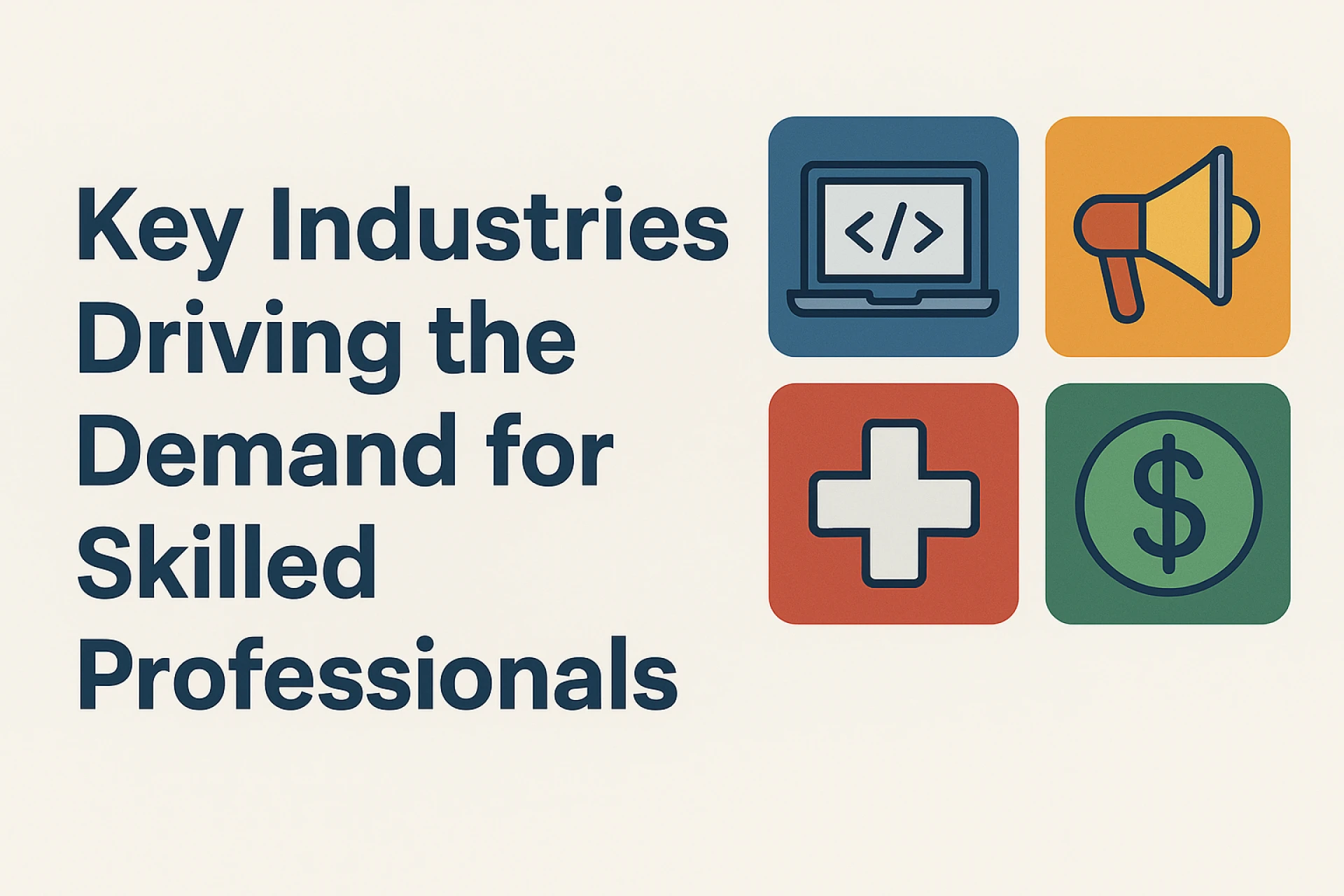
Technology & IT – Demand for professionals skilled in software, data, cloud, and emerging technologies.
Digital Marketing & Media – Growing need for performance marketing, analytics, content, and automation skills.
Healthcare & Life Sciences – Increased focus on skilled roles in healthcare services, technology, and operations.
Finance & FinTech – Requirement for professionals with expertise in financial systems, compliance, and digital platforms.
E-commerce & Retail – Emphasis on supply chain, customer experience, and data-driven decision-making skills.
Manufacturing & Industrial Services – Rising demand for skilled talent in automation, quality control, and process optimization.
Common Skill Gaps in Today’s Workforce
Practical Application Skills – Difficulty applying theoretical knowledge to real-world tasks.
Digital Proficiency – Limited exposure to modern tools, platforms, and technologies.
Problem-Solving Ability – Gaps in analytical thinking and decision-making in dynamic situations.
Communication & Collaboration – Challenges in teamwork, presentation, and cross-functional coordination.
Adaptability & Learning Agility – Struggles with adjusting to new processes, tools, and role expectations.
Industry-Relevant Experience – Lack of hands-on experience aligned with current job requirements.
The Role of Practical, Hands-On Learning
Practical, hands-on learning has become an essential part of effective skill development in today’s evolving job market. It enables learners to move beyond theoretical understanding and apply concepts in real-world situations that reflect actual workplace challenges. Through hands-on activities, case studies, and project-based learning, individuals gain deeper insight into industry processes, tools, and expectations.
This approach also helps build problem-solving abilities, confidence, and decision-making skills, which are highly valued by employers. By experiencing real scenarios, learners are better prepared to adapt to professional environments and contribute meaningfully from an early stage. Overall, practical learning supports stronger skill retention, faster readiness for employment, and smoother transitions into job roles across industries.
How Industry-Aligned Training Bridges the Gap
Industry-aligned training helps bridge the gap between academic learning and real workplace expectations by focusing on practical, in-demand skills. These programs are structured around current tools, workflows, and industry challenges, allowing learners to gain relevant exposure before entering professional roles. Platforms such as The Upthrust, which emphasize hands-on learning through real projects, reflect this approach by aligning skill development with actual industry needs. By connecting learning outcomes with employer expectations, industry-focused training improves job readiness, reduces skill gaps, and supports smoother transitions into the workforce.
Benefits of Job-Ready Skills for Career Growth
Job-ready skills offer professionals a distinct advantage in today’s competitive and rapidly evolving job market. These skills enable individuals to apply theoretical knowledge in practical scenarios, making them capable of handling real workplace challenges from the very beginning. Employees with strong job-ready skills often require less onboarding and training, contribute more effectively to team objectives, and demonstrate greater reliability in achieving results.
Beyond immediate performance, job-ready skills play a crucial role in long-term career growth. Professionals who continuously develop relevant skills are better positioned to adapt to technological advancements, industry shifts, and evolving business needs. They are often considered for diverse roles, promotions, and leadership opportunities because their expertise demonstrates both competence and adaptability.
In addition to professional advantages, job-ready skills foster personal growth by building confidence, problem-solving abilities, and decision-making capabilities. Continuous development of practical skills encourages a mindset of lifelong learning, helping individuals stay relevant and resilient in an ever-changing work environment. Overall, investing in job-ready skills not only enhances employability but also lays the foundation for sustained career success and professional fulfillment.
What Learners Should Focus on to Stay Competitive
In today’s fast-paced job market, learners need to focus on acquiring skills that align with industry demands and prepare them for practical challenges. Technical expertise alone is no longer sufficient; employers also value problem-solving abilities, adaptability, critical thinking, and effective communication. Focusing on a combination of technical and soft skills ensures that professionals can perform efficiently, collaborate well, and respond effectively to dynamic work environments.
Hands-on experience through projects, internships, and practical training is essential for building confidence and real-world competence. Learners should prioritize staying updated with emerging tools, technologies, and trends in their chosen industry to remain relevant. Additionally, continuous learning and upskilling help professionals anticipate market shifts, address skill gaps, and position themselves as valuable assets to employers.
Platforms that emphasize practical, industry-aligned training, such as The Upthrust, can support learners in gaining relevant exposure and bridging the gap between education and employment. By combining practical skills, adaptability, and a commitment to ongoing development, learners can maintain a competitive edge and achieve long-term career growth in any field.
Conclusion: Adapting to a Skills-First Job Market
The modern workforce is increasingly driven by practical skills and the ability to apply knowledge effectively. As industries continue to evolve, employers are prioritizing job-ready abilities that enable professionals to contribute meaningfully from the start. Bridging the gap between theoretical learning and real-world application is essential for career success.
By focusing on hands-on experience, continuous learning, and staying updated with industry trends, individuals can remain adaptable, competitive, and prepared for emerging opportunities. Developing a strong set of practical skills not only enhances employability but also lays the foundation for long-term professional growth in an ever-changing job market.