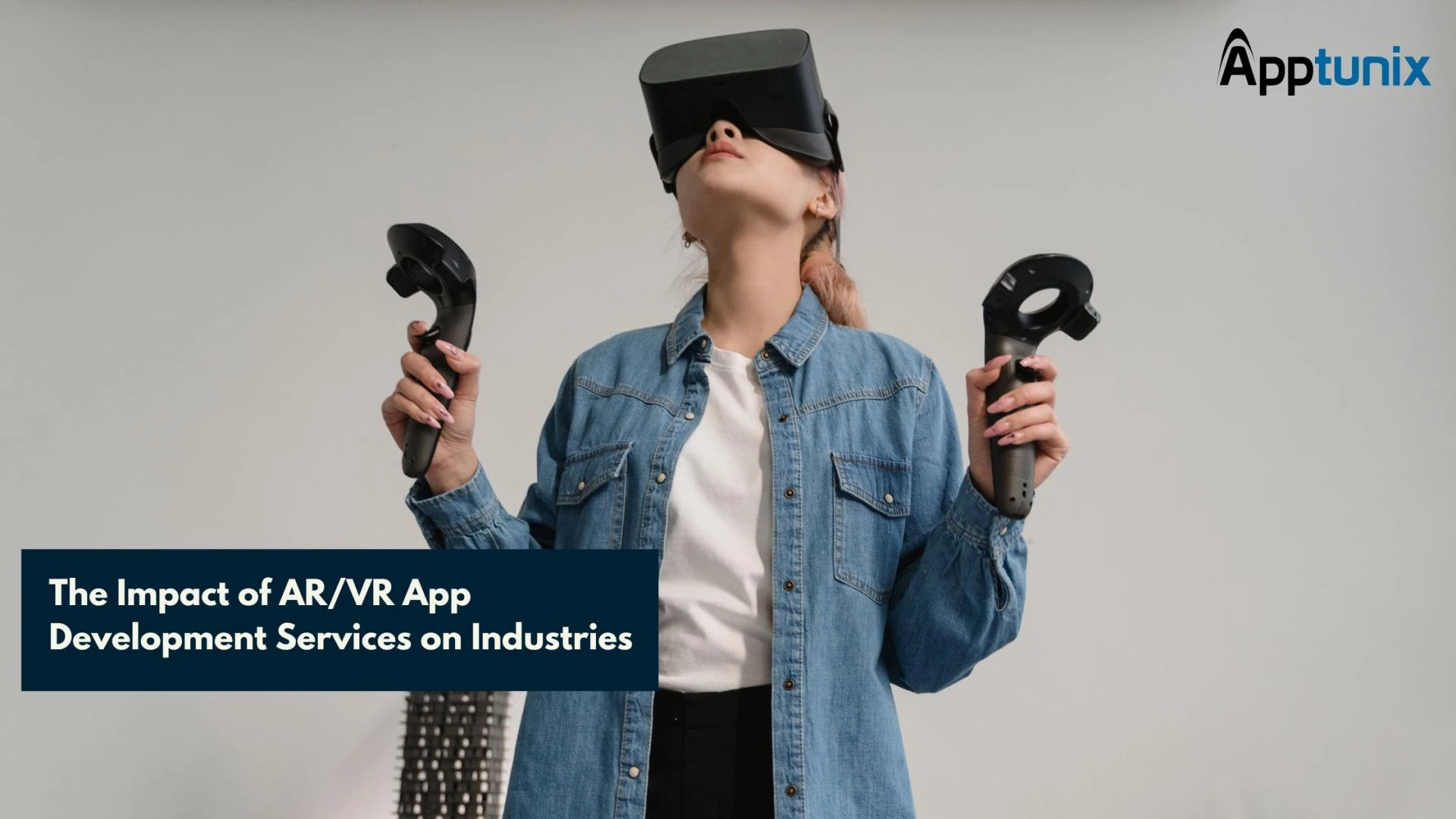

The advantage of Augmented Reality (AR) and Virtual Reality (VR) technologies has significantly transformed various industries. What was once considered science fiction is now a part of our everyday lives, thanks to the rapid advancements in AR/VR app development services. These technologies have created new opportunities for businesses to innovate, enhance customer experiences, and improve operational efficiency. In this blog post, we will explore the profound impact of AR/VR app development services on different industries, highlighting key applications and benefits.
The Rise of AR and VR Technologies
Before delving into the industry-specific impacts, it is essential to understand the difference between AR and VR. In contrast, VR creates an entirely immersive digital environment, isolating the user from the real world.
The growth of AR/VR technologies can be attributed to several factors, including advancements in hardware (such as VR headsets and AR glasses), software development, and increased investment from tech giants. As these technologies become more accessible and affordable, their adoption across various industries has accelerated.
Healthcare: Revolutionising Patient Care and Medical Training
The healthcare industry has been one of the early adopters of AR/VR technologies, leveraging them to enhance patient care and medical training. AR/VR app development services have enabled the creation of innovative applications that provide significant benefits.
Medical Training and Education: AR/VR technologies have revolutionised medical training by providing realistic simulations for students and professionals. Medical students can now practice surgeries and procedures in a risk-free virtual environment, allowing them to hone their skills before operating on real patients. For instance, VR surgical simulators provide tactile feedback, enabling trainees to experience the texture and resistance of human tissues.Patient Care and Rehabilitation: In patient care, AR apps have been used to assist in diagnostics and treatment planning. For example, AR can overlay MRI or CT scan images onto a patient's body, helping surgeons visualize the exact location of tumors or fractures. Additionally, VR has shown promise in pain management and rehabilitation. Patients undergoing physical therapy can use VR to engage in interactive exercises, making the process more enjoyable and effective.Education: Enhancing Learning Experiences
The education sector has also benefited immensely from AR/VR app development services. These technologies have the potential to transform traditional teaching methods, making learning more interactive and engaging.
Immersive Learning Environments: VR can create immersive learning environments that transport students to different places and times. For instance, history students can explore ancient civilizations, and biology students can dive into the human body to study its intricacies. This level of immersion enhances understanding and retention of information.Interactive and Gamified Learning: AR apps can bring textbooks to life by overlaying interactive content on physical pages. Students can scan a page with their devices to access 3D models, videos, and quizzes. Gamified learning experiences, facilitated by AR/VR, make education more fun and engaging, motivating students to participate actively.Retail: Redefining Customer Experiences
The retail industry is undergoing a significant transformation with the integration of AR/VR technologies. These technologies are redefining customer experiences, both online and in physical stores.
Virtual Try-Ons: One of the most popular applications of AR in retail is virtual try-ons. Customers can use AR apps to see how clothes, accessories, or makeup products will look on them without physically trying them on. This technology reduces the uncertainty of online shopping and decreases the likelihood of returns.Enhanced In-Store Experiences: In physical stores, AR can provide additional information about products through interactive displays. Customers can scan items with their smartphones to access details such as reviews, usage instructions, and promotional offers. VR, on the other hand, can create immersive brand experiences. For example, a furniture store might use VR to allow customers to visualize how furniture pieces would look in their homes.Real Estate: Transforming Property Visualisation
The real estate industry has embraced AR/VR technologies to improve property visualisation and streamline the buying process.
Virtual Property Tours: VR enables potential buyers to take virtual tours of properties from the comfort of their homes. This technology is especially useful for long-distance buyers and those with busy schedules. Virtual tours provide a realistic sense of the property's layout and ambiance, helping buyers make informed decisions.AR for Interior Design: AR apps can assist in interior design by allowing users to visualize furniture and decor in their spaces before making a purchase. Users can experiment with different arrangements and styles, ensuring that their choices match their preferences and needs.Read More: Metaverse in Real Estate: What Does the Future Look Like?
Manufacturing: Enhancing Productivity and Safety
The manufacturing sector has seen significant advancements with the integration of AR/VR technologies. These technologies enhance productivity, improve safety, and facilitate training.
Maintenance and Repair: AR apps can provide step-by-step instructions for maintenance and repair tasks, overlaying digital information onto machinery. This reduces downtime and minimizes errors, as workers can access real-time guidance. Additionally, remote experts can use AR to assist on-site technicians, providing support without being physically present.Safety Training: VR is used to conduct safety training simulations in hazardous environments. Workers can practice handling dangerous situations in a controlled virtual environment, improving their preparedness and reducing the risk of accidents.Tourism and Hospitality: Creating Memorable Experiences
The tourism and hospitality industries are leveraging AR/VR technologies to create memorable and immersive experiences for travellers.
Virtual Travel Experiences: VR can offer virtual travel experiences, allowing users to explore destinations before deciding on their travel plans. This technology provides a taste of what to expect, helping travellers make informed choices about their trips.Augmented Tourism: AR apps enhance the travel experience by providing additional information about landmarks and attractions. Travelers can use their smartphones to access historical facts, audio guides, and interactive maps, enriching their sightseeing experience.Automotive: Innovating Design and Customer Interaction
The automotive industry has adopted AR/VR technologies to innovate design processes and enhance customer interaction.
Virtual Showrooms: Car manufacturers use VR to create virtual showrooms, allowing customers to explore different models and configurations without visiting a physical dealership. This technology provides a convenient and immersive shopping experience.Design and Prototyping: AR and VR are used in the design and prototyping stages of vehicle development. Engineers and designers can visualize and test new concepts in a virtual environment, reducing the time and cost associated with physical prototypes.Conclusion
AR/VR app development services have had a profound impact on various industries, transforming the way businesses operate and interact with customers. From healthcare and education to retail and manufacturing, these technologies offer innovative solutions that enhance productivity, improve customer experiences, and drive growth. As AR/VR technologies continue to evolve, their influence on industries is expected to expand, opening up new possibilities and opportunities. Embracing these technologies will be crucial for businesses aiming to stay competitive and deliver exceptional value in an increasingly digital world.




















Sign in to leave a comment.