




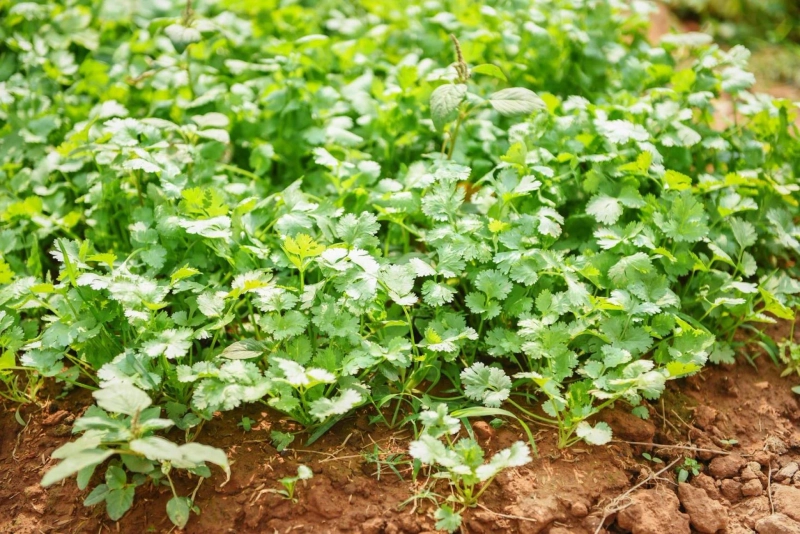
Green coriander, which is mostly known as cilantro and dhania, is an ordinary herb used in various recipes in different countries. It is usually garnished before serving or while cooking due to its zesty properties. Other than being used widely in cooking, coriander is also renowned for possessing medicinal properties.
The crop is quite versatile and easily grows in tropical and subtropical climates; hence, it is good for farmers to grow. In this guest post, we look closer at the process of farming green coriander, from soil preparation up to harvesting.
Coriander Farming Processes:
In the section below, one can read the various stages of green coriander farming. These stages are quite vital for this farming as through these stages, you can grow healthy coriander leaves.
Land Preparation:
The first and most fundamental step in the farming of coriander is preparing the soil. The plant likes well-drained soil rich in organic matter for healthy growth. An ideal pH level of the soil ranges from 6.5 to 7.5 for growing coriander. Therefore, the preparation of soil is a must before sowing seeds.
First, any weeds and debris in the field should be cleared away. This is to ensure that there is no competition for nutrients and space and to ensure the coriander plants can grow without restrictions. After the area has been cleared, ploughing and tilling of the soil becomes essential. This loosens the soil, making it easy for the roots of the coriander to break through and take up all the nutrients it needs.
The right tractor to use for soil preparation would make the job a lot easier and faster. For example, with a Mahindra 585 DI, one can always depend on its powerful engine that would efficiently till the soil. This will enable farmers to work their fields easily, ensuring proper soil preparation for the sowing of coriander seeds.
Sowing Time:
Once the soil has been prepared, it's now time to sow the coriander seeds. Direct sowing of coriander seeds into the soil, usually in rows 10 to 15 centimeters apart, is recommended. Farmers should place the seeds at about 1 to 2 centimeters deep in the soil, not too deep, as coriander seeds require light to germinate.
It's better to sow the seeds of coriander when the weather is cooler since they love mild temperatures. Instead of hot climates, one should plant during early morning or late evening to get away from the heat of the day. After sowing the seeds, one needs to give them light watering to promote germination.
Irrigation Techniques:
Coriander plants should be watered consistently and should not be deprived of moisture, especially during the initial stages. At the same time, over-watering leads to root rot, so watering must be balanced. The soil must be kept moist and not soggy. Areas receiving less rainfall may have to water the plants by themselves or use drip irrigation for better water management.
Apart from irrigation, coriander plants need proper weeding and pest control for healthy growth. Farmers can apply organic pesticides to safeguard their crops from the pest insects like aphids or whiteflies. Furthermore, they must ensure the proper exposure of the plants to sunlight to help them grow properly.
Harvest Time:
It is important to note that green coriander harvesting involves some waiting. However, in the average scenario, the coriander leaves are usually ready for harvest about 3-4 weeks from the day of sowing. The coriander leaves should be bright and healthy green at the moment of harvesting. In that case, a farmer will harvest the leaves at whatever height reaches them, although one mustn't wait very long to avoid losing its flavor and taste.
One is supposed to cut at the base of the leaves, and clean scissors or shears will do for that. Early morning harvesting is said to be when the content of moisture in the leaves is at its highest to guarantee the leaves are as fresh as crispy.
Post Harvest Stage:
After harvesting, post-harvest handling is the next important activity of coriander farming. The harvested coriander leaves should be handled very carefully in order not to bruise or damage them. The fresh leaves are sold directly to the market; however, in many cases, they are processed for storage or exportation.
Once the coriander leaves are picked, they have to be cleaned so that all the dirt or pesticides on them are removed. Then, they can be packed in air-tight containers or plastic bags so that it stays fresh while being transported. If coriander has to be preserved for a long time, it is usually dried or frozen.
For farmers who want to make their post-harvest processes more efficient, modern machinery is key. The Mahindra 585 is a heavy-duty tractor that helps in the transportation and processing of crops post-harvest. With its high lifting capacity and advanced features, it makes post-harvest tasks, such as carrying harvested coriander to storage or market, much easier.
Final Words:
Green coriander farming is an enjoyable and rewarding process that requires proper thought and care. Every phase, beginning with the preparation of the land and going down to its harvesting, adds to having a healthy profit from it.
With the correct farming techniques, farmers can grow healthy coriander that matches market demand. If this is your first time ever growing coriander, follow this step and watch your crops thrive.