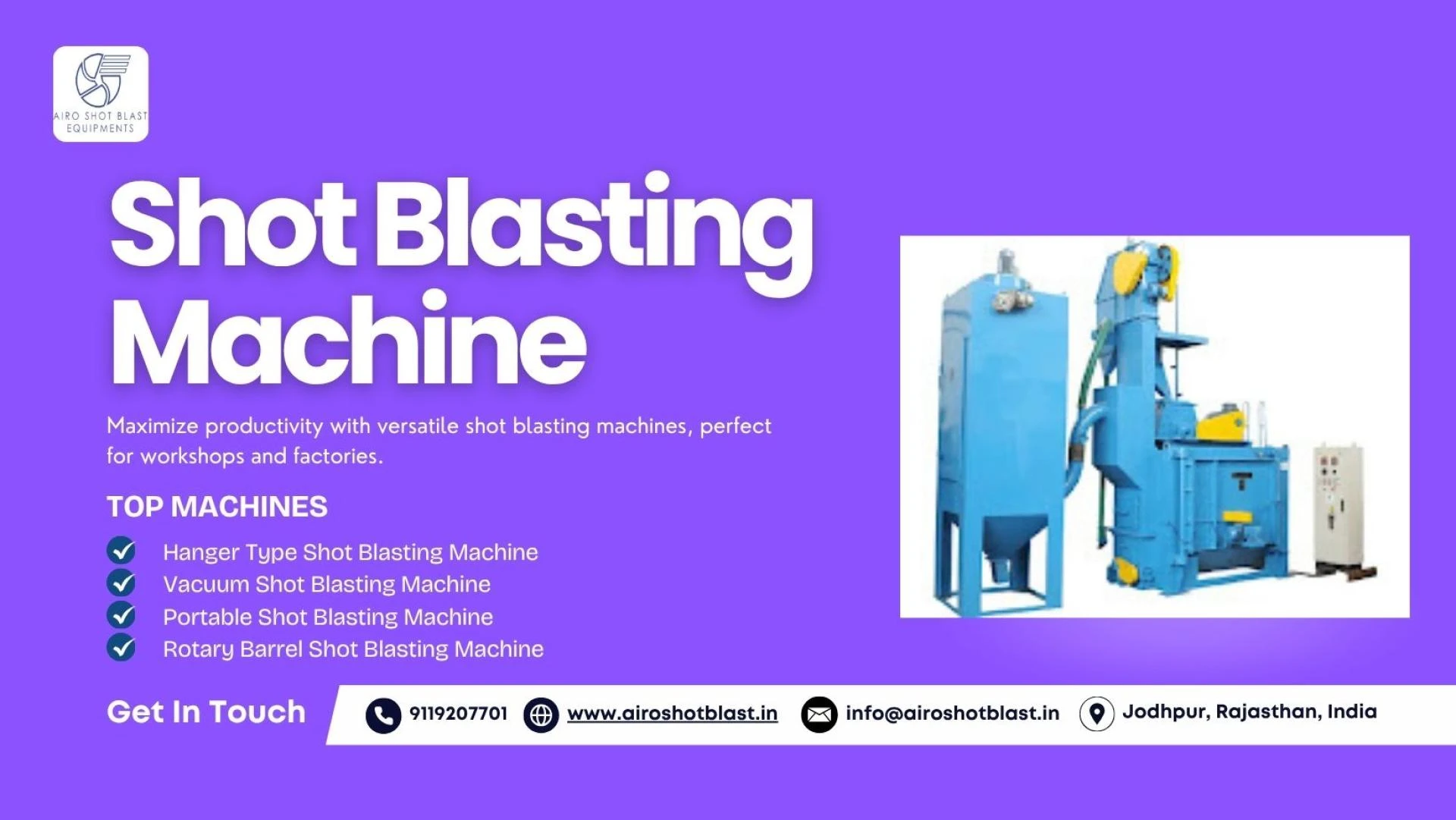

Industrial surface preparation is entering a new phase as manufacturers worldwide move away from conventional abrasive blasting systems toward smart abrasive blasting machines. This transition reflects a broader shift in industrial engineering, where automation, data intelligence, and efficiency are redefining how critical processes are managed. Across sectors such as automotive, foundry, fabrication, and heavy engineering, smart shot blasting solutions are quickly becoming the preferred choice.
This news report examines the key drivers behind this shift and how smart abrasive blasting machines are reshaping industrial operations.
From Mechanical Systems to Intelligent Machines
Traditional abrasive blasting machines were primarily mechanical, relying on fixed settings and operator experience to achieve desired surface results. While effective, these systems often lacked consistency and efficiency, particularly in high-volume production environments.
Smart abrasive blasting machines represent a significant evolution. Equipped with digital control systems, sensors, and programmable logic controllers (PLC), these machines monitor blasting conditions in real time. Parameters such as abrasive flow, blast pressure, wheel speed, and cycle duration are continuously adjusted to maintain optimal performance. This transition from static to adaptive operation marks a fundamental change in how surface preparation is executed.
Rising Demand for Consistency and Quality
One of the strongest drivers behind the adoption of smart blasting machines is the growing demand for consistent surface quality. Industries supplying components for automotive, aerospace, and infrastructure projects face strict surface preparation standards. Minor variations in roughness or cleanliness can impact coating adhesion, fatigue life, and overall product performance.
Smart machines address this challenge by delivering repeatable and uniform results across batches. Digital recipe management ensures that the same blasting parameters are applied every time, regardless of operator or shift. This level of control significantly reduces rework, rejects, and quality-related delays. Also Check - Shot Blasting Machine Manufacturers in India
Automation and Productivity Gains
Productivity pressures continue to rise as manufacturers aim to meet tighter delivery schedules with leaner workforces. Smart abrasive blasting machines improve productivity through automation. Once programmed, blasting cycles run with minimal manual intervention, allowing operators to oversee multiple processes simultaneously.
Automated material handling, synchronized blast wheel operation, and adaptive cycle control shorten processing times while maintaining quality. As a result, facilities adopting smart systems often report higher throughput and more predictable output compared to manual or semi-automatic setups.
Know More - Shot Blasting Machine Price in India
Energy Efficiency and Resource Optimization
Energy consumption and abrasive usage represent major operational costs in abrasive blasting. Smart machines use real-time data to regulate energy input and abrasive flow based on actual workload rather than fixed assumptions.
This optimization leads to:
- Lower power consumption per component
- Reduced abrasive waste and breakage
- Extended life of blasting media
- Improved dust collection efficiency
These efficiencies align with sustainability goals and help manufacturers control long-term operating expenses.
Improved Safety and Working Conditions
Workplace safety is another important factor accelerating the shift toward smart abrasive blasting machines. Advanced systems typically feature fully enclosed blasting chambers, automated controls, and safety interlocks that reduce direct operator exposure to dust, noise, and rebound abrasives.
Smart monitoring systems also detect abnormal conditions such as excessive vibration, overheating, or airflow issues, triggering alerts or shutdowns when necessary. This proactive approach enhances both operator safety and equipment protection.
Predictive Maintenance and Reduced Downtime
Unexpected machine failure can disrupt production and increase costs. Smart abrasive blasting machines support predictive maintenance by continuously tracking performance indicators such as motor load, wear rates, and system efficiency.
Maintenance teams can schedule service based on actual machine condition rather than fixed intervals. This reduces unplanned downtime and extends the service life of critical components, contributing to overall operational reliability.
Related News - https://buymeacoffee.com/londonyashl/advanced-nozzle-engineering-next-level-blasting
Integration with Smart Manufacturing Systems
As factories move toward connected and data-driven environments, smart abrasive blasting machines are designed to integrate with broader manufacturing execution systems. Production data, energy usage, and maintenance information can be captured and analyzed alongside other processes.
This connectivity provides management with better visibility into operations, enabling informed decisions related to capacity planning, cost control, and quality management.
Industry Outlook
The shift toward smart abrasive blasting machines reflects a clear industry direction: smarter, safer, and more efficient surface preparation. While conventional systems will continue to serve smaller or specialized applications, the momentum is firmly behind intelligent automation.
As digital technologies become more accessible, adoption rates are expected to accelerate. For manufacturers seeking to remain competitive, investing in smart abrasive blasting machines is increasingly viewed not as an upgrade, but as a strategic necessity.


























Sign in to leave a comment.