




Introduction
Orbit Beats combines music, timing, and geometry into one immersive experience, creating a rhythm game that feels both familiar and refreshingly different. While many rhythm games rely on note lanes or falling icons, Orbit Beats introduces a circular, orbit-based system that challenges players to think about rhythm in a new way. By blending simple controls with increasingly complex patterns, the game delivers a gameplay experience that is easy to understand but deeply challenging to master.
At its core, Orbit Beats focuses on precision, synchronization, and musical awareness. Every mechanic is designed to reinforce the connection between sound and movement, turning each level into a rhythmic puzzle that demands focus and consistency. This unique approach is what makes Orbit Beats stand out among modern rhythm games.
Dual Orbiting Planets: The Core of the Orbit Beats Gameplay
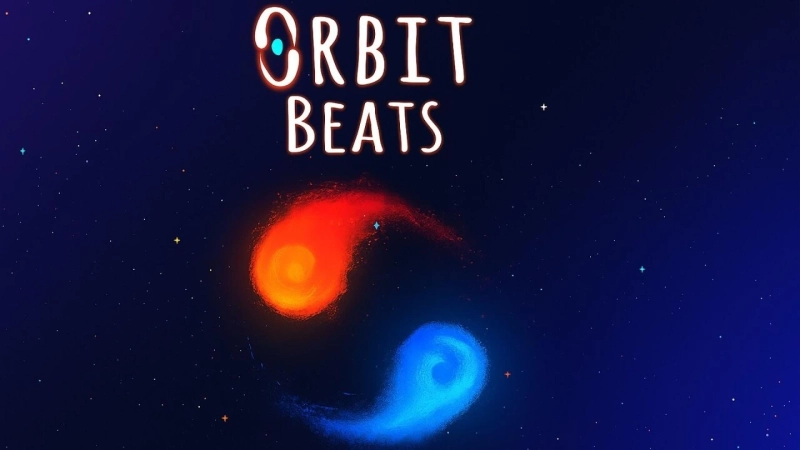
The most distinctive mechanic in Orbit Beats is the presence of two orbiting planets that move along circular paths. These planets rotate continuously, and the player’s main objective is to control their movement so they remain perfectly synchronized with the rhythm of the music. Unlike traditional rhythm games where players react to incoming notes, Orbit Beats requires anticipation and timing based on circular motion.
The dual-planet system adds an extra layer of challenge because players must always be aware of both objects at the same time. A single mistake can throw the planets out of sync, breaking the rhythm and ending the run. This mechanic encourages players to develop a strong sense of timing and spatial awareness, as success depends on understanding where each planet will be at any given moment.
As levels progress, the distance, speed, and behavior of the orbiting planets change. Some tracks introduce faster rotations, while others alter spacing or timing windows. These variations keep the gameplay fresh and prevent it from becoming repetitive, even after many replays.
One-Button Mechanics with Surprising Depth
Orbit Beats uses a one-button control system, making it extremely accessible to new players. With a single input, players can influence the movement or alignment of the orbiting planets. This simplicity allows anyone to start playing immediately, without the need for complex tutorials or explanations.
However, beneath this simple control scheme lies a surprising amount of depth. Timing that single button press correctly is crucial, especially as the music becomes faster and patterns grow more complex. The game demands precision rather than speed, rewarding players who can stay calm and consistent under pressure.
The one-button mechanic also shifts the focus away from memorizing controls and toward mastering rhythm. Players are encouraged to listen closely to the music, internalize the beat, and let timing guide their actions. This design choice makes Orbit Beats feel intuitive and musical, rather than mechanical.
How Rhythm Directly Affects Movement
In Orbit Beats, rhythm is not just a background element—it directly controls how the game behaves. The movement of the planets is tightly synchronized with the music, meaning that every beat influences speed, rotation, and alignment. This creates a strong connection between what players hear and what they see on screen.
As tracks become more complex, rhythm patterns grow less predictable. Syncopation, tempo changes, and layered beats force players to rely on musical awareness rather than visual cues alone. This design encourages players to feel the rhythm instead of simply reacting to it, which is a key reason why the game feels so immersive.
The result is gameplay that feels fluid and organic. When everything clicks, players experience a strong sense of flow, where movement and music merge into a single experience. This harmony between sound and motion is one of Orbit Beats’ greatest strengths.
The Importance of Staying in Sync
Synchronization is the heart of Orbit Beats. The two orbiting planets must remain perfectly aligned to succeed, and even small timing errors can disrupt the balance. This mechanic teaches players to value consistency over aggression, as rushing inputs often leads to mistakes.
Staying in sync becomes increasingly difficult as levels introduce tighter timing windows and faster rotations. Players must develop muscle memory and rhythmic intuition to maintain alignment throughout an entire track. The challenge lies not only in reacting to individual beats but in sustaining focus over longer periods.
This emphasis on synchronization makes Orbit Beats feel rewarding. Each successful run feels earned, as it reflects the player’s ability to maintain rhythm and control from start to finish. Failure, on the other hand, feels instructive rather than frustrating, encouraging players to refine their timing and try again.
Increasingly Complex Tracks and Patterns
As players progress, Orbit Beats introduces tracks that push the mechanics to their limits. Rotations become faster, rhythms more intricate, and patterns less forgiving. These changes force players to adapt and improve, preventing the gameplay from becoming stagnant.
Some tracks challenge players with sudden tempo shifts, while others rely on repeating patterns that test endurance and concentration. The game gradually increases complexity in a way that feels fair, allowing players to grow alongside the difficulty rather than being overwhelmed.
This progression is essential to the game’s long-term appeal. Players are constantly learning new ways to approach rhythm and timing, making each level feel like a meaningful step forward.
Conclusion
Orbit Beats stands out because it transforms simple mechanics into a deep and engaging rhythm experience. The dual orbiting planets, combined with one-button controls and music-driven movement, create a unique gameplay loop that rewards focus, timing, and musical intuition. By emphasizing synchronization and gradually increasing complexity, the game offers a satisfying challenge for both newcomers and experienced rhythm game fans.
Ultimately, Orbit Beats proves that innovation in rhythm games does not require complicated controls or flashy mechanics. Instead, it succeeds by refining core ideas—music, timing, and movement—into a cohesive and immersive experience that feels fresh, challenging, and deeply rewarding.