
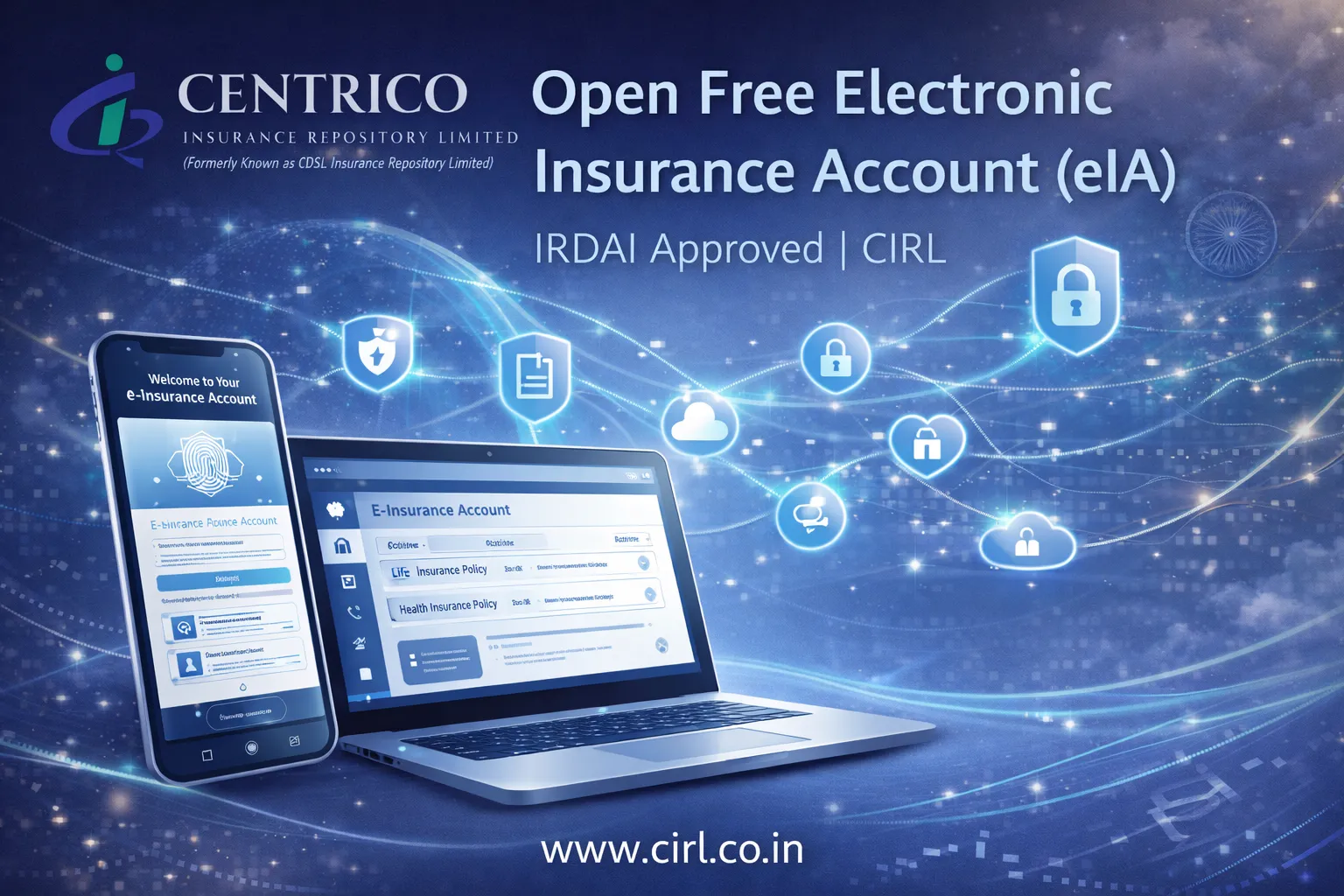
Electronic storage for insurance also known as E-Insurance Accounts or EIAs have transitioned from being a luxury to a necessity. Supervised by the IRDAI and run by licensed repositories (such as Centrico Insurance Repository Limited (CIRL), having an eIA Account gives you a single, safe location to store all your life insurance and general insurance policies in electronic format. This article outlines the top five advantages in the simplest terms and illustrates them with examples, as well as cites the relevant regulatory frameworks and the practices of the industry.
Importance of e-Insurance Accounts in 2026 (Brief Overview)
The E-Insurance Account (EIA) is an electronic account created at an insurance repository in which your portfolio of insurance policies is stored and managed digitally. The IRDAI has classified EIAs as consolidated electronic storage facilities in which policies and transactions are processed and maintained document by document and maintained electronically in an orderly system.
Benefit 1: All Policies in One Place: Ease of Access and Understanding
The Benefits
Rather than sifting through drawers for paper policies or juggling several insurance company portals, an E Insurance Account puts all of your linked policies in a single dashboard.
This entails being able to view any policy numbers, riders, nominees, due dates as well as viewing all life, health, motor, etc. policies instantly.
Real World Example
Assume you got a parent’s documents as a legacy: policies, nominees, and timelines of claims can take a very long time to find. With a well mapped eIA, the lookup from the family and claims team digitized from weeks to mere minutes. These repositories can digitized policies to give a unique eIA number, eIA number, and documents for faster claims or transfers as well.
Benefit 2: A Safer, permanent Record (Say Goodbye to Missing Policies)
How it helps
It is easy for paper policies to be lost, damaged, or stolen. An eIA mitigates that risk by electronically preserving the policy and transaction history as well. For policies with eIAs, IRDAI require them to be marked with unique serials, preserving them with complete auditability and durability. This part is what makes the policy records reliable and usable in e-format.
Practical Tips
When you upload insurance policy online to your eIA (or request insurer mapping), keep a copy of the mapping confirmation and the unique policy number — these are the two items service desks ask for most often.
Benefit 3: Streamlined KYC: Time Saved
Expanding Services
Considering a KYC process is a requirement each to open and manage a policy, there is a specific advantage to having an eIA. By permitting the user to complete KYC once and provide it to various policies, this eliminates the need to repeatedly submit the same documents to each insurer. This serves to better efficiency in servicing and policy adjustments. Multiple repositories and insurers now support single-point KYC updates and auto-alerts tied to your eIA.
Administrative Example
As part of eIA Account opening, e-KYC through Aadhaar or other approved documentation is submitted. Once verified, this is a one-time KYC submission and is flexible for servicing in multiple policies to facilitate updates in details like the nominee or address through the eIA and not needing to revert each insurer separately.
Benefit 4: Accessibility to Premium Management and Premium Payment Alerts
Explanation
A unified electronic Insurance Account (eIA) enables tracking of different insurance policies and allows to manage premium due-date notifications. Many repositories provide features to manage and facilitate premium payments (Bharat connect and Bank mandate linking) to prevent lapses and to keep coverage continuous. This is especially relevant for families with several policies where one missing payment could invalidate insurance coverage.
Instance
Minor enterprises which offer group insurance coverage to their employees sponsors group insurance arrangements often receive employer eIA statements and eIA system access for employer and employee contributions. This diminishes administrative overhead with eIA payment alerts and eIA system access for employer contributions and employee contribution to group insurance payments.
Benefit 5: Insurance Claims Support and Complains Management Faster
Explanation
Permanent policy documents and transactional history can be accessed by pertinent stakeholders allowing claim processing and policy endorsement and assignment administrative tasks to become faster, and less error-prone. eIA repositories incorporate pre-set flows for grievance and mass communication with mapping designed for efficient grievance management.
Example
In health insurance claims, if documents required are past premium payment receipts and policy rider claims history, authenticated eIA access allows the insurer or claims processing facility to provide claims submission requirements and to facilitate the insurance claim with a verified transactional history. This diminishes the chances of document submission delays, speeds up health insurance claims adjudication, and decreases lengthy correspondence required between the provider and the claims processor.

Common Concerns – Addressed with Facts:
Cost: You will not pay anything to open an eIA; accounts are free because repositories and the IRDAI clearly state that Basic Services of eIA accounts, Policy Credits and Service Request are offered to applicants free-of-cost. You will not incur any fees to create an account, only Premium services if availed shall be reasonably charged transparently.
Multiple Accounts: There cannot be Multiple Accounts of your eIA, only one eIA per person/PAN as per the IRDAI guidelines is permitted. So choose one repository like CIRL. You can switch repositories only post closure of eIA account with your current repository. This rule surrounding one account per person avoids duplicate accounts and confusion.
Security & Privacy: Repositories are subject to IRDAI regulations and maintain secure authentication and data sharing with the user’s consent. When sharing KYC (Know Your Customer) and mapping requests with reputable repositories, always ensure you are using the repository’s verified contact information.
Quick How To (Practical Checklist for 2026)
- Choose a repository (look at the list of approved repositories, and choose the one you feel has the best user experience and customer support: CIRL is one of the approved repositories). (cirl.co.in)
- Complete e insurance account opening online, or with a licensed agent have an e-KYC prepared (Aadhaar PAN address proof) i.e. Having a Digilocker account helps.
- Map existing policies: Once successfully KYC verified, you shall have the facility to map your existing policies, just choose Map your Policy to add your existing Life, Health and Motor policies from the listed companies.
- If you want to receive reminders to make payments, enable the auto pay, and link a payment mandate. CIRL has enabled NPCI Bharat Connect to facilitate payment of premium for more that 50+ insurers.
Conclusion:
This move to eIAs brings digital convenience, but also offers a change that the industry has needed and that this is being offered with the help of regulations (IRDAI) through repositories, and the demand for auditable and transparent policy records.
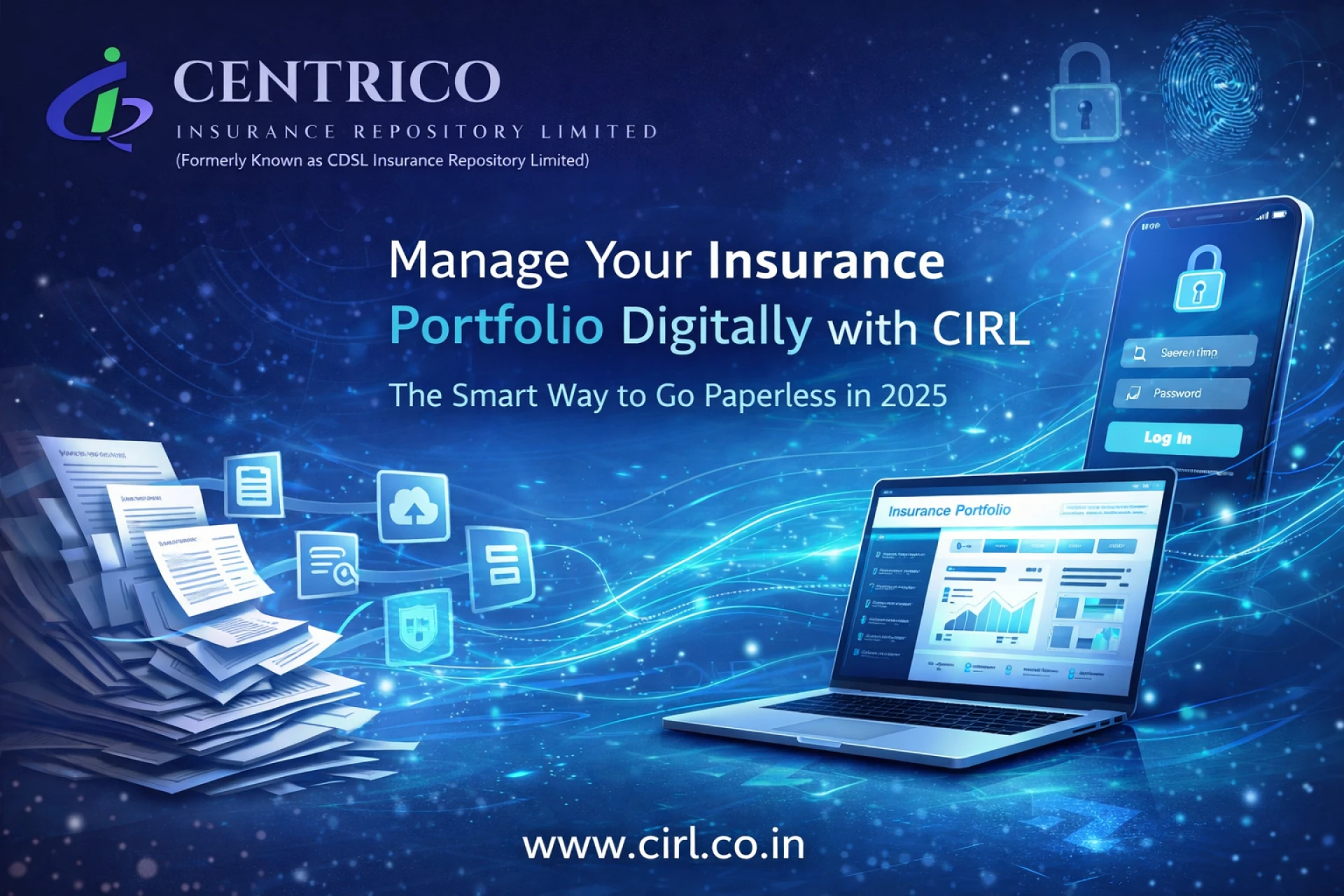
Insurance institutions within the ecosystem comprise repositories like Centrico Insurance Repository Limited (CIRL), to provide the policy holders services within the regulated environment to provide benefits to all policy holders opening electronic insurance account and manage your insurance portfolio digitally.
Consolidate access, records remain safer, KYC is simplified, premiums are managed more efficiently, servicing is faster and overall helps in the digital management of the portfolio.

Sign in to leave a comment.