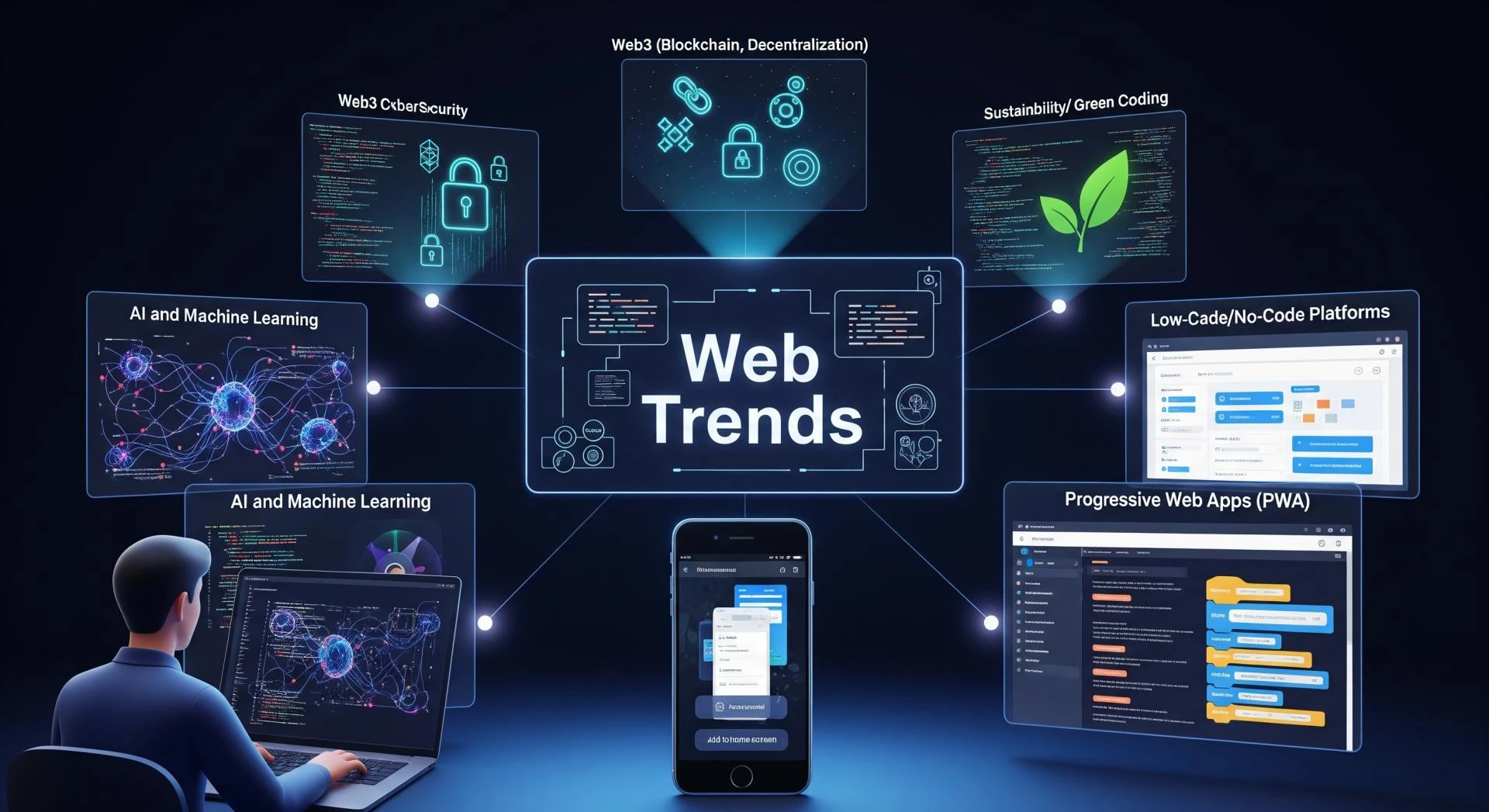

The 2026 landscape for web development is defined by a shift from "coding" to "architecting." With AI handling routine syntax and boilerplate, the premium is now on developers who understand business logic, complex integrations, and secure system design.
The year 2026 marks a definitive turning point in the technology sector. The "AI experiment" phase is over, and we have entered an era of mature, integrated utility. For Chief Technology Officers (CTOs) and hiring managers, the playbook has changed. It is no longer enough to find someone who can write clean JavaScript; the demand is for engineers who can orchestrate complex, AI-driven ecosystems.
For developers, this evolution is equally critical. The skills that guaranteed a job three years ago—basic full-stack proficiency, familiarity with REST APIs, and responsive design—are now considered baseline entry requirements. The differentiator in 2026 is specialization and the ability to leverage automation to deliver value faster.
Below, we explore the top seven hiring trends defining the web development market in 2026 and what they mean for businesses and talent alike.
1. The Rise of the "AI-Augmented" Developer
The most immediate shift in 2026 hiring is the expectation of AI fluency. We are past the point where using AI coding assistants (like GitHub Copilot or emerging 2026 native tools) is optional. It is now a standard workflow requirement.
Companies are not looking for developers to write every line of code from scratch; they are hiring professionals who can review, optimize, and secure AI-generated code. This shift has changed the interview process. Live coding challenges are moving away from syntax puzzles toward architecture and debugging assessments. Interviewers want to see how candidates prompt an AI agent to solve a problem and then refine the output to meet enterprise standards.
This trend effectively raises the bar for junior roles. Since AI can handle the "grunt work" of basic component creation, entry-level positions now require a level of architectural understanding that was previously reserved for mid-level engineers. A forward-thinking web application development company will prioritize candidates who treat AI as a force multiplier, allowing them to ship features at three times the speed of a traditional developer.
2. Cybersecurity-First Mindset (DevSecOps)
In 2026, security is no longer a separate department; it is a developer's responsibility. With the proliferation of AI-generated code, the risk of introducing subtle vulnerabilities has increased. Consequently, hiring trends have swung heavily toward "security-aware" developers.
Recruiters are specifically scanning for experience with DevSecOps pipelines. They want developers who understand how to implement automated security testing within the CI/CD workflow. Knowledge of OWASP standards is mandatory, but the high-value skill is the ability to threat-model a feature before a single line of code is written.
We are seeing a surge in job descriptions asking for "Secure by Design" principles. This implies that businesses are willing to pay a premium for developers who can demonstrate a proactive approach to data privacy, especially as global regulations around AI and user data tighten. The era of "move fast and break things" has been replaced by "move fast and secure everything."
3. The Shift to "Composable" Architectures
The monolithic application is becoming an endangered species. In 2026, the industry standard is composable architecture—building systems from interchangeable building blocks (APIs, headless CMS, microservices).
This trend impacts hiring by devaluing "framework loyalty." Being a "React Developer" or a "Laravel Developer" is less impressive than being a "System Integrator." Hiring managers are looking for versatile engineers who can stitch together best-of-breed services. For instance, a project might use Contentful for data, Stripe for payments, Auth0 for identity, and a custom Next.js frontend.
Business leaders seeking web app development services are increasingly requesting teams that specialize in this modular approach. They want to avoid vendor lock-in and ensure their tech stack can pivot quickly if a better tool emerges. Therefore, developers who demonstrate expertise in API orchestration and headless architectures are finding themselves at the top of the candidate pile.
4. Specialized Full-Stack: The End of the Generalist?
For years, the "Full-Stack Developer" was the golden goose of hiring—a generalist who could touch every part of the application. However, as frontend and backend complexities have exploded, the true generalist is becoming rare.
In 2026, we are seeing a trend toward "Specialized Full-Stack." This means a developer who can technically handle the entire stack but has deep, expert-level proficiency in one specific domain. For example, a "Frontend-Focused Full Stack" developer might be an expert in WebGL and 3D rendering for immersive web experiences but only passable at database optimization.
This nuance allows companies to build web applications that are highly performant without bloating their teams. Instead of hiring five generalists, a company might hire one database expert, one UI/UX logic expert, and one DevOps specialist who all speak the same full-stack language. This "T-shaped" skill set—broad knowledge with deep expertise in one area—is the defining characteristic of the 2026 senior developer.
5. Low-Code/No-Code Governance
A surprising hiring trend in 2026 is the demand for professional developers to manage low-code platforms. Business teams (Marketing, HR, Sales) are increasingly using no-code tools to build their own internal workflows and dashboards. However, these tools eventually hit a ceiling or create "shadow IT" security risks.
Enter the "Low-Code Architect." Companies are hiring experienced web developers specifically to oversee and extend these environments. Their job is to build the complex custom components that the low-code platform cannot handle and to ensure that the data flowing through these citizen-developer apps is secure and compliant.
This role requires a lack of ego. The developer must be willing to say, "You don't need me to code this form; use the drag-and-drop tool," while reserving their coding hours for high-impact custom logic. It is a strategic role that bridges the gap between IT and business operations.
6. Soft Skills: The "Translator" Role
As technical barriers lower due to AI, the human element becomes more valuable. The ability to communicate complex technical concepts to non-technical stakeholders is a primary hiring filter in 2026.
We are seeing a decline in roles for the "brilliant hermit"—the developer who writes genius code but cannot interact with the team. Remote and hybrid work models have made communication skills non-negotiable. Developers must be able to document their work clearly, participate in asynchronous strategy discussions, and mentor junior team members.
When organizations look to hire web developers, they are increasingly using behavioral assessments to test for empathy, business acumen, and adaptability. The prevailing thought process is that technical gaps can be filled with training (or AI), but poor communication culture is a systemic risk that is much harder to fix.
7. The Growth of "Fractional" and Contract Hiring
The final major trend is structural. The volatility of the tech market over the last few years has led many companies to move away from bloated full-time headcounts. Instead, there is a massive surge in "fractional" hiring and long-term contract roles.
Senior developers are increasingly acting as "Fractional CTOs" or "Lead Engineers" for multiple startups simultaneously. This allows companies to access high-level talent without the cost of a full-time executive salary. For developers, this offers variety and higher earning potential, provided they can manage their time effectively.
This shift means that when you see a job posting to hire web app developers, it may not be for a traditional 9-to-5 role. It is often for a 6-month intensive sprint or a retainer-based advisory role. This "Hollywood model" of assembling a team for a specific production (or project) and then disbanding is becoming the norm for high-end web development projects.
Conclusion: Adapting to the New Normal
The hiring market in 2026 is dynamic, demanding, and incredibly opportunity-rich for those who adapt. The days of resting on the laurels of knowing a single syntax are over.
For businesses, the key is to look for adaptability and architectural thinking. You are not just hiring a typist; you are hiring a problem solver who uses code, AI, and APIs as their tools.
For developers, the message is clear: Embrace the tools that speed you up, deepen your understanding of security and architecture, and never underestimate the power of clear communication. The developers who thrive in 2026 will be the ones who can look at a business problem and see the entire solution, not just the lines of code required to fix it.

























Sign in to leave a comment.