




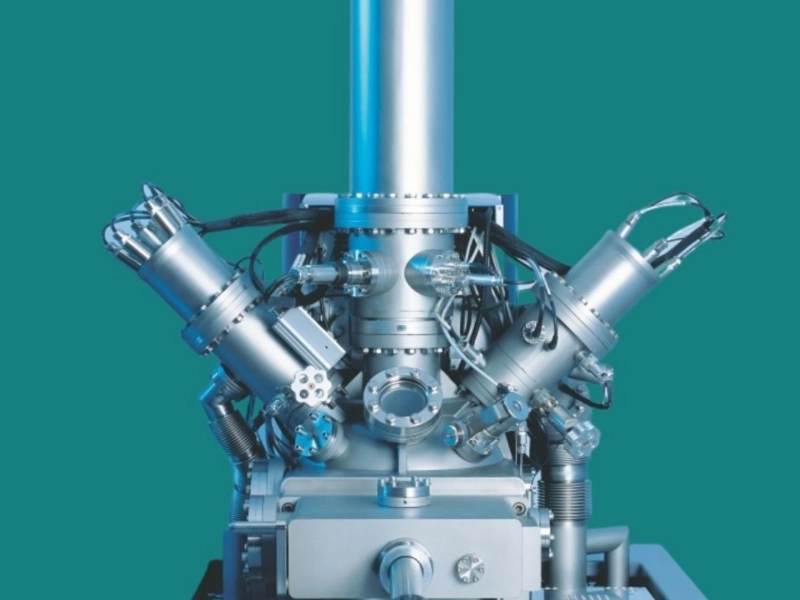
When surface chemistry needs to be understood at the smallest possible scale, Time-of-Flight Secondary Ion Mass Spectrometry, commonly known as TOF-SIMS, often becomes the technique of choice. It is used when trace-level detail, spatial resolution, and molecular information all matter at the same time.
Rather than explaining TOF-SIMS only in technical terms, this article looks at how it is actually applied across materials science, semiconductor development, and biomedical research.
Why researchers turn to TOF-SIMS
Most people exploring TOF-SIMS Testing are trying to solve a specific problem. They want to know what is present on a surface, how it is distributed, and whether it changes with depth.
TOF-SIMS stands out because it can:
- Detect elements and molecular fragments at very low concentrations
- Map chemical species across a surface
- Generate depth profiles through thin layers
These capabilities make it especially valuable when conventional surface methods reach their limits.
TOF-SIMS applications in materials research
In materials science, small chemical differences can have large performance impacts.
TOF-SIMS Testing Services are commonly used to:
- Investigate coating composition and uniformity
- Identify surface contamination and residues
- Study polymer additives, fillers, and degradation products
Because TOF-SIMS is highly surface sensitive, it reveals information that bulk analysis methods often miss.
Role of TOF-SIMS in semiconductor analysis
Semiconductor devices depend on precise control of surface and interface chemistry. TOF-SIMS plays a critical role in this area.
Common semiconductor applications include:
- Dopant profiling and distribution analysis
- Thin film and multilayer characterization
- Failure analysis at interfaces and junctions
The ability to combine high sensitivity with depth profiling makes TOF-SIMS well suited for advanced electronic materials.
TOF-SIMS in biomedical and life science research
In biomedical research, surface chemistry influences how materials interact with biological systems.
TOF-SIMS is used to:
- Analyze biomaterial surfaces
- Map proteins, lipids, and other biomolecules
- Study drug distribution on medical device surfaces
These insights help researchers understand biological responses without relying solely on bulk measurements.
How TOF-SIMS differs from other SIMS techniques
While all SIMS methods analyze secondary ions, TOF-SIMS uses a time-of-flight mass analyzer that enables parallel detection of a wide mass range.
This allows:
- Faster data collection
- Improved mass resolution
- Enhanced imaging capabilities
As a result, TOF-SIMS is often selected for imaging and molecular-level studies.
Is TOF-SIMS destructive?
TOF-SIMS is considered a destructive technique because it sputters material during analysis. However, the amount removed is extremely small.
For many research applications, the benefit of detailed chemical information outweighs this limitation.
Is TOF-SIMS regulated or required in the US
TOF-SIMS is an analytical research technique, not a legal or regulatory requirement. There is no US law mandating its use.
However, data generated by TOF-SIMS is widely accepted in academic research, industrial development, and advanced characterization programs. Testing is typically performed by specialized laboratories offering Metrology Testing Service, Material Testing Services, and Product Testing Services, including work aligned with an ASTM Service in USA when applicable.
Questions researchers often ask about TOF-SIMS
Can TOF-SIMS identify complete chemical structures?
TOF-SIMS provides molecular fragment information. Full structural identification may require complementary techniques.
How deep can TOF-SIMS analyze?
Depth profiling typically reaches nanometer to micron scales, depending on conditions.
Is sample preparation complex?
Preparation is often minimal, though it depends on material type and research goals.
Where TOF-SIMS fits into broader research programs
TOF-SIMS is rarely used in isolation. It is often combined with microscopy, spectroscopy, and performance testing to connect surface chemistry with function.
Used alongside other Material Testing Services and Product Testing Services, TOF-SIMS helps researchers move from observation to understanding more efficiently.
A practical takeaway for research teams
TOF-SIMS is chosen when surface chemistry, trace detection, and spatial detail are critical to understanding material behavior. Across materials, semiconductor, and biomedical research, it provides insights that few other techniques can match.
If you are considering TOF-SIMS Testing or want guidance on selecting TOF-SIMS Testing Services for a specific application, you can connect with Infinita Lab to discuss advanced surface analysis and metrology support.