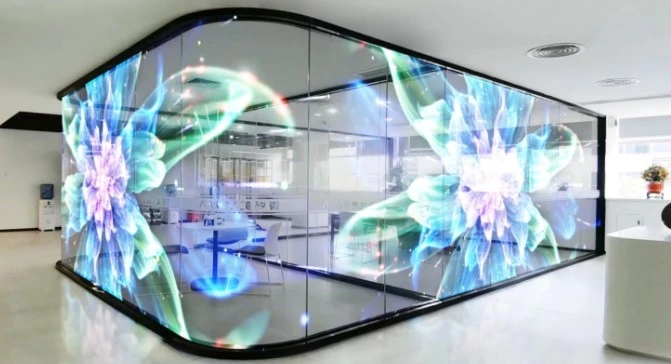

In recent years, the concept of the transparent display screen has moved from sci-fi novelty to real commercial and architectural deployments. These screens allow viewers to simultaneously see digital content and what lies behind the screen—a fusion of physical space and digital overlay. This article explores how transparent display screens work, their current applications, and where the technology is headed.
How Transparent Display Screens Work
Core Technologies
A transparent display screen can be built using several display technologies: transparent LCD, transparent OLED (Organic Light Emitting Diode), and transparent LED architectures. Broadly speaking, transparent displays embed an active matrix in the field of view rather than hiding it behind an opaque backing.
In transparent OLEDs (TOLEDs), the architecture is composed of a transparent substrate (such as glass), a transparent anode, hole transport layer, emissive layer, electron transport layer, and transparent cathode. The key is that all layers are at least partially transparent, allowing light to pass through when pixels are inactive. When pixels are activated, they emit light—thus overlaying digital content—while still allowing a view of what is behind the panel.
Transparent LED screens (or transparent LED films) work differently: they use a transparent substrate (such as glass or acrylic) with embedded micro-LED modules or SMD LED devices arranged in a grid. The spacing between the LEDs is designed so that much of the panel remains transparent (often 70–90% transparency) when viewed from a distance. These LEDs emit light for digital visuals, while the spaces between remain open, allowing background light to pass through.
Key Design Considerations
- Transparency vs resolution trade-off: The more pixels or LEDs you pack into the display surface, the less empty transparent area remains, reducing see-through clarity.
- Brightness and ambient light: To make the digital content visible, especially in daylight or high ambient light, the display must emit sufficient brightness. Transparent LED screens often support very high brightness (e.g., thousands of nits) to counter ambient light.
- Viewing angle and light transmission: The panel needs to balance image clarity with see-through performance; the placement of LED modules, wiring, and substrate must minimise visual obstruction.
- Touch/interactivity (optional): Some transparent displays incorporate touch sensors (infrared, capacitive, optical) enabling interactive transparent screens.
Current Applications
Transparent display screens are finding strong traction in several real-world use-cases:
- Retail and signage: Shop windows equipped with transparent LED or OLED screens allow digital advertising while still showcasing the physical products behind. The see-through effect draws attention while preserving storefront visibility.
- Automotive displays: Car manufacturers are experimenting with transparent HUDs (heads-up displays) and window-mounted transparent displays for navigation and safety alerts.
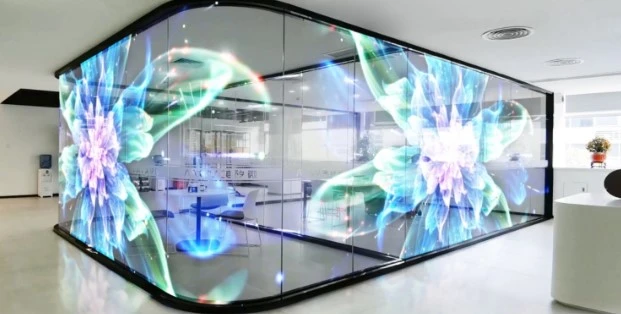
- Architecture and exhibitions: Museums, galleries, and modern offices use transparent display screens for immersive storytelling and information overlays on glass partitions or showcases.
- Smart homes and appliances: Transparent refrigerator doors or smart windows integrate displays directly into the glass without blocking visibility.
- Public installations: Airports, metro stations, and showrooms use transparent LED walls for dynamic yet non-intrusive information displays.
Advantages of Transparent Display Screens
Transparent display screens merge digital interaction with physical environments, offering advantages such as:
- Space efficiency — no need for separate screens or projectors
- A futuristic aesthetic that enhances brand appeal
- Energy efficiency, especially with OLED technology that emits light directly
- Improved engagement in advertising and retail contexts
Conclusion
Transparent display screens are redefining how we interact with digital information in the physical world. The seamless blend of digital and physical spaces signals a future where display technology becomes almost invisible yet more impactful than ever—continuing the evolution seen in modern digital LED screens. As manufacturing becomes more scalable and technology matures, these displays will find widespread adoption in retail, architecture, and automotive industries.



























Sign in to leave a comment.