




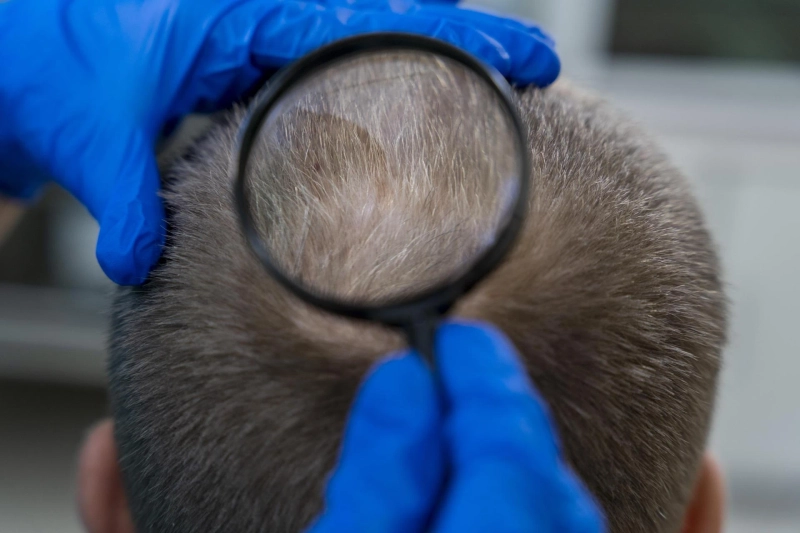
Hair loss affects millions worldwide, cutting across age, gender, and genetic backgrounds. For many, it’s not just a cosmetic issue — it has psychological and emotional consequences as well. In recent years, laser phototherapy has emerged as a non-invasive approach to address hair thinning and stimulate regrowth. A readily accessible source of user experiences is the YouTube video “Real Patient Testimonials | Theradome Hair Growth Results”, where individuals share their journeys with a medical-grade laser hair growth helmet.
While individual anecdotes are not scientific evidence, they provide context for how real people interact with emerging technologies — and help us explore broader questions: What is low-level laser therapy? How does it work? What does research say? This post breaks down the technology with a critical and informative lens.
1. The Science Behind Low-Level Laser Therapy (LLLT)
Low-Level Laser Therapy (LLLT), also known as photobiomodulation, involves exposing tissues to low-intensity light at specific wavelengths. Unlike surgical or high-energy lasers used in cutting or ablation, LLLT does not generate heat but instead uses light to interact with cellular components.
In the context of hair growth, the idea is that red and near-infrared light—often around the 650–680nm wavelength range — can penetrate the scalp and influence the hair follicle’s biological activity. Research suggests that:
- Photons of light can be absorbed by mitochondria in cells, increasing adenosine triphosphate (ATP) production — the energy currency of the cell.
- This may enhance cellular metabolism in the hair follicle region, potentially extending the anagen (growth) phase of the hair cycle.
- Improved local blood circulation and stimulation of follicle-related stem cells might support a more favorable environment for hair growth.
Importantly, results can vary widely by individual, and LLLT is generally viewed as a supportive option rather than a guaranteed cure for conditions like androgenetic alopecia (pattern baldness).
2. What Users Are Saying: Patterns in Real-World Feedback
The YouTube video with real patient testimonials presents a variety of experiences from people who used a laser hair growth helmet regularly. While purpose-built videos often highlight the most positive stories — and should be interpreted cautiously — they still reveal recurring themes:
- Some users report reduced hair shedding within a few months of consistent use.
- Others describe perceptible thickening of hair shafts or new hair growth in previously thinning areas.
- Testimonials often emphasize the ease of use and integration into daily routines, noting that sessions typically require short, regular periods of treatment rather than invasive procedures.
However, it is equally important to acknowledge community discussions and broader user feedback beyond the branded video:
- Some users in online forums have reported minimal or no noticeable results even after months of use, underscoring that outcomes are highly individual.
- Others mention potential side effects like headaches or sensitivity, suggesting that individual tolerances differ and that not everyone finds the experience comfortable.
- Skeptical perspectives also exist, pointing out that improvements might be subtle and subjective, and that devices with lower power output may not be effective for everyone.
This mixed feedback aligns with scientific understanding that no single treatment will work identically for all individuals.
3. Clinical Evidence and Regulatory Context
Unlike cosmetics or over-the-counter supplements, some laser hair growth devices have been cleared by regulatory bodies such as the U.S. Food and Drug Administration (FDA) for safety in specific applications. This clearance often indicates that the device has been reviewed for reasonable assurance of safety and intended use — but it does not equate to endorsement of efficacy for every user.
In clinical studies, LLLT has shown promise in certain controlled settings. For example:
- Trials involving double-blind designs have compared real laser treatment with sham (placebo) devices. Some studies report statistically significant improvements in hair density and reduction in shedding for the laser group.
- Research tends to emphasize that consistent use over several months (often 4–6 months or more) is necessary before noticeable changes can occur.
Compared to pharmacological interventions like minoxidil or finasteride, which also have clinical evidence backing, laser phototherapy is generally less aggressive but also may produce more modest results.
4. Setting Expectations: What Science and Experience Suggest
When evaluating laser hair growth therapy through an informational lens, several key principles emerge:
- Mechanism matters: LLLT uses specific wavelengths to target cellular metabolism rather than relying on heat or chemical agents.
- Consistency is crucial: Studies and user accounts indicate that sporadic use is unlikely to yield visible results; regular and sustained treatment is the norm.
- Individual variation is significant: Genetics, the extent of hair thinning, and overall health all influence how a person might respond.
- Scientific evidence exists but is not conclusive: While some controlled research supports efficacy, debates continue, and not all studies show strong effects for every user.
5. Conclusion: An Evolving Field Worth Watching
Laser hair growth therapy represents a fascinating intersection of technology and biology. Videos like “Real Patient Testimonials | Theradome Hair Growth Results” provide narrative insights into how individuals experience these treatments, while broader research and community discussion highlight the diversity of outcomes.
From a scientific standpoint, low-level laser therapy is grounded in plausible biological mechanisms and has shown positive effects in some studies. However, individual results vary, and users should approach such technologies with informed expectations and an understanding that personal responses can differ.
As interest in non-invasive treatments grows, continued research will be essential to delineate who benefits most, under what conditions, and how to optimize protocols for hair regeneration. In the meantime, patient experiences — when framed alongside empirical evidence — offer a valuable window into the real-world impact of these innovations.