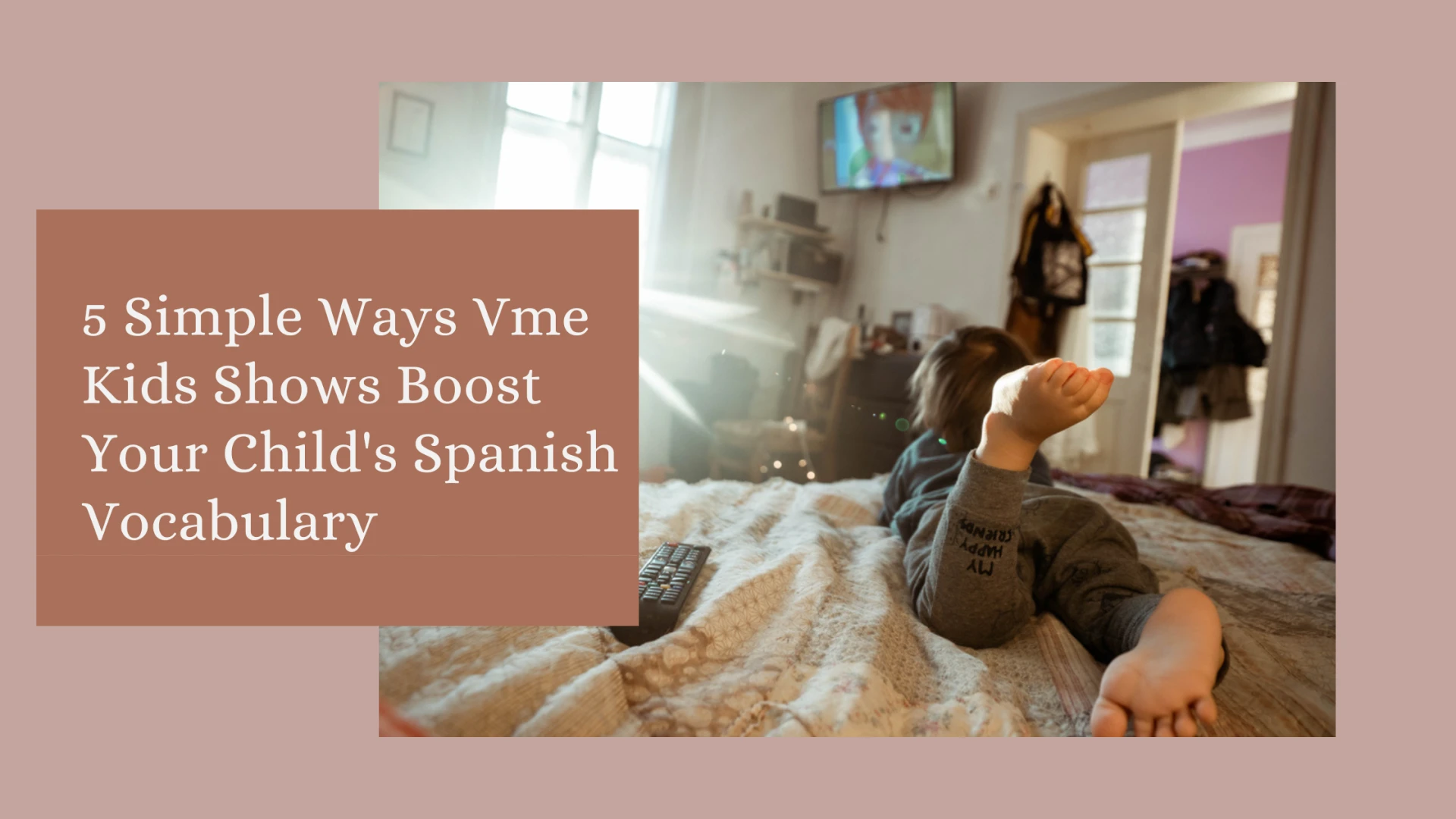

As a bilingual speech-language pathologist working with families for over a decade, I'm frequently asked about effective Spanish language learning for preschoolers. Parents want to know: can television really help children acquire a second language? The research-backed answer is yes, when done strategically.
Spanish educational shows, particularly those from Vme Kids, employ specific techniques that align with how young brains naturally acquire language. Here are five proven ways these programs accelerate vocabulary development for bilingual kids.
1. Contextual Repetition That Sticks
The most powerful vocabulary retention technique doesn't feel like learning at all. Vme Kids programs use strategic repetition within meaningful contexts, allowing children to hear new Spanish words multiple times across different scenarios.
Unlike rote memorization, contextual learning creates neural pathways that connect words to meanings, actions, and emotions. When a character says "agua" while drinking, then again while watering plants, and later during bath time, your preschooler's brain builds a comprehensive understanding of the word rather than a simple translation.
Research from Georgetown University Medical Center shows that contextual language learning activates the same brain regions used in native language acquisition. This means your child isn't just memorizing Spanish words—they're genuinely acquiring Spanish as bilingual kids naturally do.
Parent Action Step: After watching, use the same words in similar contexts at home. If the show featured "zapatos" (shoes), talk about zapatos when getting dressed or going outside.
2. Visual Anchoring for Faster Recognition
Young children are visual learners, and Spanish educational shows leverage this perfectly. Every new vocabulary word appears alongside clear visual representations, creating what linguists call "dual coding"—the simultaneous processing of verbal and visual information.
When your preschooler hears "mariposa" while seeing a colorful butterfly flutter across the screen, their brain creates a stronger memory trace than hearing the word alone could achieve. This visual anchoring accelerates recognition and recall significantly.
Vme Kids programs enhance this effect through consistent visual design. Characters, objects, and actions are animated with clarity and purpose, ensuring that even complex concepts become accessible through visual support.
Parent Action Step: Pause occasionally to point at screen elements and name them in Spanish together. This active engagement deepens the visual-verbal connection.
3. Predictable Language Patterns
Effective language learning for preschoolers requires structure. Vme Kids shows build vocabulary through predictable sentence patterns that children can anticipate and eventually reproduce.
Phrases like "¿Dónde está...?" (Where is...?) or "Vamos a..." (Let's...) appear consistently across episodes. This patterned language gives children frameworks they can fill with new vocabulary words, accelerating their ability to construct their own Spanish sentences.
Cognitive scientists call this "scaffolding"—providing structural support that children gradually internalize. As bilingual kids master these patterns, they gain confidence to experiment with language independently.
Parent Action Step: Adopt one predictable phrase from the show and use it throughout your day. "¿Dónde está tu juguete?" becomes a natural way to practice vocabulary during playtime.
4. Emotional Connection Drives Retention
Memory research consistently shows that emotionally engaging content sticks better than neutral information. Spanish educational shows from Vme Kids create lovable characters facing relatable challenges, generating the emotional investment that transforms passive viewing into active learning.
When your child cares whether a character finds their lost "pelota" (ball) or successfully makes "galletas" (cookies), they're emotionally invested in the vocabulary. This emotional connection activates the amygdala, which flags information as important and worthy of long-term storage.
Stories featuring friendship, problem-solving, and celebration create positive associations with Spanish language learning. Your preschooler isn't studying vocabulary—they're experiencing adventures that happen to unfold in Spanish.
Parent Action Step: Discuss character feelings after watching. "¿Cómo se siente?" (How do they feel?) reinforces emotional vocabulary while processing the story.
5. Musical Memory Enhancement
Perhaps the most powerful vocabulary tool in Spanish educational shows is music. Songs embed new words within melody and rhythm, utilizing the brain's superior memory for musical patterns.
You've likely noticed how easily your child memorizes song lyrics compared to spoken instructions. This isn't coincidental—musical memory engages different neural pathways that are particularly strong in young children. Vme Kids leverages this through catchy songs that teach colors, numbers, body parts, and daily routines.
Research from Northwestern University demonstrates that musical training enhances language processing abilities. Even passive exposure to educational songs strengthens the neural circuitry used for all language learning.
Parent Action Step: Sing the show's songs during relevant activities. Sing the counting song during stairs, the colors song while sorting toys, or the body parts song during bath time.
Implementing These Techniques at Home
For optimal results with bilingual kids, consistency matters more than duration. Even 20 minutes daily of Spanish educational shows, combined with the parent action steps above, yields measurable vocabulary growth.
Track new words your child uses spontaneously—these indicate genuine acquisition rather than mere recognition. Celebrate these victories to build confidence and motivation.
Remember that language learning for preschoolers thrives on low-pressure exposure. Avoid quizzing or correcting, which can create anxiety. Instead, model correct usage naturally and praise all communication attempts.
Spanish educational shows from Vme Kids provide the foundation, but your engagement amplifies the impact. When you watch together, extend the learning, and incorporate Spanish into daily routines, you're not just teaching vocabulary—you're opening doors to bilingualism and cultural connection that will benefit your child throughout their lifetime.
About the Author: This article draws on speech-language pathology research and second language acquisition studies to provide evidence-based strategies for parents raising bilingual children.


















Sign in to leave a comment.